深海生物多样性

Search documents
中印尼专家推进深海生态探查合作
Zhong Guo Zi Ran Zi Yuan Bao· 2026-02-04 03:44
Core Viewpoint - The conference held on January 15 focused on deep-sea biodiversity and ecological processes in the Sunda Strait, showcasing collaborative research efforts between the First Institute of Oceanography and Bogor Agricultural University, aiming to enhance cooperation in deep-sea research and ecological protection [1][2]. Group 1: Conference Overview - The conference was organized to discuss deep-sea biodiversity, marine resource protection, and the implementation of marine spatial planning [2]. - Experts from both institutions presented academic reports, sharing research progress and practical experiences related to the Sunda Strait and Indian Ocean [2]. Group 2: Collaborative Efforts - A memorandum of understanding was signed in 2025, establishing a framework for cooperation in deep-sea investigation and capacity building in Indonesia [1]. - The conference included discussions on a joint deep-sea ecological exploration mission planned for 2026, covering logistics, technical requirements, and data analysis [2].
联合国“海洋十年”深海课堂开讲
Zhong Guo Zi Ran Zi Yuan Bao· 2026-01-27 03:12
Core Insights - The event "Exploring the Mysteries of the Deep Sea" was successfully held as part of the United Nations' "Decade of Ocean Science" initiative, focusing on deep-sea biodiversity education for youth [1][2] - The event was organized by multiple institutions, including the China Ocean Affairs Administration and the Southern Marine Science and Engineering Guangdong Laboratory [1] - A total of 333 students and guests participated from Qingdao and Hong Kong, engaging in real-time interaction with scientists [1] Group 1 - The lecture was led by Chief Scientist Zhang Xielei, who presented the latest findings from the China Ocean 93 expedition, explaining various deep-sea habitats and biological groups in an accessible manner [1] - The lecture compared deep-sea ecosystems to terrestrial environments, highlighting the unique characteristics of biodiversity in different habitats [1] - The event included an interactive Q&A session where students actively engaged with the expert team, asking questions about deep-sea biology and ecological research [2] Group 2 - Students expressed that the content was engaging and the format innovative, which enhanced their understanding of deep-sea biodiversity and sparked interest in marine science [2] - Participants showed enthusiasm for future educational activities, indicating a desire to further explore the mysteries of the deep sea [2]


我国科学家发现深海章鱼新物种
Zhong Guo Zi Ran Zi Yuan Bao· 2025-08-06 02:15
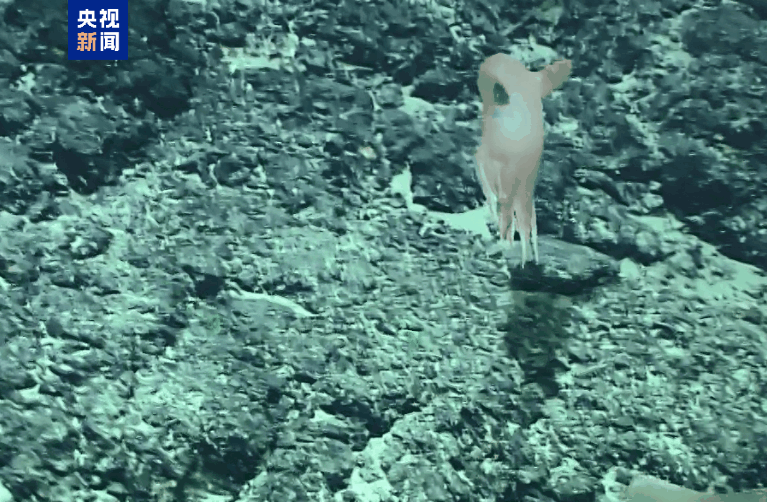
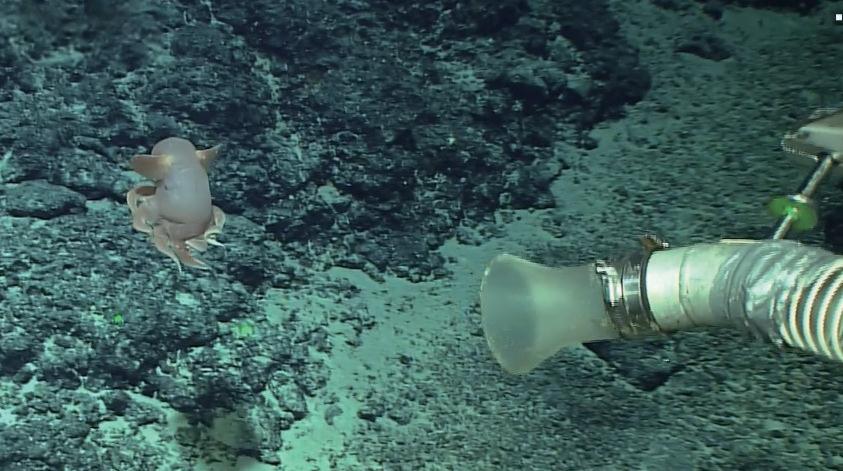
Group 1 - The Chinese Academy of Sciences has discovered and named a new deep-sea octopus species called "Flying Ash Octopus," which was published in the journal "Biodiversity and Evolution" [3] - The new species was found at a depth of 1240 meters in the Caroline Seamount of the western Pacific, measuring approximately 20 centimeters in length, with a translucent orange-red body and soft, gelatinous skin [3] - The name "Flying Ash Octopus" is inspired by the "Flying Apsaras" in Dunhuang murals, reflecting the octopus's graceful movements in water [3] Group 2 - The research team confirmed the taxonomic status of the Ash Octopus genus based on genetic information analysis, providing evidence for its monophyly [4] - The study supports recent taxonomic revisions of the octopus subclass, confirming that the suborder can be divided into two monophyletic groups: the Octopodiformes and the Vampyropoda [4] - The research explores deep-sea octopus adaptation strategies at the mitochondrial genome level, suggesting that deep-sea octopuses may reduce active swimming and lower movement speed to decrease metabolic demands, allowing them to thrive in high-pressure, low-temperature, and hypoxic deep-sea environments [4]
翩翩起舞酷似仙女“飞天” 我国科学家发现罕见深海章鱼新物种
Yang Shi Xin Wen· 2025-07-28 08:47
Core Insights - A new deep-sea octopus species named "Flying Ash Octopus" has been discovered by the Institute of Oceanology, Chinese Academy of Sciences, highlighting the biodiversity in deep-sea environments [1][4] - The research provides evidence supporting the taxonomic classification of the Ash Octopus genus and suggests a revision in the classification of recent octopuses [3][4] Group 1: Discovery and Classification - The Flying Ash Octopus was found at a depth of 1240 meters in the Caroline Seamount of the western Pacific, measuring approximately 20 centimeters in length and exhibiting a translucent orange-red color [1] - The study confirmed the monophyly of the Ash Octopus genus and provided new evidence for the classification of the suborder with two distinct superfamilies [3] Group 2: Adaptation Mechanisms - The research explored the deep-sea adaptation strategies of octopuses, indicating that they may reduce active swimming and lower movement speed to decrease metabolic demands, allowing mitochondrial respiration to function normally [4] - These adaptations enable the octopus to thrive in extreme deep-sea conditions characterized by high pressure, low temperature, and low oxygen [4]