13价肺炎疫苗(PCV13)

Search documents
国产疫苗迎来出海爆发的前夜
Xin Lang Cai Jing· 2025-12-10 08:02
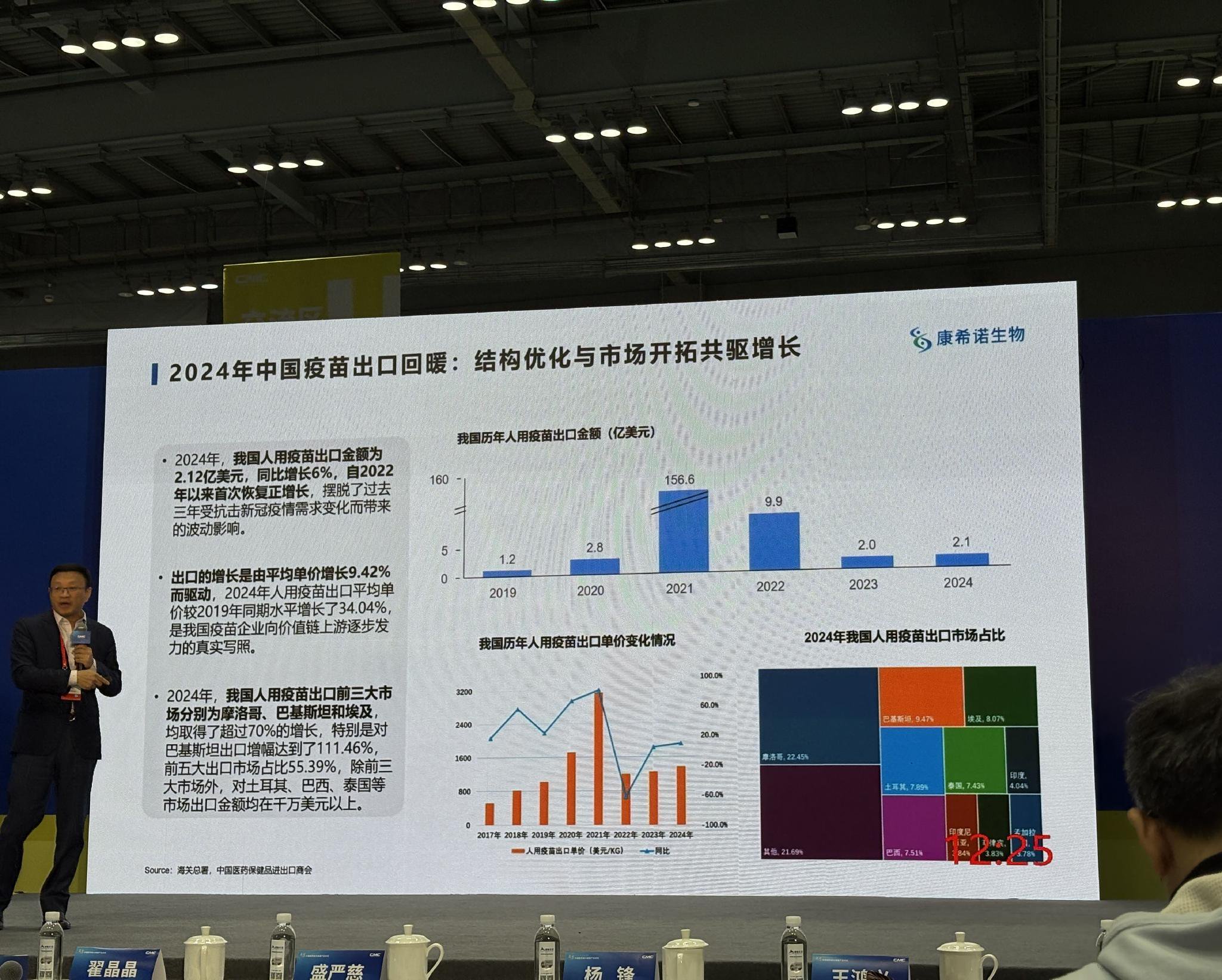
Core Viewpoint - The export of Chinese vaccines is experiencing a recovery, with significant international contracts and an upward trend in export value, driven by increased average prices and a shift towards innovative products [1][9][19]. Group 1: Export Growth and Market Dynamics - Sinovac has signed a long-term contract with the Brazilian Ministry of Health to supply approximately 60 million doses of varicella and rabies vaccines over the next decade, valued at over $700 million [1][21]. - In 2024, China's human vaccine export value is projected to reach $212 million, marking a 6% year-on-year increase and the first growth since 2022 [1]. - The average export price of Chinese human vaccines is expected to rise by 9.42% in 2024, with a 34.04% increase compared to the same period in 2019 [9]. Group 2: Product Development and Innovation - Chinese vaccine companies are expanding their product lines from basic vaccines to more competitive innovative vaccines, with a focus on higher-value categories [8]. - Various vaccines, including the 13-valent pneumococcal vaccine and quadrivalent meningococcal conjugate vaccine, are accelerating entry into international markets [10]. - The HPV vaccine from Wantai Biologics has seen a threefold increase in exports, reaching approximately 15 million doses in 2025 [12]. Group 3: Challenges and Competitive Landscape - The domestic vaccine market is under pressure, with a decline in the number of vaccine approvals from 5,343 in 2021 to 4,202 in 2024, influenced by economic downturns and reduced vaccination willingness [14]. - The competition in the vaccine development space is intense, with many companies pursuing similar vaccine types, leading to a crowded pipeline [17]. - The export strategy is also influenced by cost structures, as companies aim to lower supply costs and improve production efficiency through increased output [18]. Group 4: Strategic Opportunities and Localization - There is a structural opportunity for Chinese vaccine companies to enter markets that are underserved by multinational corporations, particularly in low- and middle-income countries [19]. - Successful international expansion requires not only product sales but also the establishment of localized systems to support long-term growth [20]. - Companies are shifting from simple export models to more integrated approaches, including local production and technology transfer agreements [20].