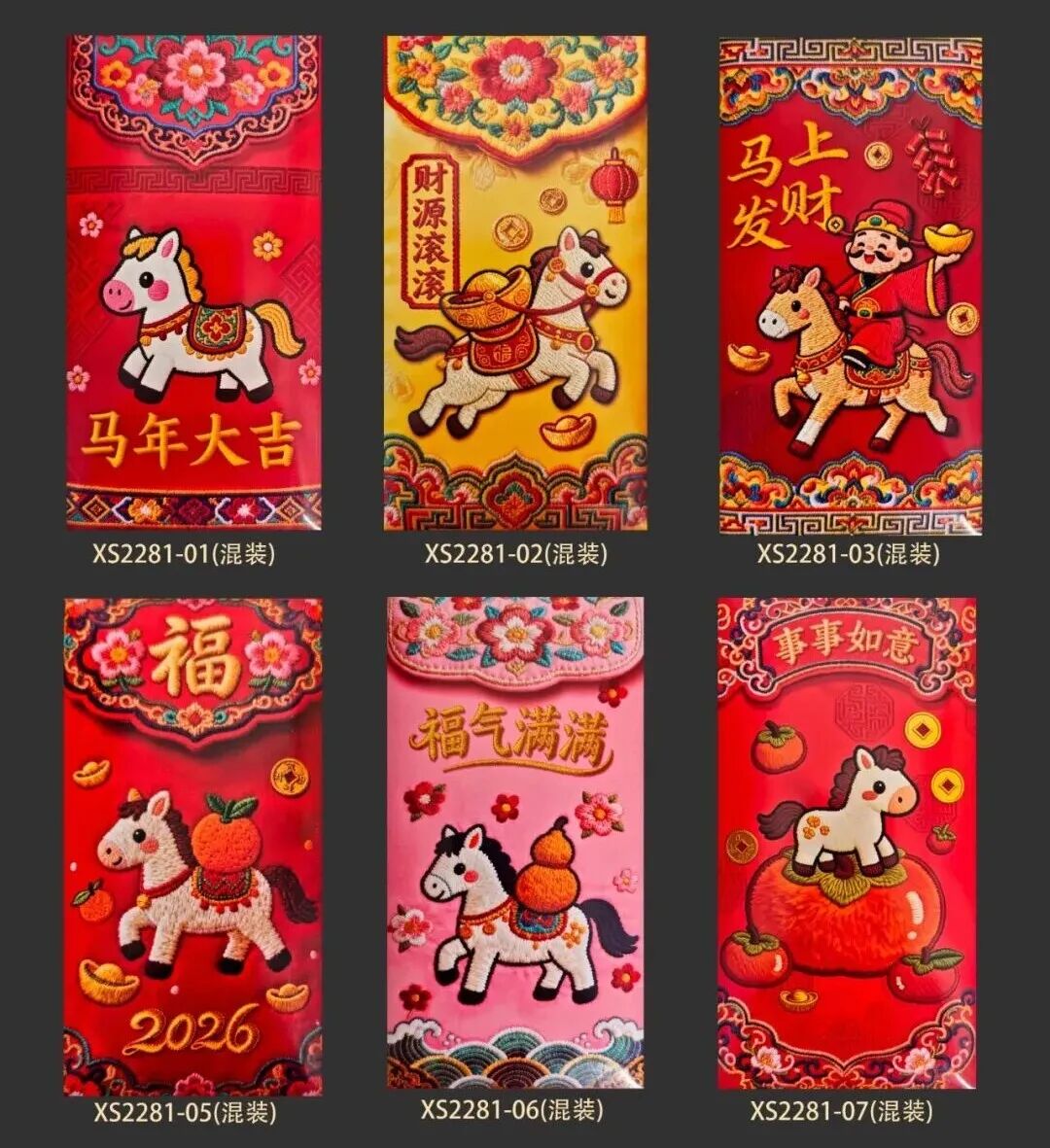
5D仿刺绣工艺红包

Search documents
红包厂的春节突围战
虎嗅APP· 2026-02-13 09:52
Core Viewpoint - The article discusses the evolving business of red envelopes in China, highlighting the balance between tradition and innovation in design, production, and consumer preferences during the festive season [4][5]. Group 1: Red Envelope Market Dynamics - The red envelope market has seen a shift towards more innovative designs while maintaining traditional elements, with popular designs often featuring a classic red background and gold lettering [5][12]. - The production of red envelopes is highly concentrated in regions like Jiangsu and Zhejiang, with factories integrating more processes to control costs and enhance competitiveness [16][18]. - The demand for red envelopes has bifurcated into two categories: commodity-type and customized-type, with the former directly targeting consumers and the latter often included in corporate gift boxes [17][20]. Group 2: Consumer Behavior and Trends - Consumer preferences have shifted towards red envelopes that reflect contemporary social sentiments, with phrases like "getting rich" and "full head of hair" becoming popular, indicating a blend of traditional wishes with modern expressions [5][20]. - The design and production of red envelopes are influenced by market feedback, with successful designs often being pre-determined months in advance based on consumer trends [12][13]. - The emotional value of red envelopes has been redefined, with a focus on the messages they convey rather than just their monetary function [20][22]. Group 3: Challenges and Opportunities - The red envelope industry faces challenges due to reduced budgets from corporate clients and a decline in demand for customized envelopes, leading to a narrowing of the market space [19][21]. - There is a clear division in the market, with some products moving towards lower-end offerings while others aim for high-end, premium designs that showcase craftsmanship [22][23]. - The rapid adoption of visually appealing yet cost-effective designs, such as the 5D embroidery technique, reflects the industry's need to balance aesthetics with affordability [25].

红包厂的春节突围战
3 6 Ke· 2026-02-13 03:04
Core Insights - The article discusses the evolving market for Chinese New Year red envelopes, highlighting the balance between traditional designs and innovative styles that cater to changing consumer preferences [1][2][9]. Group 1: Market Dynamics - The red envelope business requires innovation while adhering to traditional aesthetics, with successful designs often being a blend of both [2][9]. - The production of red envelopes is highly concentrated in regions like Jiangsu and Zhejiang, with factories integrating more processes to control costs and enhance competitiveness [9][10]. - The demand for red envelopes has shifted, with a decline in custom orders and a rise in product design that emphasizes emotional value and contemporary expressions [11][12]. Group 2: Consumer Behavior - Consumers are increasingly drawn to visually appealing designs that can be understood quickly, reflecting a shift in societal emotions and consumer attitudes [4][5][11]. - Popular phrases and themes on red envelopes have evolved, with modern expressions replacing traditional blessings, indicating a change in consumer sentiment [2][11]. Group 3: Production and Design Trends - The production cycle for red envelopes begins as early as April, with designs finalized by June and mass production starting in October [7][8]. - The market sees a polarization between low-end and high-end products, with budget constraints leading to simpler designs for lower-end envelopes [12][15]. - High-end red envelopes are often created for promotional purposes, showcasing advanced printing techniques and materials, rather than for direct sale [13][15]. Group 4: Future Outlook - The red envelope industry is adapting to economic conditions, with manufacturers already planning for the next year's designs even as the current season concludes [15][16]. - The competitive landscape is intensifying, with the need for differentiation becoming crucial for survival in the market [15].