6个月期限国股银票转贴现

Search documents
历年3月票据利率走势回顾:震荡居多
Xin Lang Cai Jing· 2026-02-27 10:37
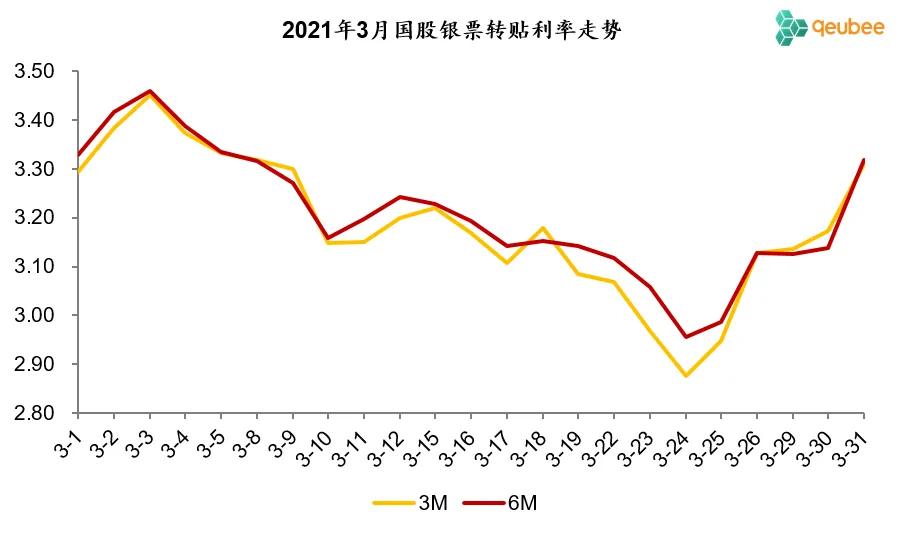
(来源:票风笔记) 历史也许不会重复它的事实,但会重复它的规律,通过对历史票据利率走势的分析有助于推测未来的走势。今天带大家来回顾一 下过去五年3月份票据利率走势,3月份票据利率走势以震荡居多,最近两年震荡幅度明显收窄,其中短期票据利率明显上行。 四、2023年 一、2021年 2021年3月,票据利率月初短暂上行后便开始持续下行,月末翘尾反弹。6个月期限国股银票转贴现利率在2.96%-3.49%之间,波 动幅度50BP,月内降幅1BP,月初月末票据利率基本持平。3月首个工作日票据利率平稳开局,多数时间6个月期限票据利率略高 于3个月期限票据。 数据来源: qeubee 三、2022年 2022年3月,票据利率月初下行,月中震荡,月末翘尾回落。6个月期限国股银票转贴现利率在1.80%-2.49%之间,波动幅度 69BP,月内降幅1BP,月初月末票据利率基本持平。由于2月末票据利率大幅跳水,3月首个工作日票据利率大幅高开125BP。多 数时间6个月期限票据利率略高于3个月期限票据。 2023年3月,票据利率呈震荡上行走势。6个月期限国股银票转贴现利率在2.38%-2.59%之间,波动幅度21BP,月内升幅20B ...

票据月评(12月):票据利率震荡上行,月末跳水回弹
Xin Lang Cai Jing· 2026-01-04 11:30
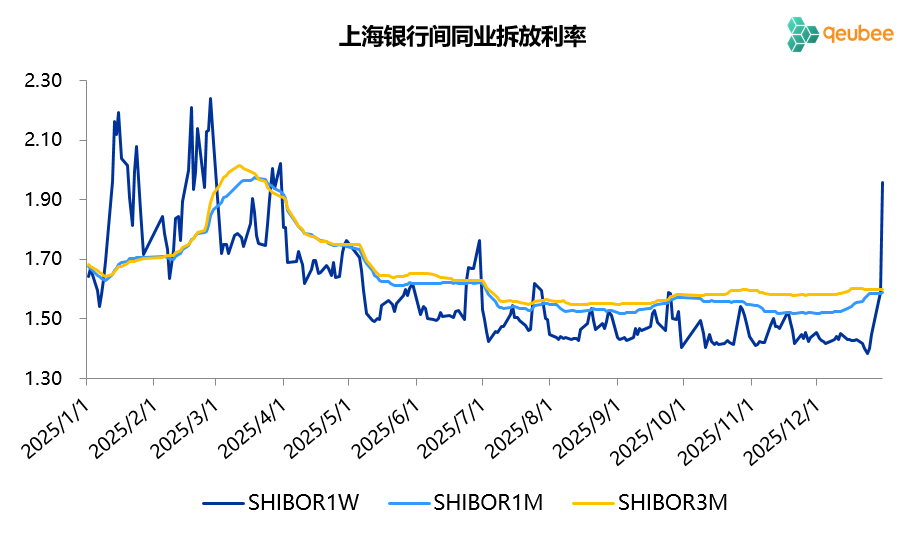
Group 1: Funding Situation - In December 2025, the central bank conducted reverse repurchase operations amounting to 37,361 billion yuan, with a buyout reverse repurchase of 16,000 billion yuan, MLF injection of 4,000 billion yuan, and issuance of treasury cash deposits of 1,500 billion yuan [1][13] - The total funds returned included 34,542 billion yuan from reverse repurchase maturity, 14,000 billion yuan from buyout reverse repurchase maturity, 3,000 billion yuan from MLF maturity, and 1,200 billion yuan from treasury cash deposits maturity, resulting in a net injection of 6,119 billion yuan [1][13] - The funding environment remained loose throughout the year, but was tight during the year-end period, with the 7-day SHIBOR rate mostly around 1.40%, surging to 1.96% at year-end [1][13] Group 2: Bill Market Conditions - In December 2025, the bill market acceptance amount was 4.28 trillion yuan, a year-on-year decrease of 1.7%, while the discount amount was 3.25 trillion yuan, down 5.0% year-on-year [3][16] - The acceptance growth rate was higher than the discount growth rate, with a discount acceptance ratio of 76%, down 2 percentage points from November and lower than the 79% of the previous year, indicating an overall supply-demand imbalance in the bill market [3][16] Group 3: Bill Interest Rates - Bill interest rates showed a volatile upward trend in December 2025, with the 6-month national stock bank bill discount rate starting at around 0.75%, rising to 0.93% mid-month, then dropping to a low of 0.85%, and finally rebounding to 0.95% at the end of the month [6][19] - The month-end saw significant fluctuations in bill rates due to short-term demand shocks and limited direct bill sources [6][19] Group 4: Yield Comparisons of Related Assets - In December 2025, the yield on 6-month government bonds decreased by 10 basis points, while the yield on interbank certificates of deposit remained stable, and the yield on bill discounts increased by 22 basis points [8][21] - The bill interest rates continued to run below government bond yields, with the month-end yield spread between bills and government bonds at -38 basis points, and between bills and interbank certificates of deposit at -66 basis points [8][21] Group 5: Macroeconomic and Policy Analysis - Economic conditions improved in December 2025, with the manufacturing PMI at 50.1%, up 0.9 percentage points from the previous month, and the non-manufacturing PMI at 50.2%, up 0.7 percentage points, both returning to the expansion zone [11][23] - The Central Economic Work Conference held on December 10-11 outlined the economic work for 2026, emphasizing a stable yet progressive policy approach, with a focus on maintaining liquidity and supporting key sectors such as domestic demand and technological innovation [11][23] Group 6: Bill Market Outlook - The bill market in December 2025 saw a strong supply of primary market bills, despite rising bill interest rates, with acceptance volumes remaining high [24] - Looking ahead to January 2026, social financing and bill supply are expected to be key factors influencing future bill interest rate movements, with anticipated pressures on bill rates due to expected credit tightening [24][25]