64K位DRAM

Search documents
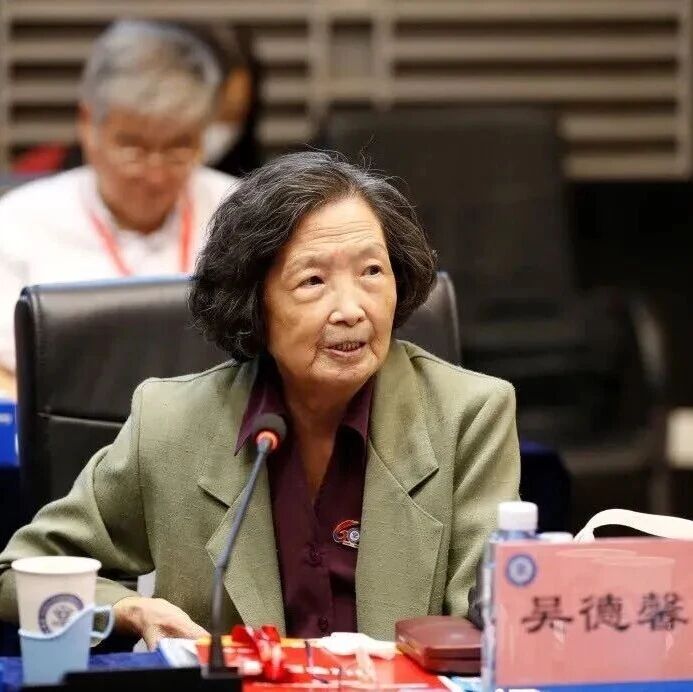
中国半导体重要开拓者——追忆吴德馨先生
半导体行业观察· 2026-03-29 01:46
Core Viewpoint - The article commemorates the contributions of Wu Dexin, a prominent figure in China's semiconductor industry, highlighting her dedication to the development of semiconductor technology and her lifelong commitment to serving the nation [2][21]. Group 1: Early Life and Career - Wu Dexin was born in 1936 in Hebei Province and graduated from Tsinghua University in 1961, subsequently joining the Semiconductor Research Institute [3]. - The establishment of the Semiconductor Research Institute in 1960 was part of China's strategic plan to enhance semiconductor technology, which Wu Dexin actively contributed to from its inception [3]. Group 2: Key Achievements - From 1962 to 1964, under the guidance of Wang Shouwu, Wu Dexin led a project on planar high-speed switching transistors, achieving a switching speed that matched international standards, which significantly benefited China's technological capabilities [5]. - In 1965, she became the leader of the device research group and later developed digital integrated circuits and high-impedance operational amplifiers, laying the groundwork for China's early digital and analog integrated circuit development [5]. Group 3: Contributions to Integrated Circuits - In 1978, Wu Dexin played a crucial role in the development of the N-MOS 4096-bit dynamic random-access memory (DRAM), introducing advanced techniques that improved yield rates significantly [11]. - Her work on the 16K and 64K DRAM technologies further advanced China's memory technology, earning her accolades including the Chinese Academy of Sciences' Science and Technology Achievement Award [12]. Group 4: Leadership and Legacy - In 1986, Wu Dexin was appointed as the deputy director of the newly established Microelectronics Center, continuing her leadership in semiconductor research and development [15]. - Throughout her career, she remained committed to supporting the Semiconductor Research Institute, contributing to various projects and mentoring young scientists, thus leaving a lasting impact on the field [15][21].