903型综合补给舰

Search documents
视频丨组团出击、战力强悍 两栖攻击舰编队硬核盘点
Xin Lang Cai Jing· 2026-01-17 00:13
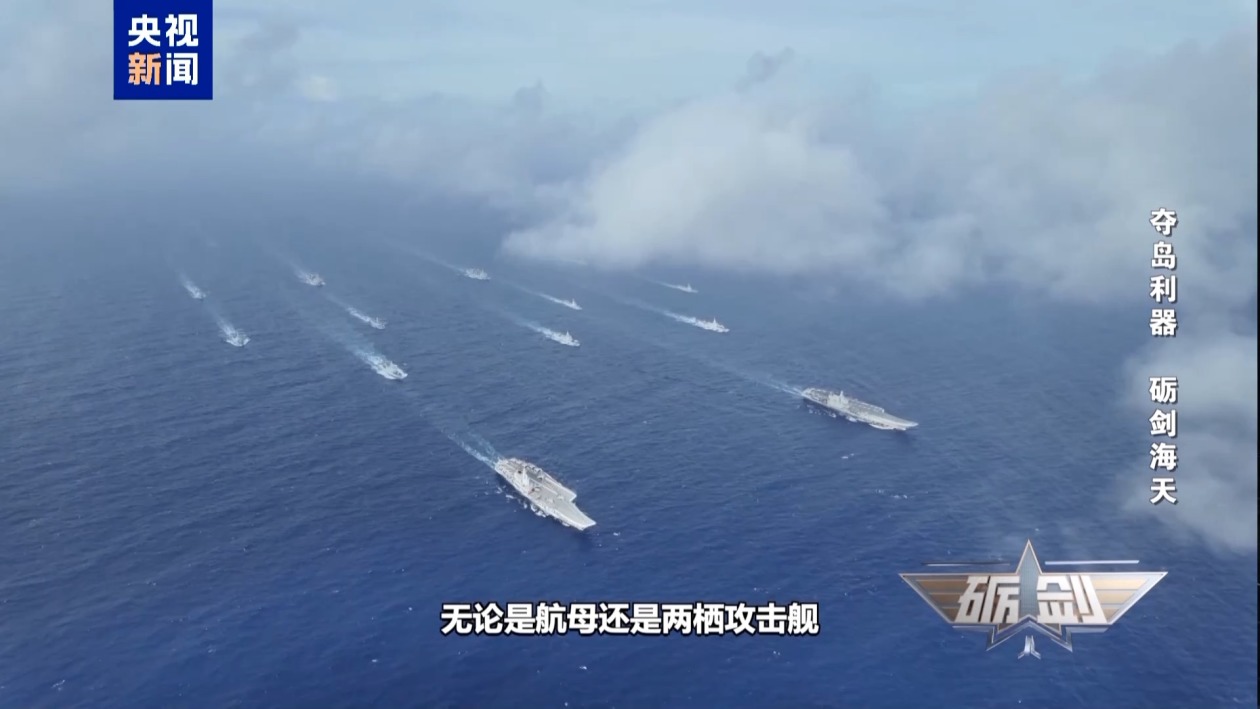
Group 1 - The core viewpoint of the article highlights the debut of the new amphibious assault ship formation, specifically the 075-class amphibious assault ship, during the "Justice Mission-2025" military exercise, marking its first appearance in exercises around Taiwan [1] - The amphibious assault ship formation is identified as the core force for modern naval overseas landing operations, serving as a mobile command center and a three-dimensional delivery equipment library [1] - The formation includes destroyers and frigates that create a multi-layered air defense and anti-submarine barrier, while the comprehensive supply ship acts as a mobile logistics hub, supporting long-term overseas deployment [1] Group 2 - The 055-class guided missile destroyer is noted as China's first self-designed destroyer with a displacement of over 10,000 tons, featuring strong information perception, air defense, and anti-missile capabilities [2] - The 903-class comprehensive supply ship is described as a "floating warehouse," capable of consolidating various supply materials on a single vessel, thus reducing supply time and exposure to enemy fire [3] - The 054A-class frigate is characterized as a versatile vessel equipped for anti-submarine tasks, featuring a multi-barrel launcher for anti-submarine depth charges and the ability to deploy various munitions [4] Group 3 - Military experts emphasize that the configuration surrounding aircraft carriers and amphibious assault ships is similar, with variations in the number of vessels based on the intensity of military operations [6] - The amphibious assault ship is not intended to compete for air or sea dominance but is designed to deploy large numbers of marines and equipment onto land or islands, highlighting its role within a broader operational system [8] - The article discusses the advanced technical performance and formidable combat capabilities of China's amphibious assault ships, which can execute three types of landing operations: vertical, over-the-horizon, and parallel landings [14]

日本防卫省:中国海军辽宁舰、山东舰航母编队首次同时在日本附近的太平洋海域活动
Guan Cha Zhe Wang· 2025-06-10 03:46
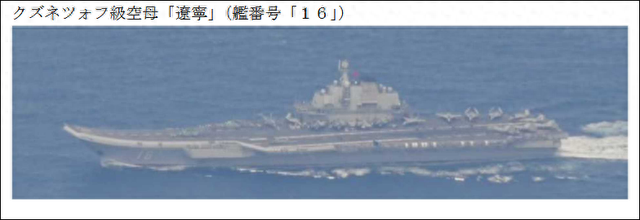
Core Viewpoint - The simultaneous presence of two Chinese aircraft carriers, Liaoning and Shandong, in the Western Pacific marks a significant development in China's naval capabilities, showcasing a new level of operational readiness and strategic reach [1][4][6]. Summary by Sections Naval Operations - On June 7, Japan's Self-Defense Forces confirmed the presence of the Liaoning carrier group, which included the 052D destroyer Tangshan, the 055 destroyer Wuxi, and the 901 supply ship Hohhot, approximately 300 kilometers southwest of Minami-Torishima [1]. - The Liaoning conducted flight operations for carrier-based fighter jets and helicopters on June 8, and had previously performed similar operations in the East China Sea and the Pacific from May 25 to May 30 [1][4]. - On the same day, the Shandong carrier group, which included the 055 destroyer Zunyi and two 054A frigates, was confirmed to be operating approximately 550 kilometers southeast of Miyako Island [4]. Strategic Implications - This event is historically significant as it represents the first time both Chinese aircraft carriers have operated together outside the First Island Chain, indicating a shift in China's naval strategy towards more assertive operations in the Pacific [6][9]. - The dual carrier deployment allows for enhanced operational flexibility, enabling coordinated strikes and increased air sorties, thereby complicating the response for foreign militaries [6][7]. International Reactions - Japanese media highlighted the strategic implications of the Liaoning's operations near Japan, interpreting it as a breakthrough into the Second Island Chain [9]. - Reports from international outlets, including Reuters, noted that this development reflects China's growing naval capabilities and its intent to project power further into the Pacific [9]. - The U.S. military has not publicly responded to the activities of the Liaoning, with current U.S. carrier operations positioned away from the area [11].