ADL(代理定义语言)

Search documents
Python只是前戏,JVM才是正餐,Eclipse开源新方案,在K8s上不换栈搞定Agent
3 6 Ke· 2025-11-03 08:51
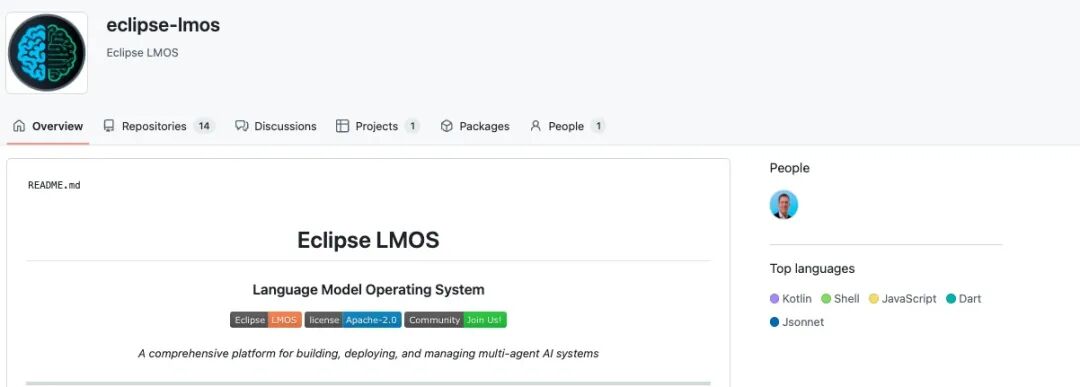
Core Insights - The Eclipse Foundation has launched the Agent Definition Language (ADL) within its open-source platform Eclipse LMOS, enabling users to define AI behaviors without coding [1] - ADL is positioned as a core component of the LMOS platform, which aims to reconstruct the development and operational chain of enterprise-level AI agents in a unified and open manner, challenging proprietary platforms and Python-centric enterprise AI tech stacks [1][2] - The LMOS project follows a "land first, open source later" approach, initially developed from Deutsche Telekom's production-level practices in traditional cloud-native architecture [1][4] Technical Convergence - The LMOS project aims to leverage existing skills in the JVM ecosystem, allowing enterprises to integrate AI capabilities without discarding their current technology stack [2][4] - The platform is built on Kubernetes and Istio, deploying agents as microservices and enhancing them to first-class citizens through custom resources [5][6] - Eclipse LMOS provides a streamlined development workflow, allowing developers to deploy agent images quickly and enabling operational teams to monitor and release updates using familiar tools [6] Business Outcomes - The platform has supported multiple AI applications at Deutsche Telekom, including the award-winning customer service bot Frag Magenta, which processes approximately 4.5 million conversations monthly and has reduced human handovers by 38% [7][8] - The initial deployment of the first agent in late 2023 has expanded from 3-4 countries to 10 across Europe, showcasing the scalability of the system [7][8] Dual Strategy - Eclipse has adopted a dual strategy for pushing AI agents into production, with one line focusing on the LMOS platform and the other on ADL, which simplifies the process of writing agents [10][13] - ADL allows business and engineering teams to collaboratively define agent behaviors, enabling rapid testing and iteration without waiting for engineering work orders [13] Integration and Control - The LMOS platform consists of three independent yet collaborative modules: ADL, the ARC Agent Framework, and the LMOS platform layer, facilitating agent lifecycle management and observability [13][14] - The LMOS protocol is designed to enable agents to discover and negotiate communication protocols, inspired by established standards and decentralized technologies [16] Conclusion - Eclipse LMOS aims to bridge the gap between agile, open-source AI development and the robust, controlled environments of JVM-based enterprise systems, allowing organizations to build scalable and transparent agent systems without overhauling their existing infrastructure [18]