
智能体计算

Search documents
黄仁勋:英伟达已经从GPU公司演变为“AI工厂”
阿尔法工场研究院· 2026-03-25 02:12
Core Insights - NVIDIA has evolved from a GPU company to an AI factory, emphasizing the importance of decoupled inference technology and AI factory architecture [2][3] - The demand for AI computing is expected to grow exponentially, with calculations potentially increasing by over ten thousand times in two years, driving the need for robust AI infrastructure [2][3] - NVIDIA's CEO highlights the importance of defining vision and strategy, focusing on challenging areas that leverage the company's core strengths [2] AI Factory Operations - The AI factory operating system "Dynamo" was launched approximately two and a half years ago, seen as the next industrial revolution's operating system, with decoupled inference as its core technology [2] - NVIDIA plans to integrate Grok chips to optimize workload distribution across various components, including GPUs, CPUs, switches, and network processors [2] Market Analysis - The physical AI sector is projected to be a $50 trillion industry, with NVIDIA already generating nearly $10 billion in annual revenue from this rapidly growing business [3] - Digital biology is anticipated to experience a "ChatGPT moment," leading to significant transformations in the healthcare industry in the coming years [3] Impact of AI Agents and Open Source Models - Open source AI projects like "OpenClaw" are redefining computing and are seen as the blueprint for future personal AI computers, with agents becoming crucial for achieving work outcomes [4] - The enterprise software industry is expected to see a hundredfold growth due to the widespread use of AI agents [4] Autonomous Driving Strategy - NVIDIA's strategy in the autonomous driving sector focuses on providing a complete technology stack, including training, simulation, and onboard computing, without manufacturing vehicles [4] Competitive Advantage - NVIDIA is confident in its unique position as the only company collaborating with all global AI firms to provide end-to-end solutions deployable across any cloud and edge environment, with increasing market share [4] Robotics Industry Outlook - High-functionality robotic products are predicted to become mainstream within 3 to 5 years, with China being a key player in the global robotics supply chain [4] AI and Employment Perspectives - While some jobs may be replaced by AI, it is believed that more new jobs will be created, emphasizing the importance of becoming proficient in using AI and maintaining skills in science, mathematics, and language [5]



Agent Native的infra增长潜力有多大?
3 6 Ke· 2026-02-26 23:26
Core Insights - The article discusses the emerging trend of AI Agents, which are expected to surpass ChatBots as the primary application form in various fields due to their ability to enhance productivity significantly. Group 1: AI Agents vs. ChatBots - AI Agents can complete entire workflows and deliver results directly, unlike ChatBots, which assist with specific tasks within a workflow [1] - Agents can work in parallel, allowing experienced professionals to collaborate with multiple Agents simultaneously, greatly increasing efficiency [1] - The infrastructure for Agents is still in its infancy, lacking the necessary technology paradigm to support their operational needs [1] Group 2: Daytona's Innovations - Daytona has developed a new type of "composable computer" or "AI sandbox" that allows Agents to run code and manage computer operations with full control over the underlying environment [2] - Daytona recently secured $24 million in Series A funding, led by FirstMark, with participation from several other investors [2] - The founding team of Daytona has a history of creating developer tools and has pivoted from serving human developers to focusing on AI Agents [6][4] Group 3: Technical Specifications - Daytona's infrastructure is designed for speed and concurrency, achieving cold starts in under 60 milliseconds [8] - The system is built entirely in-house, tailored specifically for AI Agents, and does not rely on existing orchestration systems like Kubernetes [9] - Daytona's technology includes strict security boundaries, resource management, and observability, essential for the effective operation of AI Agents [9] Group 4: Market Potential and Future Outlook - The trend of Agentic AI is becoming increasingly prominent, with predictions that Agents will become a significant part of the workforce [17] - The market for Agent-based computing is expected to surpass human-centered computing markets due to the ability of one person to manage multiple Agents [18] - There is a substantial opportunity for entrepreneurs in this space, as the market potential is vast and competition is relatively low [19][20]

Python只是前戏,JVM才是正餐,Eclipse开源新方案,在K8s上不换栈搞定Agent
3 6 Ke· 2025-11-03 08:51
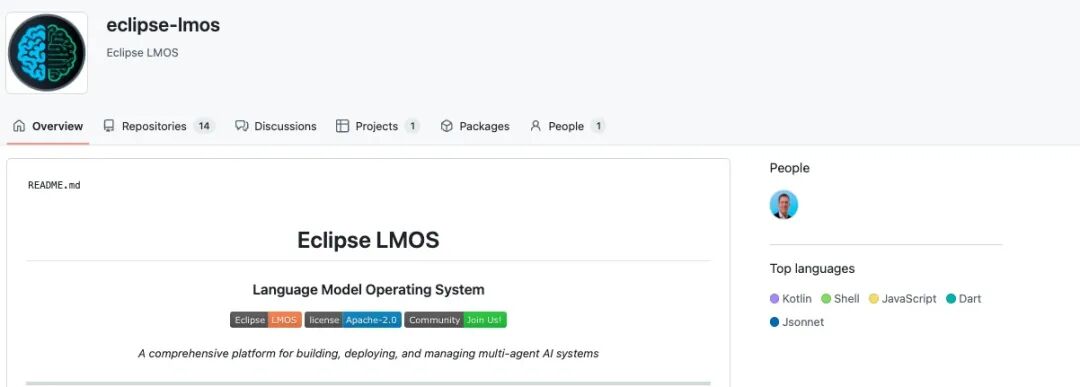
Core Insights - The Eclipse Foundation has launched the Agent Definition Language (ADL) within its open-source platform Eclipse LMOS, enabling users to define AI behaviors without coding [1] - ADL is positioned as a core component of the LMOS platform, which aims to reconstruct the development and operational chain of enterprise-level AI agents in a unified and open manner, challenging proprietary platforms and Python-centric enterprise AI tech stacks [1][2] - The LMOS project follows a "land first, open source later" approach, initially developed from Deutsche Telekom's production-level practices in traditional cloud-native architecture [1][4] Technical Convergence - The LMOS project aims to leverage existing skills in the JVM ecosystem, allowing enterprises to integrate AI capabilities without discarding their current technology stack [2][4] - The platform is built on Kubernetes and Istio, deploying agents as microservices and enhancing them to first-class citizens through custom resources [5][6] - Eclipse LMOS provides a streamlined development workflow, allowing developers to deploy agent images quickly and enabling operational teams to monitor and release updates using familiar tools [6] Business Outcomes - The platform has supported multiple AI applications at Deutsche Telekom, including the award-winning customer service bot Frag Magenta, which processes approximately 4.5 million conversations monthly and has reduced human handovers by 38% [7][8] - The initial deployment of the first agent in late 2023 has expanded from 3-4 countries to 10 across Europe, showcasing the scalability of the system [7][8] Dual Strategy - Eclipse has adopted a dual strategy for pushing AI agents into production, with one line focusing on the LMOS platform and the other on ADL, which simplifies the process of writing agents [10][13] - ADL allows business and engineering teams to collaboratively define agent behaviors, enabling rapid testing and iteration without waiting for engineering work orders [13] Integration and Control - The LMOS platform consists of three independent yet collaborative modules: ADL, the ARC Agent Framework, and the LMOS platform layer, facilitating agent lifecycle management and observability [13][14] - The LMOS protocol is designed to enable agents to discover and negotiate communication protocols, inspired by established standards and decentralized technologies [16] Conclusion - Eclipse LMOS aims to bridge the gap between agile, open-source AI development and the robust, controlled environments of JVM-based enterprise systems, allowing organizations to build scalable and transparent agent systems without overhauling their existing infrastructure [18]
大摩为微软(MSFT.US)“排雷”:三大增长担忧不足为虑 重申“增持”评级
智通财经网· 2025-09-26 13:38
Core Viewpoint - Morgan Stanley has upgraded Microsoft (MSFT.US) to its top pick in the software sector, raising the target price from $582 to $625 while maintaining an "overweight" rating [1][2]. Group 1: Microsoft and OpenAI Relationship - Concerns regarding Microsoft's relationship with OpenAI have pressured its stock price, but Morgan Stanley believes Microsoft has found ways to alleviate these pressures and that growth drivers are increasing [1]. - The recent $300 billion partnership between OpenAI and Oracle (ORCL.US) is viewed as a positive signal for Microsoft, indicating that Microsoft will likely prioritize its GPU resources for enterprise clients [1][2]. Group 2: Azure Cloud Business - Despite worries that OpenAI's shift to other partners may slow Azure's growth, Morgan Stanley asserts that Azure's business scope extends beyond generative AI [1]. - The analysis indicates that Azure AI business revenue has significant upside potential, based on capital expenditures related to AI projects [2]. Group 3: Office Productivity Applications - Recent surveys show that Microsoft's office productivity applications maintain a "sustainable" advantage in user perception and market share, with proven capabilities in product optimization [2]. - Overall, the data and survey results support the view that Microsoft's growth is sustainable, with double-digit growth rates, cost control, stock buyback plans, and dividend yields contributing to a high sustainable total return rate that is not fully reflected in the current stock price [2].
