
AI辅助乳腺筛查

Search documents
最新研究显示,AI辅助乳腺筛查可降低“间期癌”发病率
Xin Lang Cai Jing· 2026-02-05 16:09
Core Insights - A study involving Lund University indicates that the introduction of AI-assisted imaging in breast cancer screening enhances detection capabilities and reduces the incidence of interval cancers, which are diagnosed between scheduled screenings [1][5]. Group 1: Study Overview - The research recruited approximately 100,000 women aged 40 to 74 in Sweden, randomly divided into two groups for routine mammography [5]. - The control group utilized traditional methods with radiologists interpreting the images, while the AI-assisted group employed AI for image analysis, followed by a review from doctors [5]. - The study lasted about two years, revealing that AI-assisted screening improved efficiency and detection performance, reducing the workload for doctors by 44% and increasing breast cancer detection rates by 29% [5]. Group 2: Interval Cancer Findings - The AI-assisted group showed a 12% reduction in interval cancer cases compared to the control group, indicating a significant impact on detecting more aggressive cancer types [7]. - The study suggests that AI not only enhances screening sensitivity but also does not increase the probability of false positives, supporting its safety, accuracy, and efficiency in clinical applications [7]. Group 3: Clinical Implications - AI does not fully replace the role of radiologists, as the final decision-making authority remains with the doctors [9]. - The study was conducted in Sweden, where the medical system is equipped with specialized radiologists, raising questions about the applicability of AI in breast cancer screening across different countries and regions with varying levels of expertise and infrastructure [11].

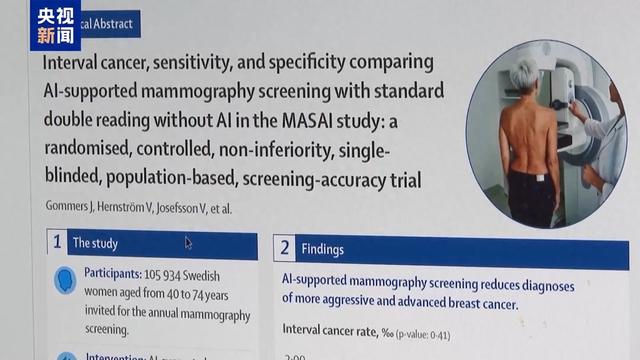
AI辅助乳腺筛查可显著降低“间期癌”风险
Xin Hua She· 2026-02-03 07:09
Core Insights - The introduction of AI-assisted screening in breast cancer detection significantly improves screening efficacy and reduces the incidence of interval cancers, which are diagnosed between scheduled screenings [1][2] Group 1: Research Findings - The study involved approximately 106,000 Swedish women aged 40 to 74, with a follow-up period of over two years [1] - AI-assisted screening reduced the workload for radiologists by 44% and increased breast cancer detection rates by 29% compared to traditional methods [1] - The incidence of interval cancers in the AI-assisted group decreased by 12% compared to the control group, with a lower proportion of more severe cases among the remaining interval cancers [1] Group 2: Clinical Implications - AI assistance not only enhances the sensitivity of screenings, making it less likely to miss cancers, but it also does not increase the rate of false positives, which can lead to unnecessary anxiety and medical costs [2] - The results support the safety, accuracy, and efficiency of AI-assisted breast screening in clinical applications, with the technology already being implemented in some regions of Sweden and other parts of Europe [2]