
AI Smart Glasses

Search documents
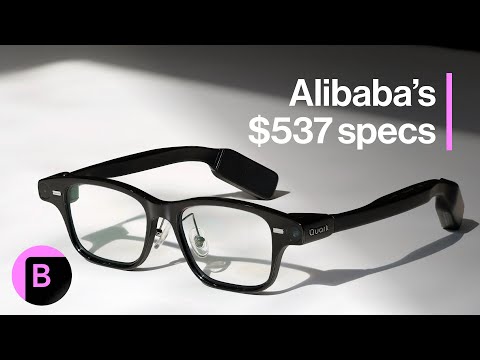
Alibaba Unveils AI Smart Glasses: S1 Model Starts at $537
Bloomberg Television· 2025-11-27 10:35
Market Trend - Alibaba is venturing into consumer hardware with smart glasses [1] - Smart glasses are gaining popularity in US and European markets, indicating a market opportunity in China [2] Product & Pricing - Alibaba's smart glasses are estimated to be priced around $545, cheaper than metal glasses costing about $800 [3] - The cheaper price point may offer comparable or even better features, similar to the smartphone market [3] Technology & Comparison - The technology for smart glasses is readily available and can be delivered at a good price [2] - Alibaba's glasses allow users to act normally with overlaid information, differing from Apple Vision [4]



中国硬件:花旗 2025 年TMT新看-捕捉蓬勃发展的人工智能智能眼镜的强劲增长-China Hardware_ What‘s New from Citi‘s 2025 China TMT Day_ Capturing the Strong Growth of Blooming AI Smart Glass
花旗· 2025-09-03 13:23
Investment Rating - The investment rating for Goertek is "Buy" with a target price of Rmb34 based on a 26.3x 2026E P/E [9] - The investment rating for Sunny Optical Technology Group is "Buy" with a target price of HK$103 based on a 23x 2026E P/E [11] Core Insights - The market for smart glasses is expected to grow from single-digit millions of units in the next 2-3 years to over ten million units in the long term, driven by the annual shipment of over a billion pairs of eyewear [3] - Key challenges in the development of smart glasses include the need for lightweight and power-efficient chipsets, battery life, and eyewear design, which are still in the development phase [4][7] - The distribution channels for smart glasses include consumer electronics stores, optical shops, and certain business parties, with potential clients including insurance companies and telecom operators [8] Summary by Sections Market Expectations - Mr. Cheung believes in a promising long-term outlook for smart glasses despite differing market expectations [1] - The supply chain is anticipated to shift towards dedicated designs for smart glasses as volumes increase significantly [1] Development Challenges - Semiconductor technology is a bottleneck due to the need for lightweight and power-efficient designs, with current chipsets not being optimal for smart glasses [4] - Battery life remains a significant challenge, especially for functionalities like video encoding and wireless streaming [4][7] Distribution and Target Markets - Smart glasses are distributed through various channels, including consumer electronics and optical stores, with insurance companies potentially subsidizing eyewear as a healthcare benefit [8] - The blind community is identified as a potential market, with SDKs provided for software development tailored to their needs [8]
