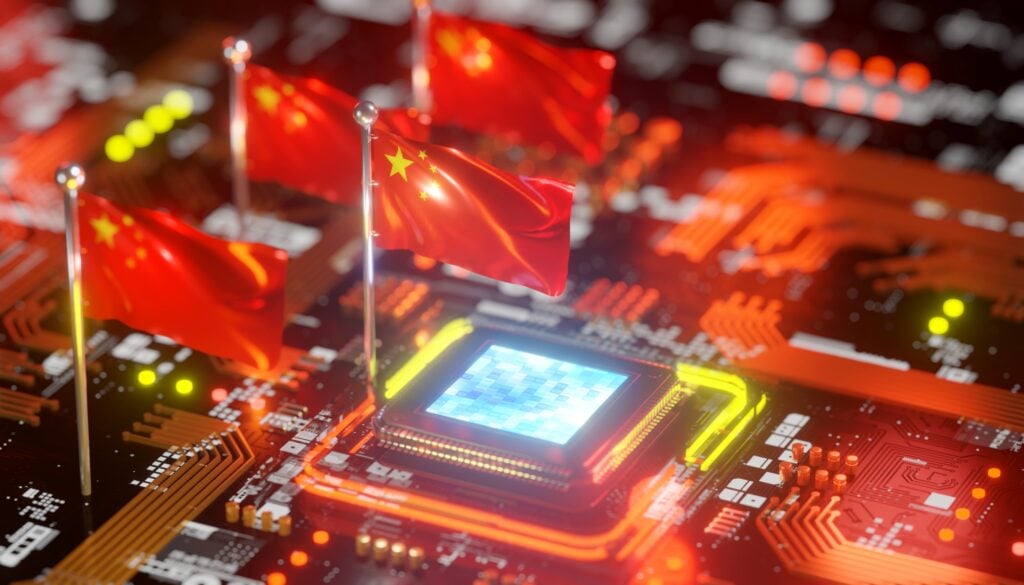
AI training and inference GPUs

Search documents
'China's Nvidia' Moore Threads Shares Surge Over 500% In Blockbuster Shanghai IPO - NVIDIA (NASDAQ:NVDA)
Benzinga· 2025-12-05 07:56
Core Insights - Moore Threads Technology, referred to as China's Nvidia, experienced a significant share price increase of up to 502% upon its debut on the STAR Market in Shanghai [1][2][9] - The IPO was oversubscribed by more than 4,000 times, indicating strong market interest despite a declining broader market [2][10] - The company raised 8 billion yuan ($1.13 billion), marking it as the second-largest IPO in mainland China for the year [3][11] Company Performance - Moore Threads' shares opened at 650 yuan ($91.92), a 468% increase from the IPO price of 114.28 yuan ($16.16) [2][10] - The stock reached a peak of 688 yuan during the trading session [2][10] - The company is not yet profitable, but its revenue is projected to grow over threefold in 2024 according to its prospectus [3][11] Use of IPO Proceeds - The funds raised from the IPO will primarily be allocated to accelerate core research and development, focusing on next-generation AI training and inference GPUs [3][11] - Additional funding will be directed towards enhancing working capital [3][11] Industry Context - The IPO reflects the growing trend of Chinese companies developing their own AI processors, aligning with government efforts to reduce reliance on U.S. chip manufacturers like Nvidia [4][12] - Major competitors in this space include Huawei and Cambricon, with the latter's shares also experiencing significant growth [4][13] Regulatory Environment - Moore Threads received approval from the China Securities Regulatory Commission (CSRC) in just 88 days, significantly faster than the average of 470 days for the STAR Market [5][14] - The company was founded by Zhang Jianzhong, a former Nvidia executive, who faced challenges due to U.S. sanctions limiting access to advanced chip manufacturing [6][15] - The U.S. has imposed strict regulations on chip exports to China, which has affected Nvidia's market share in the region [6][16]