
Acura RSX

Search documents
Sony and Honda scrapped their next EV before launch. You can still drive it on PlayStation.
Business Insider· 2026-03-25 17:48
Core Insights - The Afeela electric vehicle, developed by Honda and Sony's joint venture, has been canceled, marking a significant shift in Honda's EV strategy in the US market [1][2][3] Group 1: Honda's EV Strategy - Honda announced a $15.7 billion write-down while canceling several upcoming EV models, leaving only the Prologue in the US market [2] - The cancellation of Afeela is part of Honda's broader reassessment of its EV plans, with a potential shift towards a hybrid-heavy lineup [4][7] - Analysts suggest that Honda may revisit its EV plans and consider producing a lower-cost model by the end of the decade [9] Group 2: Industry Context - The cancellation of Afeela is seen as unusual, especially so close to its expected launch, highlighting a growing divide in how automakers approach the US EV market [6][7] - In contrast to Honda, Toyota has accelerated its EV plans, indicating differing strategies among traditional automakers [7] - The future role of Sony Honda Mobility in Honda's revised strategy remains unclear, as discussions continue between the parent companies [10]



Honda Sony Mobility cancels planned EVs
Yahoo Finance· 2026-03-25 17:30
Group 1 - The joint venture Sony Honda Mobility of America planned to launch its first EV model, the Afeela 1, with a starting price of $89,990 and production set to begin in late 2026 [3][4] - The CEO of Sony Honda Mobility expressed confidence in the venture's focus on high-tech, software-defined vehicles, aiming for profitability before the end of the decade [4] - Honda announced the cancellation of three other EV models for the U.S. market, following a reassessment of its electrification strategy due to significant financial losses [5][6] Group 2 - The joint venture has now canceled the launch of the Afeela 1 sedan and a second EV model, raising questions about its future amid Honda's reevaluation of its electrification strategy [7] - Honda's fiscal-year forecasts were revised after reporting a $1.7 billion loss in the first three quarters, leading to a reevaluation of its joint venture with Sony [6][7] - The reassessment of Honda's electrification strategy has fundamentally altered the assumptions regarding the technologies and assets planned for the joint venture [7]
Honda cancels 3 planned EV models for US
Fox Business· 2026-03-16 18:55
Core Viewpoint - Honda announced a significant $15.7 billion writedown of its electric vehicle (EV) business, indicating a strategic shift in response to weak consumer demand for EVs in the U.S. market [1][3]. Group 1: Business Strategy and Restructuring - Honda will restructure its EV business and cancel three planned battery-powered EV models intended for the U.S. market, including the Saloon sedan, Honda 0 SUV, and Acura RSX [1][6]. - The company plans to pivot its focus in the U.S. towards hybrid vehicles and aims to enhance its lineup and cost competitiveness in India [6]. Group 2: Market Demand and Competition - Demand for EVs has decreased as consumers show a preference for hybrid vehicles, compounded by the reduction of tax credits that previously incentivized EV purchases [2]. - Honda has struggled to compete with newer companies in China that focus on shorter development cycles and advanced software technologies, leading to a decline in its competitiveness [7][8]. Group 3: Financial Impact - The writedown and restructuring efforts may result in Honda reporting its first annual loss in nearly 70 years, with cash outflows primarily due to compensating suppliers [3]. - Battery-powered cars represented only 2.5% of Honda's global sales last year, translating to approximately 84,000 vehicles sold out of 3.4 million total sales [8].
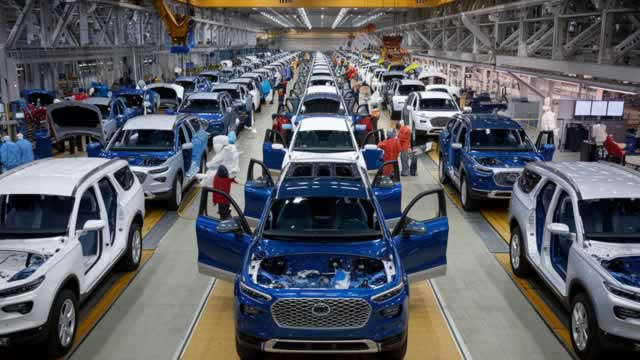
Honda Projects First Loss Since 1957 - $15.7 Billion - Thanks To EV Strategy Fail
ZeroHedge· 2026-03-14 21:30
Core Viewpoint - Honda Motor Co., Ltd. is reassessing its electric vehicle (EV) strategy and plans to cancel three EV models for the North American market, which could result in losses of approximately $15.7 billion for the fiscal year ending March 31 [1][3]. Group 1: Financial Impact - This will mark the first annual loss for Honda since its shares were listed on the Tokyo Stock Exchange in 1957 [3]. - Honda reported a nearly 50% year-over-year decline in operating profit for the quarter ended December 31, 2025, primarily due to heavy losses in its EV segment and the impact of tariff policies [5]. - Shares of Honda fell nearly 6% in intraday trading and have decreased over 22% in the past six months [9]. Group 2: Strategic Shift - Honda is shifting its manufacturing plans towards electrification in response to major policy changes in the U.S. aimed at promoting EV adoption, particularly in smaller passenger vehicles [3][4]. - The company has faced declining profitability in its EV business due to recent changes in the EV market environment [5][7]. - Honda will cancel the development and market launch of the Honda 0 sport utility vehicle, the Honda 0 Saloon, and the Acura RSX [8]. Group 3: Market Challenges - Economic pressures from new EV manufacturers in China and other Asian markets have affected Honda, as these competitors offer software-laden vehicles that align better with consumer demand [6]. - The expiration of a $7,500 federal tax credit for new electric vehicles on September 30, 2025, has significantly reduced consumer demand for EVs in the U.S. [6]. - The expansion of the EV market in the U.S. has slowed due to various factors, including easing fossil fuel regulations and revisions to EV incentives [7].
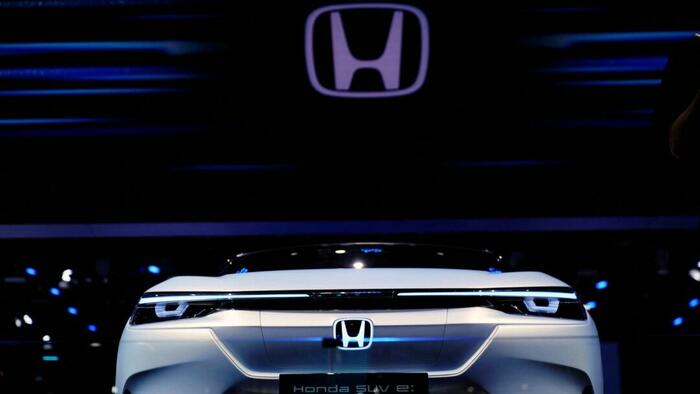
Honda's $15.7 billion EV writedown is painful, but China challenges loom down the road
Reuters· 2026-03-13 09:52
Core Viewpoint - Honda's $15.7 billion writedown in its electric vehicle business signifies a major strategic reversal and highlights upcoming challenges in China, where the company faces a growing technological gap [1] Group 1: Financial Impact - Honda announced a restructuring of its EV business, primarily in the U.S., leading to a writedown of approximately 2.5 trillion yen ($15.7 billion) [1] - The company is expected to report its first annual loss in nearly 70 years as a listed entity [1] - Cash outflows could reach up to 1.7 trillion yen, primarily due to supplier compensation costs [1] Group 2: Product Strategy Changes - Honda will cancel three planned battery-powered models in the U.S. due to a significant drop in demand for electric vehicles following the end of related subsidies [1] - The cancelled models include the Saloon, Honda 0 SUV, and Acura RSX, which were expected to be launched in North America [1] Group 3: Market Performance and Competitiveness - In China, Honda's battery-powered vehicle sales were only 17,000 units last year, representing just 2.5% of its total sales in the country [1] - The company acknowledged its struggle to compete with newer Chinese EV manufacturers, which have shorter development cycles and advanced software capabilities [1] - Concerns have been raised regarding Honda's long-term technological competitiveness, particularly in the context of its joint venture with Sony Group, Sony Honda Mobility [1]
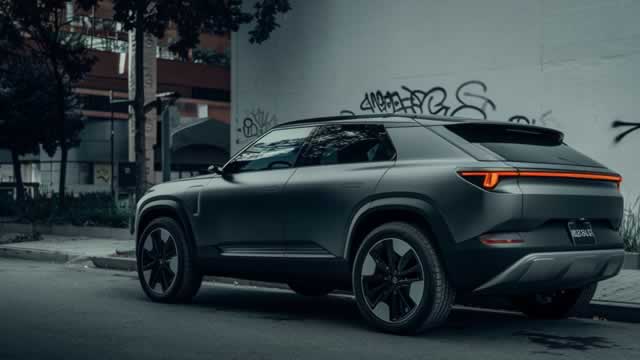
本田上市以来首亏,EV战略被迫调整
日经中文网· 2026-03-13 03:08
Core Viewpoint - Honda has decided to halt the development of its flagship EV model "0 Saloon" and adjust its EV strategy due to significant anticipated losses, marking a shift from its aggressive expansion plans in the electric vehicle sector [2][4][6]. Group 1: Financial Impact - Honda expects to incur losses of up to 2.5 trillion yen by the end of the fiscal year 2026, with the highest loss of 1.3 trillion yen projected for the fiscal year 2025 [6][8]. - The company has revised its financial outlook, predicting a maximum loss of 690 billion yen for the fiscal year 2025, a stark contrast to the previous year's profit of 835.8 billion yen, marking its first loss since going public [4][6]. Group 2: Strategic Adjustments - Honda will cease the development of certain key models within its "0 series," including the "Saloon" sedan and the "Acura RSX" SUV, which were central to its global EV strategy [6][7]. - The company is shifting focus towards hybrid vehicles, aiming to increase hybrid sales to 2.2 million units by 2030, which is 2.2 times the target set for the fiscal year 2025 [9]. Group 3: Market Challenges - Honda's operations in China are under pressure, with the company anticipating losses of up to 150 billion yen due to competition from local manufacturers like BYD, leading to a 24% decline in new car sales in 2025 compared to previous years [8][9]. - The company acknowledges the difficulty in achieving its long-term goal of phasing out gasoline vehicles by 2040, with the CEO stating that the target is "difficult to realize" given current market conditions [7][9].
Honda braces for Y2.5tn hit after EV strategy shift
Yahoo Finance· 2026-03-12 18:33
Core Viewpoint - Honda Motor anticipates charges of up to Y2.5 trillion ($15.75 billion) due to a revision of its electrification strategy and the cancellation of three planned electric vehicle (EV) models [1][2] Group 1: Strategy Revision - The company has decided to halt the development and planned US launch of the Honda 0 SUV, Honda 0 sedan, and Acura RSX due to a slowdown in demand, which could lead to long-term losses [1][2] - Honda's reassessment of its electrification strategy is a response to shifts in the business environment, affecting its consolidated financial results for the fiscal year ending March 31, 2026 [2] Group 2: Financial Impact - Honda now expects losses for the fiscal year ending March to range between Y270 billion and Y570 billion, reflecting pressures on its automotive business [2] - The company anticipates write-offs and impairment on assets related to the cancelled models, alongside additional costs from halting development and sales [5] Group 3: Market Challenges - Changes in US tariff policies on petrol and hybrid vehicles, along with weaker competitiveness in Asia due to increased resources for EV development, are significant challenges for Honda [3] - The US EV market is experiencing slower growth, influenced by relaxed fossil fuel regulations and changes to EV incentives [3] - In China, competition has intensified as consumers favor software-based vehicle functions, and newer EV makers have shorter development cycles, impacting Honda's competitiveness [4] Group 4: Future Plans - Honda plans to improve its model lineup and cost competitiveness in India and other Asian markets while continuing its long-term electrification efforts [5]
Honda scraps 3 EVs planned for the US, blaming tariffs and Chinese competition
TechCrunch· 2026-03-12 14:00
Core Viewpoint - Honda has canceled three electric vehicle models intended for the U.S. market due to the impact of tariffs and increased competition from Chinese EV manufacturers [1][2] Group 1: Cancellations and Reasons - Honda has decided to cancel the Honda 0 SUV, Honda 0 Saloon, and the electric Acura RSX, which were first showcased at the 2025 Consumer Electronics Show [1] - The company attributes these cancellations to President Trump's tariffs affecting its gas and hybrid vehicle business, leading to a challenging earnings situation [1] - Honda also cited an inability to respond flexibly to competition from China and a slowdown in growth within the U.S. market as contributing factors [1] Group 2: Future Strategy and Financial Impact - Honda plans to reassess its resource allocations and focus on strengthening its hybrid models in the U.S. market [2] - The changes resulting from these cancellations could potentially cost Honda up to $15.7 billion [2] - Honda's decision reflects a broader trend among legacy automakers who are retracting their electric vehicle plans for the U.S. market [2]

本田汽车:预亏4200亿-6900亿日元
财联社· 2026-03-12 11:39
Core Viewpoint - Honda has warned of potential losses up to 2.5 trillion yen (approximately 15.7 billion USD) over the next two years due to adjustments in its electrification strategy, marking a significant shift in its business outlook [2]. Group 1: Financial Impact - Honda expects a net loss of 420 billion yen (approximately 2.645 billion USD) to 690 billion yen (approximately 4.345 billion USD) for the fiscal year ending this month, a drastic change from a previous forecast of a net profit of 300 billion yen (approximately 1.889 billion USD) [2][4]. - This will be Honda's first annual net loss since going public in the 1950s [4]. Group 2: Strategic Adjustments - The company has canceled three planned electric vehicle models intended for production in North America, specifically the Honda 0 SUV, Honda 0 Saloon, and Acura RSX [8]. - Honda's president, Toshihiro Mibe, stated that the company has faced an extremely challenging profit environment due to various factors, including an inability to adapt to changes in the business landscape [6]. Group 3: Leadership Response - In response to the significant losses from strategic adjustments, Mibe announced he would return 30% of his salary for three months, while automotive business executives will return 20% of their compensation [7]. Group 4: Future Plans - Honda has not yet decided whether to cancel its joint electric vehicle project with Sony for the U.S. market, although discussions are ongoing [9]. - The company plans to strengthen its hybrid vehicle lineup to improve profitability in its automotive business and will rely on stable earnings from its motorcycle and financial services sectors to maintain consistent returns to shareholders [9].
Honda Motor (NYSE:HMC) Update / briefing Transcript
2026-03-12 08:32
Summary of Honda's Conference Call Company Overview - **Company**: Honda Motor Co., Ltd. - **Industry**: Automotive Key Points and Arguments Management Decisions and Strategic Direction - Honda announced a revision of its forecast for the fiscal year ending March 31, 2026, due to a challenging business environment [2][3] - The company aims for carbon neutrality by 2050, shifting focus towards electric vehicles (EVs) as a long-term solution [2][3] - Anticipated stringent environmental regulations in the U.S. could impose penalties of up to $20,000 per non-compliant vehicle [2] Market Challenges - The U.S. market has seen a slowdown in EV growth due to eased environmental regulations and the discontinuation of EV incentives [3][4] - Competitors have advanced in electrification and technology faster than Honda, leading to a decline in competitiveness [4] - Honda's gasoline and hybrid models have also faced profitability declines due to new tariffs [4] Product Development Changes - Honda decided to cancel the market launch and development of three models: Honda 0 SUV, Honda 0 Saloon, and Acura RSX, due to declining EV demand, particularly in the U.S. [5][6] - The company expects to record impairment and write-off losses totaling JPY 2.5 trillion, with JPY 1.3 trillion impacting the current fiscal year [6][7] Future Strategy - Honda plans to reassess resource allocation, focusing on new hybrid models to improve immediate profitability [8] - The introduction of next-generation hybrid systems and advanced driver-assistance systems (ADAS) is planned for key models starting in 2027 [9][10] - India is identified as a key market for future growth, with plans to enhance the model lineup tailored to local demand [11] Manufacturing and Supply Chain - Honda aims to transform manufacturing operations to shorten development periods and improve production efficiency [12] - A joint venture with LG Energy Solution is in progress to localize hybrid battery production, addressing tariff impacts and demand for hybrid electric vehicles (HEVs) [13] Financial Outlook - Despite the forecast revision, Honda expects operating profit to remain around JPY 1 trillion, excluding one-off losses [15] - The company maintains a strong balance sheet with a cash reserve equivalent to one month's revenue and a relatively high credit rating [16] Long-term Goals - Honda remains committed to its 2040 carbon neutrality target but acknowledges the need to reassess the feasibility of achieving 100% EV sales by that date [20][22] - The company emphasizes the importance of flexibility in its business outlook and the necessity to adapt to changing market conditions [21][22] Additional Insights - The decision to cancel certain EV models was difficult, reflecting the company's commitment to maintaining brand integrity and customer trust [5][6] - Honda's management acknowledges the significant impact of recent losses on stakeholders, including associates and suppliers [52] Conclusion Honda is navigating a challenging automotive landscape marked by regulatory changes and competitive pressures. The company is pivoting its strategy towards hybrid models while preparing for future EV demand, all while managing significant financial losses and restructuring its operations for long-term growth.