Alphafold

Search documents
AI是抢活还是赋能?颜宁给出最新答案
Guan Cha Zhe Wang· 2025-11-20 07:36
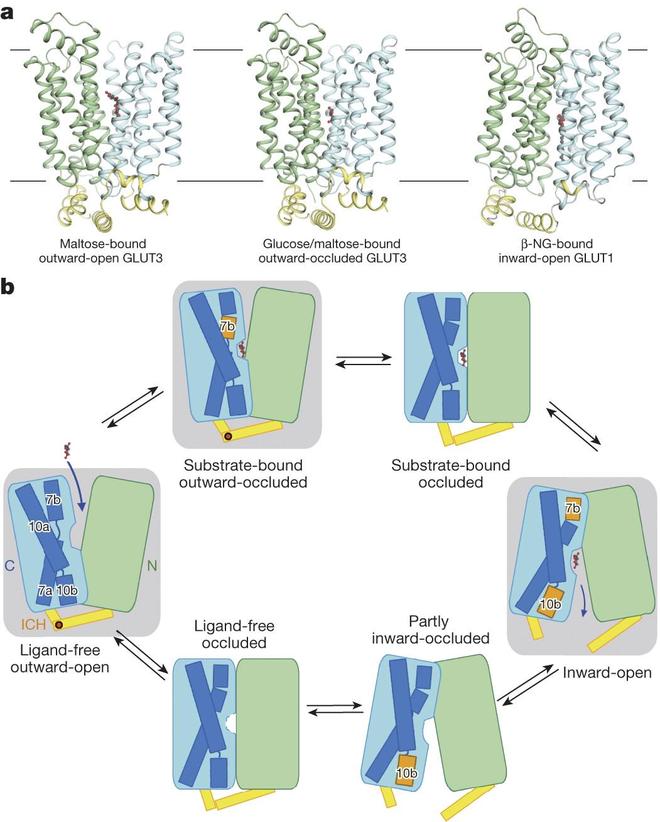
Core Insights - The academic report by Yan Ning at Shanghai Jiao Tong University discusses the relationship between AI and scientific research, emphasizing a new paradigm in biological discovery led by structural insights [1][19]. Research Focus - Yan Ning's initial goal in establishing her lab in 2007 was to produce results that could be included in textbooks, focusing on glucose transport proteins and sodium ion channels as primary research areas [2][5]. - The research on glucose transport proteins (GLUTs) has successfully reached publication in textbooks, with the next target being sodium ion channels, particularly the Nav1.7 subtype, which is linked to pain perception [5][10]. Technological Advancements - The advent of cryo-electron microscopy (cryo-EM) has revolutionized the ability to analyze protein structures, achieving resolutions as high as 1 Å, which allows for detailed structural analysis previously only possible with X-ray crystallography [6][8]. - The development of AI tools, such as Alphafold, is being integrated into research, although current predictions from these tools are not yet sufficiently accurate for the desired conformations of proteins [8][20]. New Research Paradigms - The research approach is shifting from a problem-oriented methodology to an observation-driven paradigm, allowing for the discovery of new molecular structures, including unique sugar fibers that may have applications in carbon neutrality and material science [11][14]. - The introduction of a new algorithm named Ahaha aims to enhance the efficiency of determining the absolute chirality of sugar fibers in cryo-EM images, showcasing the integration of AI in structural biology [16][18]. AI Integration - AI is seen as a tool for empowerment in scientific research, facilitating the analysis of large datasets generated by cryo-EM and enabling the development of models for sugar structures [19][21]. - The collaboration between biology and AI is expected to lead to significant advancements in both fields, with potential implications for the future design of AI hardware inspired by biological structures [21].

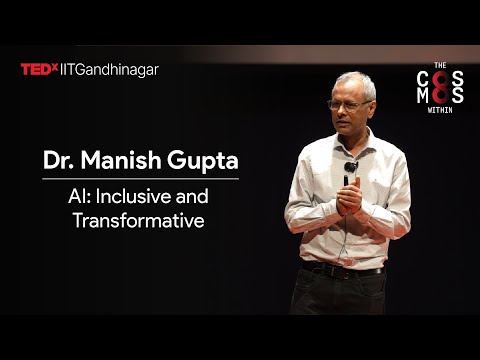
AI: Inclusive and Transformative | Manish Gupta | TEDxIITGandhinagar
TEDx Talks· 2025-07-28 16:02
AI发展与应用 - DeepMind 的使命是负责任地构建 AI,以造福人类,深度学习已成为解决图像分类、语音识别和机器翻译等问题的最佳方法 [5][6] - Transformer 架构促成了大型语言模型的构建,这些模型在大量公开数据上进行训练,能够解决广泛的问题 [8] - 现代基础模型(LLM)已超越文本,成为多模态模型,能够处理文本、手写文本和图像,为个性化辅导等学习方式带来可能性 [11][12] - Gemini 1.5 Pro 能够处理高达 1 million 多模态 tokens 的上下文窗口,可以处理大量信息作为输入 [15] - AI Agents 不仅限于简单的聊天机器人,还可以进行语音交互,甚至在 3D 世界中进行实时交互 [16] AI的包容性与可及性 - 行业致力于弥合英语和其他语言(特别是印度语言)之间 AI 能力的差距,目标是开发能够理解 125 种以上印度语言的模型 [19][20][21][22] - Vani 项目与印度科学研究所合作,旨在收集印度各个角落的语音数据,目标是从印度每个地区收集数据,以覆盖更多零语料库语言 [24][25] AI在特定领域的应用 - 行业正在构建数字农业堆栈的基础层,利用卫星图像识别农田边界、作物类型和水源,为农民提供个性化服务,如作物保险 [26][27][28] - AlphaFold 通过预测蛋白质结构,将原本需要 5 年的研究缩短到几秒钟,并在不到一年的时间内完成了 200 million 个蛋白质结构的预测,并免费提供数据,极大地加速了科学发现 [29][30][31][32] 未来展望 - 行业期望 AI 能够帮助更多人,使他们能够做出诺贝尔奖级别的贡献 [35]