科研范式转变

Search documents
AI是抢活还是赋能?颜宁给出最新答案
Guan Cha Zhe Wang· 2025-11-20 07:36
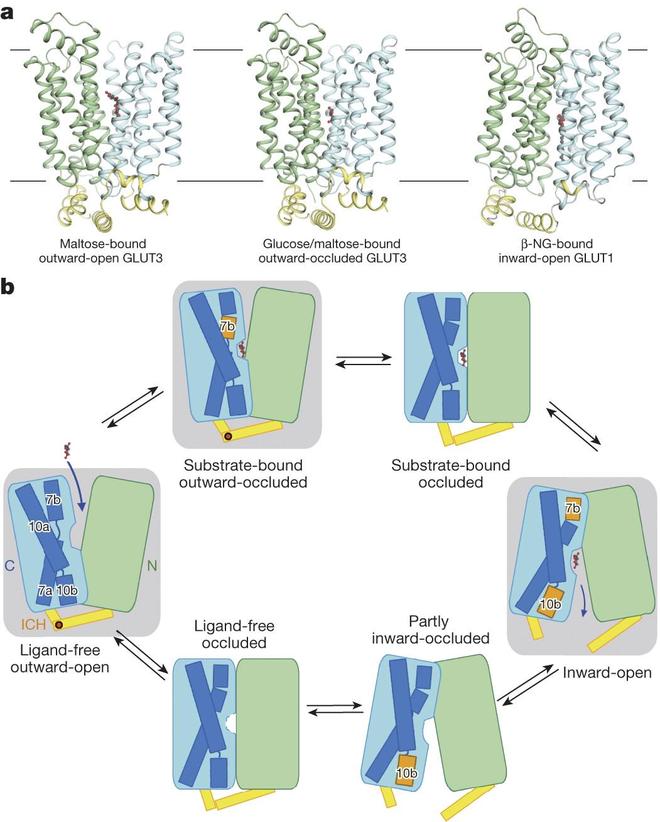
Core Insights - The academic report by Yan Ning at Shanghai Jiao Tong University discusses the relationship between AI and scientific research, emphasizing a new paradigm in biological discovery led by structural insights [1][19]. Research Focus - Yan Ning's initial goal in establishing her lab in 2007 was to produce results that could be included in textbooks, focusing on glucose transport proteins and sodium ion channels as primary research areas [2][5]. - The research on glucose transport proteins (GLUTs) has successfully reached publication in textbooks, with the next target being sodium ion channels, particularly the Nav1.7 subtype, which is linked to pain perception [5][10]. Technological Advancements - The advent of cryo-electron microscopy (cryo-EM) has revolutionized the ability to analyze protein structures, achieving resolutions as high as 1 Å, which allows for detailed structural analysis previously only possible with X-ray crystallography [6][8]. - The development of AI tools, such as Alphafold, is being integrated into research, although current predictions from these tools are not yet sufficiently accurate for the desired conformations of proteins [8][20]. New Research Paradigms - The research approach is shifting from a problem-oriented methodology to an observation-driven paradigm, allowing for the discovery of new molecular structures, including unique sugar fibers that may have applications in carbon neutrality and material science [11][14]. - The introduction of a new algorithm named Ahaha aims to enhance the efficiency of determining the absolute chirality of sugar fibers in cryo-EM images, showcasing the integration of AI in structural biology [16][18]. AI Integration - AI is seen as a tool for empowerment in scientific research, facilitating the analysis of large datasets generated by cryo-EM and enabling the development of models for sugar structures [19][21]. - The collaboration between biology and AI is expected to lead to significant advancements in both fields, with potential implications for the future design of AI hardware inspired by biological structures [21].

云载 AI·健行未来——火山引擎“AI+医药大健康”行业论坛圆满落幕
Cai Fu Zai Xian· 2025-06-19 09:13
Core Insights - The "AI + Healthcare" forum highlighted the transformative impact of AI in the healthcare sector, emphasizing the integration of cloud computing, big data, and AI technologies to enhance medical services and patient experiences [1][17] - The forum featured contributions from various experts, indicating a collaborative effort in advancing AI applications in healthcare, particularly in areas like disease prevention, diagnosis, and drug design [3][10] Group 1: AI Applications in Healthcare - AI is expected to address the increasing demands of life sciences and medicine due to rising life expectancy, with a focus on developing new AI technologies tailored for healthcare [3][10] - The collaboration between Volcano Engine and researchers has led to the development of Bio-OS-Co-Pilot, which significantly reduces research timelines from years to hours, enhancing efficiency in modeling and analysis [4] - Companies like Tianjin Pharmaceutical Group have reported a 14.3% increase in digital maturity through strategic digital transformation initiatives, showcasing the effectiveness of AI in optimizing workflows [6][8] Group 2: Future Directions and Challenges - The healthcare industry faces challenges such as high complexity and strict requirements for data governance, necessitating a shift towards sustainable iterative mechanisms for AI applications [12] - AI is positioned to enhance pre-consultation processes, patient education, and overall efficiency in healthcare delivery, while maintaining a supportive role rather than replacing human decision-making in high-risk scenarios [15] - Future efforts will focus on low-risk, high-value areas for AI implementation, such as research data analysis and logistics support, to ensure effective integration into healthcare systems [14]