BOPP香烟包装膜

Search documents
前五大玩家争相扩产,BOPP烟膜市场正在上演“高端化”卡位战
QYResearch· 2026-03-27 07:56
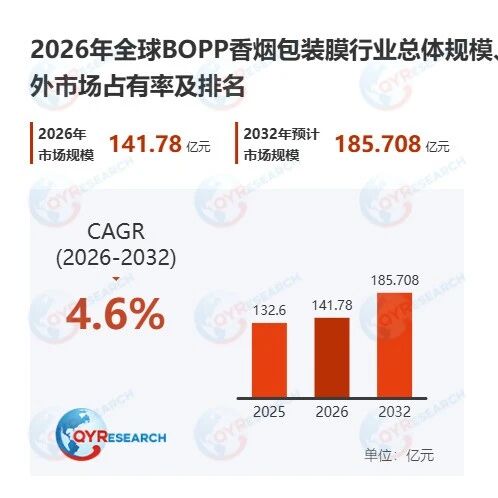
Core Insights - The global BOPP cigarette packaging film market is projected to reach approximately $1.95 billion by 2025, with a compound annual growth rate (CAGR) of 4.6% over the next few years [4] - The industry is currently in a phase characterized by "stock demand and structural upgrades," where the overall growth in tobacco is limited, but the requirements for cigarette packaging are increasing in terms of automation, consistency, anti-counterfeiting, and compliance [4] Industry Pain Points - Variability in film thickness, haze, and gloss affects the yield of high-speed packaging lines [7] - Balancing printing suitability, metallization adhesion, anti-static properties, and smoothness is challenging [7] - Upgrading environmental regulations (low VOC, recyclability) coexists with cost reduction pressures [7] Optimization Directions - Implementing online closed-loop control of resin formulations and stretching processes to enhance thickness and shrinkage consistency [6] - Optimizing surface treatment, coating/metallization, and anti-static systems to improve heat sealing and printing compatibility [6] - Integrating lightweight, recyclable structures with anti-counterfeiting features to strengthen quality traceability and rapid delivery [6] Key Market Players and Dynamics by 2025 - Major companies in the BOPP cigarette packaging film market are concentrated in India, China, Europe, and the Middle East, with listed companies and large groups dominating the market [8] - Jindal Films (India) plans to operate a new 60,000 tons/year BOPP capacity in Nashik by October 2025 [9] - Cosmo First (India) aims to increase total BOPP capacity by approximately 40% to 277,000 tons/year [9] - FSPG (China) focuses on high-function film innovation and technology development [9] - Semcorp (China) leverages membrane technology to participate in high-end cigarette film supply [9] - Uflex (India) plans to add 54,000 tons/year of BOPP production lines [9] Industry Trends 1. Compliance-driven shift from "usable" to "recyclable, auditable, and verifiable" [10] 2. Single-material and recyclable-friendly barriers becoming mainstream, with all-PP structures gradually replacing multi-layer composites [11] 3. Lightweight and high-speed packaging adaptability becoming core technological focuses [12][13] Industry Chain Overview - Upstream: PP resin and additives determine core quality, with high demands for low odor, low VOC, and batch stability [14] - Midstream: BOPP stretching and functional processing barriers, with core competitiveness in thickness uniformity, low haze, and controlled shrinkage [15] - Downstream: High certification barriers for tobacco packaging manufacturers and cigarette factories, with strict requirements for stability, traceability, and compliance [16] Research Summary - Although the BOPP cigarette packaging film market is in a mature phase, regulatory upgrades, recyclability trends, high-speed production, and premiumization are driving structural growth [17] - Companies with stable processes, global delivery capabilities, compliance R&D, and major client certifications will continue to hold advantages in industry consolidation [17]

BOPP香烟包装膜市场洞察:全球前10强生产商排名及市场份额
QYResearch· 2026-02-12 02:40
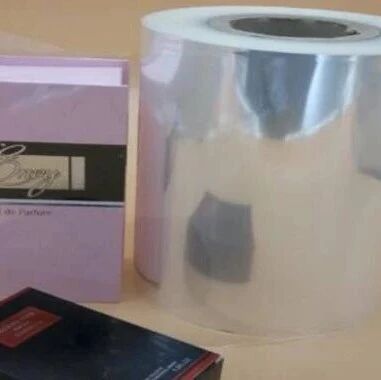
Core Insights - BOPP cigarette packaging film is a biaxially oriented polypropylene film used for cigarette boxes and packs, providing moisture protection, tamper-evidence, and a glossy appearance, compatible with high-speed packaging equipment [2] - The global BOPP cigarette packaging film market is projected to reach 1.5 billion USD by 2032, with a compound annual growth rate (CAGR) of 4.5% from 2026 to 2032 [4] - Major manufacturers in the global BOPP cigarette packaging film market include Innovia Films, Taghleef Industries, and Jindal Films, with the top ten companies holding approximately 71% market share in 2025 [6] Industry Trends - The "compliance-driven" structural trend emphasizes recyclable and auditable packaging designs, influenced by regulations such as the EU's PPWR, which mandates recyclable design in packaging materials [8] - The industry is shifting towards single-material solutions and recyclable-friendly coatings, moving from multi-material composites to aluminum-coated BOPP and transparent high-barrier coated BOPP [9] - Two main directions in specifications are lightweight (thinner films) and wider processing windows for high-speed packaging adaptability, focusing on resin systems and orientation processes [10] Market Drivers - Regulatory pressures for packaging redesign and compliance are evolving under the WHO FCTC, necessitating updates in the packaging supply chain and stricter compliance documentation [11] - High-speed performance requirements for external packaging are critical, with films needing low sealing initiation temperatures, strong heat sealability, and consistent sliding properties to avoid production downtime [12] - The focus on anti-counterfeiting, traceability, and machine readability is increasing due to the shrinking brand space and ongoing illicit trade, shifting value towards stability and integration with tax stamps and traceability features [13]