
Battery Electric Vehicles (BEVs)

Search documents
NIO Is Outperforming Even as U.S. Stocks Slump: Can the Uptrend Continue?
Yahoo Finance· 2026-03-15 13:00
Core Viewpoint - Nio's stock has experienced a significant increase of over 21% in the last five days and is up 13.5% year-to-date, contrasting with the broader market decline, particularly in the electric vehicle sector [1] Group 1: Financial Performance - Nio achieved its first-ever adjusted profit in Q4 2025, alongside generating positive free cash flows, ending the year with cash and cash equivalents of $6.67 billion [3] - The company has provided an optimistic Q1 guidance, indicating that deliveries could nearly double on an annual basis [4] Group 2: Market Position and Sales Outlook - Despite an expected dip in overall vehicle sales in China, Nio anticipates a rise in battery electric vehicle (BEV) penetration levels, which is favorable for its business model as it exclusively sells BEVs [4][5] - Nio's management has reaffirmed a volume growth guidance of 40% to 50% for the year, which is promising given the challenges faced by the automotive industry in China [5] Group 3: Global Expansion - Nio is expanding its global presence, which is expected to enhance its sales volumes. Countries like Canada are reducing tariffs on EV imports from China, and the EU is considering more favorable import conditions [6] - The potential increase in oil prices may lead to a renewed interest in electric vehicles, benefiting companies like Nio [6]

Chinese automakers strengthen their presence in Southeast Asia
Yahoo Finance· 2026-03-03 13:24
Core Insights - Chinese automakers experienced significant sales growth in Southeast Asia, with deliveries in Thailand, Indonesia, Malaysia, and the Philippines increasing by 95% to over 377,450 units in 2025 from 193,510 in 2024 [1] - The overall vehicle sales in these four markets reached 2.71 million units in 2025, leading to a doubling of Chinese automakers' market share to 14% from 7% in 2024, primarily at the expense of Japanese brands like Honda, Nissan, and Daihatsu [2] Market Performance - Thailand emerged as the largest market for Chinese brands, with over 140,000 sales, accounting for 23% of total vehicle sales, followed by Indonesia with over 128,000 sales (16% market share), Malaysia with 59,990 units (7%), and the Philippines with 48,960 units (11%) [3] - The market shares mentioned only account for vehicles sold under Chinese brands and do not include partnerships with local manufacturers, such as Malaysia's Proton and Indonesia's Hartono Istana Electronic [4] BEV Segment Growth - The growth of Chinese brands in the region was significantly driven by the rising demand for battery electric vehicles (BEVs), with BEV sales in the four markets increasing by 105% to an estimated 264,000 units in 2025 [5] - Thailand saw BEV sales surge by 80% to over 120,000 units, Indonesia experienced 143% growth to almost 107,000 units, Malaysia reported 30,850 units (+109%), and the Philippines had 5,890 units (+90%), with Chinese automakers accounting for approximately 90% of these sales [5] Government Incentives - The demand for BEVs in the region has been bolstered by government incentives, including tax discounts for consumers and investment incentives for manufacturers, encouraging more Chinese brands to enter and localize production in these markets [6] - Despite some markets reducing BEV incentives at the beginning of 2026, most Chinese manufacturers have established strong dealer networks and localized production in the region [6]
Thai vehicle sales rebound by 54% in January
Yahoo Finance· 2026-02-25 12:02
Core Insights - Thailand's new vehicle market experienced a significant rebound of nearly 54%, reaching 73,936 units in January 2026, compared to 48,092 units in January 2025 [1] Group 1: Market Performance - January marked the tenth consecutive month of growth for Thailand's vehicle market, following two years of declines due to financing challenges faced by consumers and small businesses [2] - Economic growth in Thailand accelerated to 2.5% year-on-year in Q4 2025, up from 1.2% in Q3, driven by stronger domestic consumption and investment [2] Group 2: Electric Vehicle Surge - The surge in vehicle sales was primarily attributed to a spike in electric vehicle (EV) deliveries before the expiration of the EV3.0 incentive program at the end of 2025, which has been succeeded by the EV3.5 program offering lower incentives [3] - Sales of battery electric vehicles (BEVs) soared by 354% year-on-year to 31,860 units in January, while hybrid electric vehicles (HEVs) sales increased by 19% to 12,650 units [4] Group 3: Production and Export Trends - Vehicle production in Thailand rose by 10.5% to 118,386 vehicles in January, while exports fell by 6.3% to 58,405 units, impacted by a strong baht and increased competition from Chinese automakers [5] - The Federation of Thai Industries has raised its 2026 vehicle production target to 1.5 million units, which includes 550,000 domestic sales and 950,000 exports [5]
Li Auto Inc. (LI) Expands EV Reach with Supercharging Milestone
Yahoo Finance· 2026-02-20 16:55
Core Insights - Li Auto Inc. is recognized as one of the best emerging market stocks to invest in currently, highlighted by the launch of its 4,000th supercharging station [1] - The company has established itself as the owner of the largest self-built fast-charging network in the industry, with a total of 22,173 charging stations across 289 cities [2] - In January, Li Auto delivered 27,668 vehicles, bringing its cumulative total to 1,567,883 [2] - JPMorgan has downgraded Li Auto to Underweight due to concerns over slowing demand and rising costs, as well as policy uncertainties for Chinese carmakers in 2026 [3] Company Overview - Li Auto Inc. is a leading Chinese electric vehicle manufacturer that focuses on designing, developing, manufacturing, and selling premium smart SUVs, particularly Extended-Range Electric Vehicles (EREVs) and battery electric vehicles (BEVs) [4]

Vietnam vehicle market surges 90% in January – VAMA
Yahoo Finance· 2026-02-12 09:12
Market Overview - Vietnam's new vehicle market rebounded by 90% to 29,774 units in January 2026 from 15,676 units in January 2025, according to VAMA data [1] - Compared to peak volumes of 42,701 units in December 2025, the market was down by 30% in January 2026 [2] Economic Context - The vehicle market growth is supported by strong economic growth, with GDP accelerating to 8.5% year-on-year in Q4 2025, marking the fastest quarterly growth in 15 years [2] - The overall economy expanded by 8% in 2025, driven by robust domestic consumption, fixed investment, and exports [2] Sales Performance - Light passenger vehicle sales surged by 103% to 22,440 units, while commercial vehicle deliveries increased by 59% to 7,334 units in January 2026 [3] - Truong Hai (Thaco) Group reported an 82% sales increase to 9,458 units, including a 98% jump in commercial vehicle sales to 2,001 units [3] - Major brands like Toyota, Ford, Mitsubishi, and Hyundai also reported significant sales increases, with Ford's sales surging by 109% to 5,121 units and Mitsubishi's by 194% to 5,039 units [4] Future Projections - GlobalData forecasts that sales of light vehicles in Vietnam will grow by over 4% to 587,000 units in 2026, up from 564,000 units in 2025, driven by continued economic growth and rising consumer demand [5] - The Vietnamese government will continue to exempt battery electric vehicles (BEVs) from vehicle registration tax until the end of February 2027, further supporting market growth [5]
UK car market up but sees EV share fall in January
Yahoo Finance· 2026-02-06 18:37
Market Overview - The UK new car market grew by 3.4% in January, reaching 144,127 units, with growth across all buyer types [1] - Private retail buyers saw a 4.5% increase in registrations, while fleet registrations increased by 1.6%, and the low-volume business segment rose significantly by 46.5% [1] Electric Vehicle (EV) Performance - Battery electric vehicle (BEV) uptake rose by only 0.1% to 29,654 units, resulting in a 20.6% market share, the lowest since April 2025 [2] - The decline in BEV market share follows a strong performance in January 2025, influenced by buyers' attempts to avoid new tax rates on BEVs [2] - BEV sales are falling short of mandated targets under the UK government's Zero Emission Vehicle Mandate, with a target of 33% market share for 2026, compared to last year's target of 28% which was missed at 23.4% [3] Growth in Electrified Vehicles - Plug-in hybrids (PHEVs) recorded the largest growth, increasing by 47.3% to account for 12.9% of registrations [4] - Hybrid electric vehicles also saw a 4.8% increase, making up 13.4% of the market [4] Industry Insights - The SMMT Chief Executive noted that the UK car market is regaining momentum after a challenging start to the decade and is decarbonizing rapidly [5] - Despite a dip in EV market share in January, there are indications of growth by the end of the year, although the pace of transition may be slowing and is behind mandated targets [5] - A comprehensive review of the transition is necessary to align ambition with reality, especially with plans to end sales of new petrol and diesel cars in less than four years [5]
Hyundai’s net profits drop in 2025, hit by US tariffs
Yahoo Finance· 2026-01-30 10:07
Financial Performance - Hyundai Motor Company reported a 22% drop in net profits to KRW 10.365 trillion (US$7.2 billion) in 2025, primarily due to the impact of US import tariffs introduced in April 2025 [1] - Operating profits decreased by 19.5% to KRW 11.458 trillion (US$8.0 billion) as the company absorbed an additional KRW 4.1 trillion in costs related to the US tariffs [3] - The fourth quarter of 2025 was particularly challenging, with net profits plunging by 52% to KRW 1.18 trillion (US$821 million) [1] Revenue and Sales - Revenues increased by 6.3% to KRW 186.254 trillion (US$130 billion) in 2025, despite a 0.1% decline in global vehicle sales to 4,138,389 units [2] - The rise in revenues was supported by an improved product mix, including a 27% increase in eco-friendly vehicles to 961,812 units [2] Market Outlook - Hyundai forecasts a slight increase in global vehicle sales to 4.158 million units in 2026, with revenues expected to rise by 1% to 2% to KRW 190 trillion [5] - Sales projections for key markets in 2026 include North America at 1,231,000 units, Europe at 601,000 units, India at 592,000 units (+3%), South Korea at 700,000 units (-2%), and South America at 328,000 units (+0.1%) [5] Challenges - A Hyundai official described 2025 as a challenging year due to weakening global demand, increased competition from Chinese automakers, and uncertainties surrounding import tariffs [4]
China Auto Market Boomed in 2025: Why Growth May Be Softer in 2026
ZACKS· 2026-01-16 17:01
Core Insights - China's vehicle sales and production reached record highs in 2025, with production at 34.5 million units (up 10.4% year over year) and sales at 34.4 million units (up 9.4% year over year), driven by strong demand for new energy vehicles (NEVs) [2][4] Group 1: Market Performance - In 2025, China's passenger vehicle market also crossed the 30-million-unit mark, with production at 30.27 million units (up 10.2% year over year) and sales at 30.10 million units (up 9.2% year over year) [3] - The commercial vehicle segment saw production and sales rise to 4.26 million and 4.30 million units, both achieving double-digit growth [3] - China maintained its position as the world's largest auto market for the 17th consecutive year [4] Group 2: NEVs and Export Growth - China remained the largest NEV market globally for the 11th consecutive year in 2025, with NEV production and sales surpassing 16 million units [5] - NEV sales increased by 28% year over year to 16.5 million units, with battery electric vehicles (BEVs) leading the growth at 10.6 million units (up 37.6%) and plug-in hybrid vehicles (PHEVs) reaching 5.8 million units (up 14%) [6] - Vehicle exports reached a record 7.1 million units, up 21% year over year, driven by improved product quality and competitive pricing [7] Group 3: Key Players - BYD led in volume with approximately 4.6 million vehicles delivered in 2025, marking a 7.7% year-over-year increase [9] - NIO delivered 326,028 vehicles, up nearly 47% year over year, while XPeng recorded the fastest growth with deliveries jumping 126% to 429,445 units [10] - Li Auto delivered 406,343 vehicles, reflecting a 19% year-over-year decrease, despite expanding its international presence [11] Group 4: Future Outlook - Growth in China's auto market is expected to moderate in 2026, with total vehicle sales forecasted to increase by just 1% to 34.8 million units, compared to a 9% rise in 2025 [17] - Passenger vehicle sales are projected to rise 0.5% to 30.3 million units, while commercial vehicle sales are expected to increase by 5% to 4.5 million units [18] - NEVs are anticipated to remain the main growth driver, with sales forecasted to rise 15% to 19 million units, albeit at a slower pace than in recent years [18]


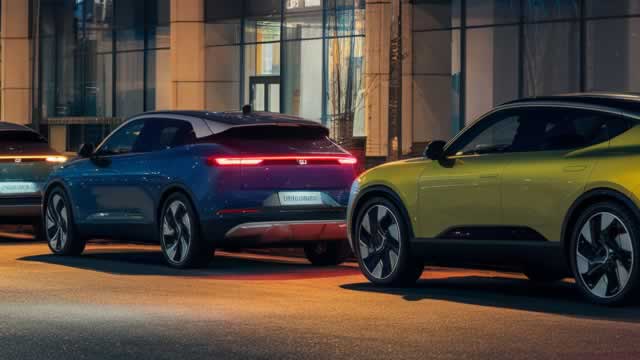
Chinese vehicle sales fall 6% in December
Yahoo Finance· 2026-01-16 09:37
Industry Overview - Sales of Chinese-made vehicles, including exports, declined by over 6% to 3.272 million units in December 2025, after a 10% increase to 3.489 million units a year earlier [1] - Domestic sales fell by almost 16% to 2.519 million units last month, compared to a 12% growth to 2.985 million units a year earlier, while exports surged by over 49% to 753,000 units [1] - In 2025, total sales of China-made vehicles increased by over 9% to 34.402 million units from 31.436 million units in 2024, with domestic sales rising by almost 7% to 27.304 million units and exports increasing by 21% to 7.098 million units [2] New Energy Vehicles (NEVs) - Sales of new energy vehicles rose by 28% to 16.490 million units in 2025, accounting for 48% of total industry volumes, driven by a 38% surge in battery electric vehicle (BEV) sales to 10.622 million units [3] - Domestic NEV sales increased by 20% to 13.875 million units last year, while exports doubled to 2.615 million units [3] Market Dynamics - The domestic vehicle market was supported by government stimulus measures, including vehicle trade-in incentives and cuts in vehicle purchase taxes, alongside strong price competition and new model launches [4] - However, the domestic market has lost significant momentum recently due to weakening consumer and business sentiment, as well as strong year-earlier volumes [4] Future Outlook - The Chinese government confirmed the continuation of the vehicle trade-in subsidy program in 2026 to boost domestic consumption [5] - GlobalData forecasts a 3% increase in light vehicle sales to 27.63 million units in 2026, up from 26.9 million units in 2025 [5] Manufacturer Performances - BYD's global sales increased by 7.7% to 4,602,436 units in 2025, despite an over 18% decline in December, marking the fourth consecutive month of decline due to weakening domestic demand [6] - Overseas sales for BYD surged by 151% to 1,046,083 units last year [6] - SAIC Motor reported a 12% increase in global sales to 4,507,518 units in 2025, driven by a 33% rise in NEV sales to 1,642,785 units [7] - SAIC-GM-Wuling reported a 21% rise in global deliveries to 1,615,066 units, while SAIC-VW's sales fell by 11% to 1,024,000 units [7]
BYD posts slowest annual sales growth in 5 years, but China’s EV giant is still set to outsell Tesla for the first time
Yahoo Finance· 2026-01-02 09:20
Core Insights - BYD's sales growth slowed to 7.7% in 2025, marking the slowest growth rate in five years due to increased domestic competition in China's saturated car market [1] - Despite the slowdown, BYD is expected to surpass Tesla in annual battery electric vehicle (BEV) sales for the first time, selling 2.3 million BEVs in 2025, a 27.9% increase from the previous year [2] Sales Performance - BYD sold 4.6 million vehicles in 2025, up from 4.3 million in 2024, but December sales dropped by 18.3% year-on-year to approximately 420,000 cars [1] - Tesla's sales faced challenges, with estimates predicting 1.6 million BEVs sold in 2025, and projected sales of 1.8 million in 2026, 2 million in 2027, and 3 million in 2029 [3][4] Market Dynamics - The Chinese EV market is highly competitive, with manufacturers reducing prices to gain market share, leading to an oversupply of vehicles [6] - UBS forecasts that the growth rate of EV sales in China will halve in 2026 due to these competitive pressures [6] International Expansion - Domestic competition is prompting Chinese car manufacturers, including BYD, to explore overseas markets, making China the world's largest car exporter [7] - BYD has become the leading EV brand in Southeast Asia, surpassing Toyota in Singapore as the top-selling car brand of 2025 [7] - The company is also expanding into the European market with a new factory in Hungary set to produce 150,000 all-electric sedans annually starting in 2026, alongside plans for facilities in Thailand, Indonesia, and Brazil [8]