Computer Equipment

Search documents
内需稳健叠加出口走强 美国三季度GDP增速创近两年新高
Zhi Tong Cai Jing· 2026-01-22 14:36
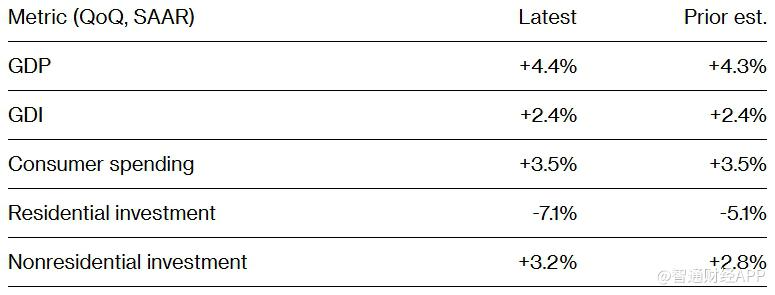
Economic Growth - The U.S. economy showed a better-than-expected growth performance in Q3, with a real GDP annualized growth rate of 4.4%, marking the fastest growth in nearly two years [1] - This growth is supported by strong exports and a reduction in the drag from inventory, contributing to the strongest consecutive quarters of growth since the recovery from the COVID-19 pandemic in 2021 [1] Key Metrics - GDP growth was reported at +4.4%, slightly above the prior estimate of +4.3% [2] - Consumer spending increased by 3.5%, with service spending growing at the fastest rate in three years and goods spending accelerating compared to the previous quarter [3] - Business investment rose by 3.2%, driven by sustained growth in computer equipment spending and record-high investments in data centers for artificial intelligence infrastructure [3] Labor Market and Inflation - Initial jobless claims remain low, indicating a robust labor market [3] - The preferred inflation measure of the Federal Reserve, the PCE price index excluding food and energy, rose by 2.9% in Q3, consistent with previous data [3] Trade and Consumer Behavior - Despite fluctuations in trade policy, consumer and business spending have remained resilient, providing support to the economy [2] - Economists are focusing on the "private domestic final sales" metric, which grew by 2.9% in Q3, indicating steady domestic demand [3]

资产盘点总出错?揭秘企业资产管理的 5 大隐形痛点!
Sou Hu Cai Jing· 2025-10-21 10:25
Core Insights - The article highlights the hidden pain points in asset management within companies, emphasizing issues such as information chaos, asset loss, maintenance costs, and inter-departmental communication barriers [1][5][6][8] Group 1: Information Chaos - Many companies rely on Excel for asset tracking, often missing critical details like model, purchase date, and user, leading to confusion during maintenance and inventory checks [1] - Delays in updating asset records result in discrepancies during inventory, making it difficult for companies to accurately assess usable equipment [1][3] Group 2: Asset Loss - Common causes of asset loss include unrecorded asset usage and forgotten idle equipment, which can lead to significant cumulative losses over time [5] - Improper disposal of obsolete assets without documentation can result in both information loss and waste of potentially usable items [5] Group 3: Maintenance Costs - Companies often lack a maintenance strategy, leading to unexpected failures and high recovery costs, as well as unnecessary expenses from over-maintenance [6] - The absence of a proactive maintenance approach can turn asset upkeep into a financial drain for companies [6] Group 4: Inter-departmental Communication - Asset management is often hindered by poor communication between departments, resulting in delays in asset registration and maintenance notifications [6] - Lack of clarity in departmental responsibilities can lead to blame-shifting and inefficiencies in resolving asset-related issues [6][8] Group 5: Solutions - The article suggests that companies can improve asset management by establishing a structured information system, utilizing efficient inventory tools, and clarifying processes and responsibilities [8] - Effective asset management can enhance value creation and minimize unnecessary waste and losses for companies [8]