Dagster

Search documents
为什么现代人工智能项目离不开数据运维 (DataOps) 与机器学习运维 (MLOps)
3 6 Ke· 2026-01-14 07:31
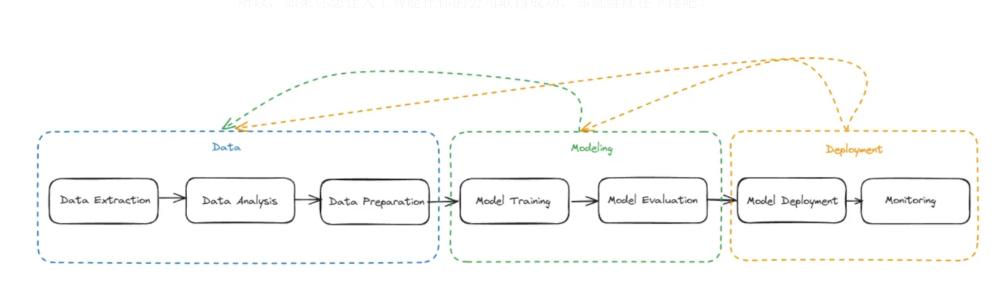
Core Insights - The article emphasizes the critical interdependence between DataOps and MLOps, highlighting that effective machine learning operations cannot succeed without robust data operations [3][15][70] - It argues for a unified approach to AI infrastructure that integrates both data management and machine learning processes, moving away from isolated practices [66][70] DataOps Overview - DataOps is influenced by DevOps and focuses on treating data pipelines as living systems that require strict standards, testing, and automation [4] - The main goals of DataOps include eliminating ETL job failures, ensuring data consistency, and fostering collaboration across teams [4][5] - Key principles of DataOps include data quality as code, declarative pipelines with version control, and data lineage tracking [4][5][16] MLOps Overview - MLOps serves as a bridge between training machine learning models and deploying them in real-world applications, applying DevOps principles to the machine learning lifecycle [7][8] - Essential components of a good MLOps stack include experiment tracking, model version control, continuous training and deployment, and monitoring [9][10][11] Intersection of DataOps and MLOps - The article stresses that both DataOps and MLOps must work together, as issues in one area can adversely affect the other [15][16][70] - It highlights the importance of establishing a feedback loop where data changes can trigger model retraining, and model performance can inform data improvements [17][70] Unified Workflow Design - A unified DataOps and MLOps workflow should begin with data ingestion and validation, followed by metadata tracking, model training, continuous deployment, and monitoring [21][28][31] - The integration of tools like Dagster for orchestration, MLflow for experiment tracking, and CI/CD pipelines for automation is essential for creating a seamless workflow [37][39][66] Future Trends - The article notes a shift towards AI infrastructure platforms that provide a common foundation for both DataOps and MLOps, blurring the lines between data and machine learning platforms [63][66] - It suggests that the industry is moving from a model-centric to a data-centric operational mindset, focusing on continuous improvement of the data that underpins machine learning models [66][70]