Data center equipment

Search documents
Jensen Huang Just Raised Nvidia's Order Outlook to $1 Trillion. Should You Buy the AI Stock -- or Has the Market Already Priced It in?
Yahoo Finance· 2026-03-31 12:30
Core Insights - Nvidia's CEO announced a staggering $1 trillion order book through 2027, highlighting the immense demand for AI infrastructure [1] - The backlog signifies a major shift for Nvidia, moving from reliance on gaming to a focus on AI and data center equipment [1] Group 1: Growth Prospects - Nvidia's backlog includes contractual commitments from major AI developers, indicating strong demand from hyperscalers, cloud providers, and governments [3] - The demand transforms the narrative from uncertainty about infrastructure spending to questions about production ramp-up speed [4] - The backlog is expected to maintain high gross margins due to premium pricing on locked-in orders [4] Group 2: Market Sentiment - Concerns over rising capital expenditure (capex) budgets in the tech sector have been prevalent, with fears of disappointing returns on AI investments [5] - Nvidia's $1 trillion backlog counters these fears, as commitments from major companies like Microsoft and Amazon reflect confidence in AI investment returns [6] - This visibility supports the narrative that AI infrastructure development is a long-term, multi-trillion-dollar endeavor rather than a short-term trend [6]

Will AMD Be a $1 Trillion Company By 2028?
The Motley Fool· 2025-11-26 01:30
Core Viewpoint - Advanced Micro Devices (AMD) has issued ambitious growth projections, aiming for significant revenue increases and a potential market cap of $1 trillion by 2028, despite currently lagging behind Nvidia in the AI sector [1][2]. Company Overview - AMD's current market cap is approximately $360 billion, requiring its stock to nearly triple to reach the $1 trillion mark by 2028 [2]. - The company has a more diversified product lineup compared to Nvidia, which includes central processing units, embedded processors, and various data center equipment, potentially providing stability against market fluctuations [2]. Financial Performance - In the third quarter of fiscal 2026, Nvidia generated $51.2 billion from data center equipment, while AMD's data center revenue was $4.3 billion out of a total of $9.3 billion [3]. - AMD's revenue for the past 12 months was $32 billion, with projections indicating it could reach approximately $84.9 billion by 2028 at a 35% compound annual growth rate (CAGR) [7]. Growth Projections - AMD anticipates a greater than 60% CAGR in data center revenue over the next five years, significantly outpacing its recent growth [5]. - The company expects an overall revenue CAGR of 35% and adjusted earnings per share exceeding $20 [7]. Profitability Expectations - AMD projects an adjusted operating margin greater than 35%, a substantial increase from the current 10%, which could lead to an estimated profit margin of 25% by 2028 [8]. - At $84.9 billion in revenue, this would translate to approximately $21.2 billion in profits [8]. Valuation Insights - Currently, AMD's stock trades at over 110 times earnings, which is considered unrealistic; a more reasonable valuation would be around 40 times earnings, potentially valuing the company at $848 billion [9]. - If growth rates are slightly higher in the early years or if a higher valuation is applied, AMD could reach a $1 trillion valuation by 2028, with a more conservative estimate suggesting it may achieve this by 2030 [9][10].


Trump’s new trade deals give US an edge over Southeast Asia
BusinessLine· 2025-10-28 03:14
Core Insights - The trade agreements announced by US President Trump in Southeast Asia are characterized as "historic" but reveal uneven benefits and numerous uncertainties for the involved countries [1][2]. Trade Agreements Overview - The agreements include the removal of many tariff and non-tariff barriers on US exports, with commitments from Southeast Asian nations to purchase nearly $150 billion worth of US goods, particularly in sectors like semiconductors and aerospace [2][6]. - The agreements are perceived as "one-sided," with Southeast Asian countries facing unclear benefits and potential costs to their domestic industries due to the rollback of tariffs on US goods [3][7]. Economic Impact on Southeast Asia - For Malaysia, the tariff exemptions are estimated to apply to about $12 billion of its exports to the US, which is approximately 2.8% of its GDP, but only about $1 billion of these exports will benefit from a zero tariff rate [3][4]. - The Malaysian stock market showed a decline following the announcement, indicating that investors may have already priced in the trade deals [5]. Specific Country Insights - Vietnam is highlighted as a significant contributor to regional exports to the US, accounting for about $18 billion of the $41 billion total in July [9]. - Cambodia expressed satisfaction with the deal but is seeking further exemptions for garments and footwear, which constitute about 50% of its exports [13]. - Malaysia's Trade Minister indicated that the deal provides better access to US markets and exemptions for specific products like palm oil and pharmaceuticals [14]. Future Negotiations and Uncertainties - The framework of the agreements is non-binding, and detailed negotiations are expected to continue, particularly for Thailand, with a goal to conclude by the end of the year [13]. - There remains uncertainty regarding how the US will classify "transshipped" goods, which could be subject to high tariffs, adding complexity for manufacturers [11][12].


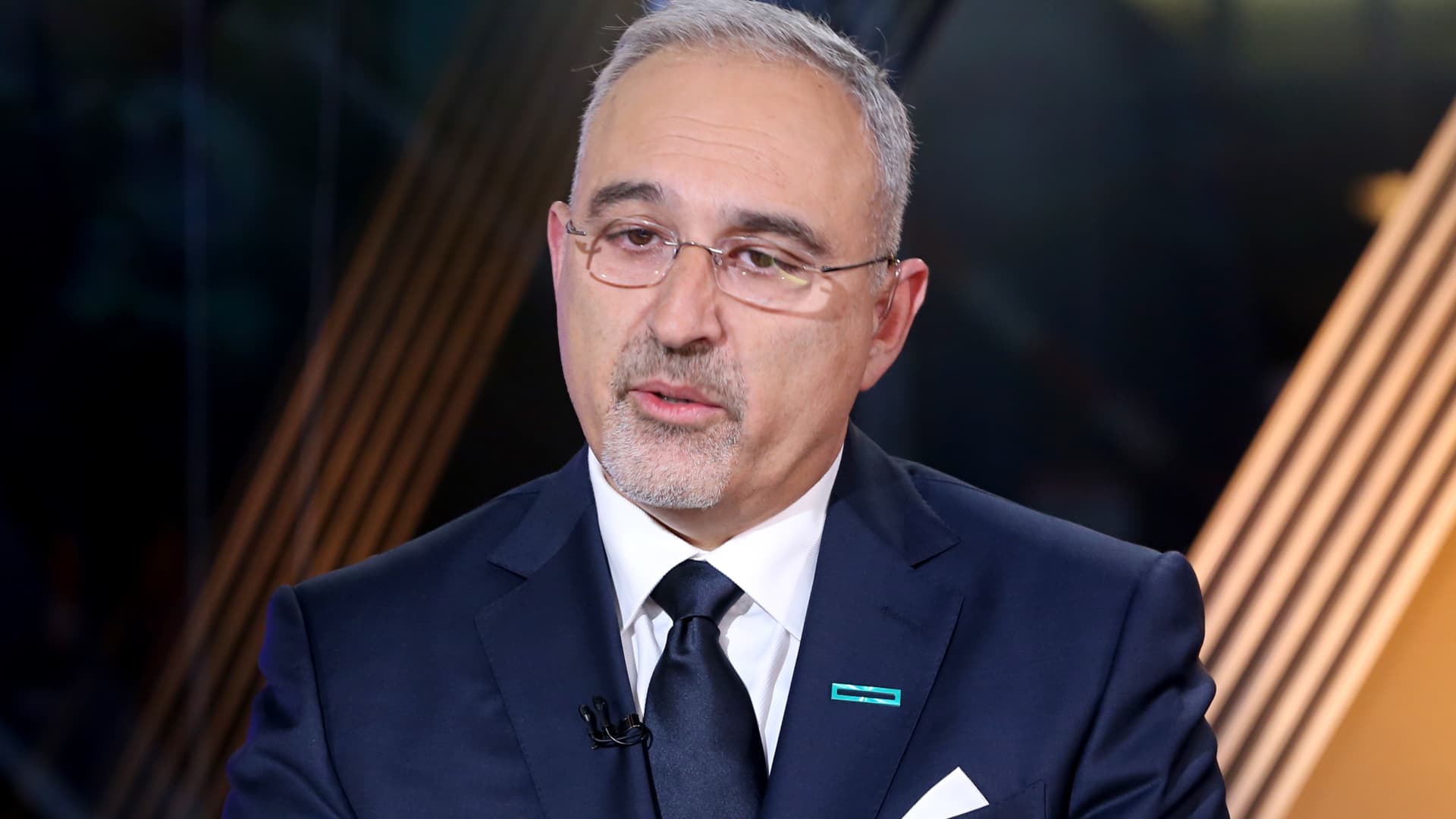
HPE stock sinks 10% on weak guidance for fiscal 2026
CNBC· 2025-10-15 21:54
Core Insights - Hewlett Packard Enterprise (HPE) shares fell 7% after disappointing fiscal 2026 guidance, with adjusted earnings per share expected between $2.20 and $2.40, below analyst expectations of $2.40 [1] - Revenue growth is projected to be between 5% and 10%, significantly lower than Wall Street's estimate of 17% [1] Strategic Focus - HPE plans to concentrate on strategic priorities, including networking technology and artificial intelligence offerings for both sovereign and enterprise segments [2] - The CEO emphasized that the strengthened portfolio aims to create more profitable growth and enhance capital return opportunities for shareholders [2] Financial Actions - The board approved an additional $3 billion in share buybacks, increasing the total repurchase plan to $3.7 billion [3] - HPE announced a 5% reduction in employee headcount, equating to approximately 2,500 job cuts [3]

Here's Why Data Center Equipment Company Vertiv's Stock Soared Today
The Motley Fool· 2025-04-23 16:33
Group 1: Core Insights - Vertiv's stock rose significantly, indicating strong demand for data center equipment, with a peak increase of 21% in early trading and a 10.5% rise by midday [1] - The earnings report revealed a positive outlook with a hike in full-year sales guidance and a return to strong order growth [2] - Concerns over previous flat order performance were alleviated by a 13% growth in orders in the first quarter compared to the same period in 2024, alongside a 20% increase in trailing-12-month orders [3] Group 2: Guidance and Valuation - Management updated the organic net sales growth forecast to 16.5%-19.5%, up from the previous estimate of 15%-17%, while maintaining the midpoint of earnings and free cash flow guidance [4] - Vertiv is currently trading at less than 24 times the midpoint of free cash flow guidance for 2025, positioning it as an attractively priced growth stock amid the early stages of AI application growth [5]