Database Software

Search documents
Oracle's Modern Market Masterclass: What ORCL Can Teach Us All About Today's Market
Yahoo Finance· 2026-01-16 16:37
Core Insights - Oracle has undergone a significant transformation over the past 24 months, evolving from a legacy database company to a key player in the AI infrastructure market [1] - The narrative surrounding Oracle's growth is more important than traditional valuation metrics, highlighting a shift in market dynamics [2] Financial Performance - Following a strong earnings report in September 2025, Oracle's shares surged nearly 40% in a single day, reflecting high volatility typically seen in smaller companies [3] - Oracle's remaining performance obligations (RPO) increased to over $523 billion, driven by substantial AI contracts, which triggered significant ETF buying and algorithmic trading [4] Market Dynamics - The market's focus has shifted towards narrative-driven momentum rather than traditional financial metrics, leading to rapid price changes [4] - Despite the initial surge in stock price, much of the gain was lost by early 2026 as investors began to scrutinize the company's balance sheet [4] Financial Concerns - Oracle's debt has exceeded $100 billion, raising concerns about its financial stability [6] - The company is projected to spend around $50 billion in capital expenditures for fiscal 2026 to remain competitive in the AI sector [6] - In Q2 of fiscal 2026, Oracle reported negative free cash flow of approximately -$7.3 billion, indicating potential liquidity issues [6]

Oracle shares on pace for worst quarter since 2001 as new CEOs face concerns about AI buildout
CNBC· 2025-12-26 12:00
Core Viewpoint - Oracle's new CEOs, Clay Magouyrk and Mike Sicilia, are facing significant challenges as the company's stock has dropped 30% this quarter, marking its steepest decline since 2001 and the dot-com bust [1][2]. Financial Performance - Oracle reported weaker-than-expected quarterly revenue and free cash flow, prompting the new finance leader to announce a $50 billion capital expenditure plan for fiscal 2026, which is 43% higher than previously planned and double the amount from the previous year [3]. - The company is also planning $248 billion in leases to enhance cloud capacity alongside building new data centers [3]. Debt and Investment Concerns - To support its growth plans, Oracle raised $18 billion in a significant bond sale, one of the largest in the tech industry, raising concerns about its ability to maintain an investment-grade debt rating [4]. - Analysts express skepticism about Oracle's capacity to meet its financial obligations without restructuring its contract with OpenAI, which has committed over $300 billion to Oracle [5]. Market Position and Growth Strategy - Oracle's revenue backlog surged by 359% due to its agreement with OpenAI, which initially boosted its stock by nearly 36% [8]. - The company aims to increase revenue to $225 billion by fiscal 2030, primarily driven by AI infrastructure, although this growth may come at the expense of profitability, with gross margins expected to decline from 77% in fiscal 2021 to about 49% by 2030 [15][16]. Investor Sentiment - Some investors remain cautious about Oracle's long-term plans, particularly its heavy reliance on OpenAI, which is facing its own financial challenges [17]. - Analysts have mixed views, with some issuing buy ratings based on potential revenue growth from OpenAI, while others highlight the need for Oracle to improve its market share in cloud infrastructure, where it lags behind competitors like Amazon and Microsoft [18][19].


Oracle's $300B AI Bet Becomes Bubble Barometer
Youtube· 2025-12-12 21:35
Core Viewpoint - Oracle is facing challenges in fulfilling its large contracts for data center development due to supply chain issues, despite high demand for AI computing resources [1][2][3][4]. Company Insights - Oracle has a significant contract with OpenAI, involving the development of data centers with a capacity of 4.5 gigawatts [1]. - The company is experiencing delays in building data centers, attributed to labor shortages and insufficient electrical infrastructure in Texas [2]. - Despite these challenges, the demand for AI compute resources remains extremely high, with potential clients ready to sign contracts for large data centers [4]. - Oracle is positioning itself as a key player in AI infrastructure, leveraging its strong cash flow from database software to invest heavily in this sector [6][7]. Market Dynamics - The demand for AI infrastructure is insatiable, but there are concerns about the sustainability of this demand in the long term [4]. - Oracle's stock experienced a surge of 7% following a robust earnings report and significant deal announcements, but has since declined by approximately 42% [10][11]. - Investors are questioning Oracle's ability to fulfill its commitments, particularly a $300 billion deal with OpenAI, as other companies also secure similar commitments [11][12].
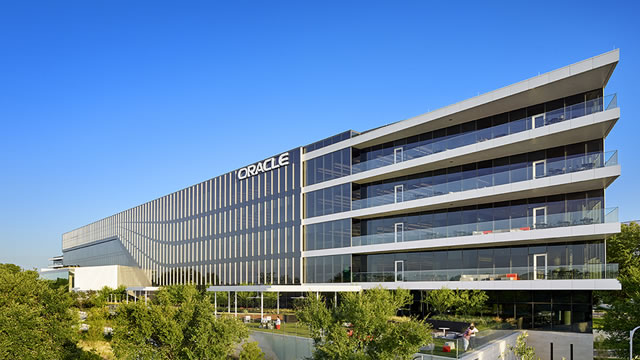
Oracle stock plunges as AI data center spending hits $12 billion and FY26 capex jumps to $50 billion
BusinessLine· 2025-12-12 02:55
Core Viewpoint - Oracle Corp. shares experienced a significant decline due to increased spending on AI data centers and equipment, which is taking longer to convert into cloud revenue than investors anticipated [1]. Financial Performance - Capital expenditures for the quarter reached approximately $12 billion, up from $8.5 billion in the previous period, exceeding analysts' expectations of $8.25 billion [2]. - Oracle now projects capital expenditures to total around $50 billion for the fiscal year ending in May 2026, a $15 billion increase from prior forecasts [3]. - Total revenue for the quarter grew by 14% to $16.1 billion, with cloud sales increasing by 34% to $7.98 billion and infrastructure revenue rising by 68% to $4.08 billion, although these figures fell short of analysts' estimates [7][15]. Market Reaction - Oracle's stock fell 11% to $198.85, marking the largest single-day drop in nearly 11 months, and the stock has lost about a third of its value since reaching a record high on September 10 [4]. - The company's credit risk reached a 16-year high, with the cost of protecting its debt against default rising significantly [8]. Strategic Developments - Oracle is heavily investing in data center infrastructure to support AI initiatives, including partnerships with companies like OpenAI, TikTok, and Meta [6]. - The company reported a significant increase in remaining performance obligations, which rose more than fivefold to $523 billion, slightly above analysts' expectations [9]. Debt and Cash Flow - Oracle's cash burn increased, resulting in a negative free cash flow of $10 billion, with total debt amounting to approximately $106 billion [12]. - The cost of protecting Oracle's debt against default has risen, reflecting declining investor confidence in the company's credit quality [8]. Future Outlook - Oracle's management expects total revenue to increase by 19% to 22% in the current period, with cloud sales projected to rise by 40% to 44%, aligning with analysts' estimates [17].
Oracle's AI spending surge sparks bubble concerns
Youtube· 2025-12-11 13:19
Core Viewpoint - Oracle's shares dropped nearly 12% in after-hours trading following weaker-than-expected revenue for Q2, attributed to increased spending on AI infrastructure and a lack of clarity on financing plans [1][6]. Financial Performance - Oracle's order backlog surged 438% to $523 billion, driven by new commitments from companies like Meta and Nvidia [2]. - Despite the drop in share price, Oracle's stock is still up 34% year-to-date, although it has experienced significant volatility, with a low of $122 and a recent high of around $328 [10]. Investment Concerns - Investors expressed concerns over Oracle's unclear strategy for financing its capital expenditures, particularly regarding its AI buildout [5][6]. - The company is expected to raise less than $100 billion for its spending plans, a figure that analysts have been monitoring closely [7]. - The broader tech sector is facing pressure as investors grow wary of companies increasing capital expenditures through debt [8]. Market Reactions - Following Oracle's results, shares of Nvidia, AMD, and Coreweave also declined, indicating a ripple effect across the tech industry [2]. - The world's largest sovereign wealth fund has stated it is cautious about investing in data centers due to volatility in the sector [2][3].

Stock Market Pads Gains After Tech Earnings Impress; Marvell Technology Jumps Late
Investors· 2025-12-02 23:21
Core Viewpoint - The Nasdaq composite showed strong performance, rising 0.6% on the day, driven by positive earnings reports from technology companies, particularly Credo Technology and MongoDB [1] Group 1: Market Performance - The Nasdaq composite outperformed the stock market, closing off highs but still achieving a 0.6% increase [1] - The Dow Jones Industrial Average also saw a gain, moving ahead by 0.3% [1] Group 2: Company Earnings - Credo Technology, a chip designer, reported strong earnings, contributing to the positive market sentiment [1] - MongoDB, a database software maker, also delivered strong earnings, further supporting the technology sector's performance [1]



S&P 500 Gains and Losses Today: Robinhood Pops on Prediction Markets Play, Workday Stock Slumps
Investopedia· 2025-11-26 21:55
Core Insights - Robinhood Markets emerged as the best-performing stock in the S&P 500, with shares soaring nearly 11% following the announcement of a joint venture to acquire a stake in LedgerX, enhancing its offerings in prediction markets [4][9] - Major U.S. equity indexes, including the S&P 500 and Dow, extended their winning streak to four sessions, driven by optimism surrounding a potential rate cut in December [3] - Dell Technologies saw its shares jump close to 6% after raising its full-year sales and profit outlook, citing strong AI-driven demand with record AI server orders exceeding $12 billion year-to-date [5] - Oracle's stock gained 4% despite previous losses, as analysts suggested the recent sell-off may have been overdone [6] - Workday's shares tumbled nearly 8% due to an underwhelming fourth-quarter subscription revenue forecast, attributed to soft demand from higher education and cautious corporate spending [7][9] - Deere & Company experienced a decline of close to 6% after warning of a challenging market environment, with CEO John May indicating ongoing pressures from tariffs and broader agricultural sector challenges [8][10]





CoreWeave’s Worst-Ever Week Shows AI Traders Are Getting Picky
Yahoo Finance· 2025-11-17 14:38
Group 1: Market Trends - The market is becoming more selective regarding beneficiaries of AI infrastructure investments, with a focus on companies with strong cash flow [1][4] - Spending from major technology companies like Microsoft, Amazon, Alphabet, and Meta is projected to rise 34% to approximately $440 billion over the next 12 months [5] Group 2: Company Performance - CoreWeave Inc., a provider of computing services, saw its shares drop 26% last week, following a 22% decline the previous week, despite a 400% rise from an April low to June [2] - Micron Technology Inc. is projected to see profits more than double this year due to high demand for its memory chips, with shares up 190% for the year and hitting a record high last week [3] - Oracle Corp. experienced a 36% stock increase after projecting significant growth in its cloud-computing division, but shares have since fallen 33% due to concerns over debt-funded obligations and negative cash flow projections [6][7]
甲骨文:预计在人工智能全球大会上有积极的客户案例和盈利能力表现
2025-10-13 01:00
Summary of Oracle Corporation (ORCL.K) Conference Call Company Overview - **Company**: Oracle Corporation - **Industry**: Technology, specifically database software and cloud services - **Key Offerings**: Database management systems, enterprise applications (ERP, CRM, SCM), and Oracle Cloud Infrastructure (OCI) [32] Key Points and Arguments Financial Performance and Projections - **Recent Stock Performance**: ORCL shares have declined over 10% from recent highs due to concerns about backlog quality and profitability [1] - **Earnings Projections**: Projected FY26-30 EPS CAGR of over 30% driven by operational efficiency and GPU gross margins expected to scale to 35-40% by FY29-30 [1][4] - **Target Price Increase**: Target price raised to $415 based on a PE multiple of approximately 37x FY28 EPS of $11.51 [1][23] Customer Demand and Bookings - **Bookings Strength**: Recent RPO (Remaining Performance Obligations) disclosures indicate strong bookings beyond OpenAI, with significant new annualized revenue booked [3][10] - **Long-term RPO Growth**: Long-term RPO increased by $137 billion, suggesting a broader base of new bookings rather than being solely reliant on the OpenAI contract [11][16] Operational Insights - **CapEx and Financing**: Anticipation of clarity on CapEx and financing needs following a recent $18 billion debt raise, with implications for gross margins and EPS [2] - **Restructuring Plan**: A $1.6 billion restructuring plan is expected to support profitability growth, with a focus on maintaining flat OpEx growth year-over-year [17][22] Market Dynamics - **AI Infrastructure Demand**: OCI is projected to grow at a CAGR of over 65% over the next five years, driven by increasing demand for AI infrastructure [18] - **Competitive Landscape**: Risks include potential higher-than-expected CapEx and increased competition from other cloud providers, which could impact revenue and earnings [37][38] Management Commentary - **New Leadership**: Investors are looking for insights from new Co-CEOs regarding OCI's expanding customer base, including notable clients like TikTok and OpenAI [2] Additional Important Insights - **Operational Efficiency**: The company is expected to leverage AI efficiencies to manage operational costs effectively, which could mitigate pressure on operating margins [34] - **Valuation Considerations**: Despite trading above historical valuation ranges, the demand for AI infrastructure and sustainable earnings growth are seen as catalysts for further stock price appreciation [35][36] Conclusion - **Investment Recommendation**: Oracle is rated as a "Buy" due to strong bookings, potential margin improvements, and favorable growth projections in the AI infrastructure space [33]
Oracle Shares Jump 40% on Bullish AI Outlook
Youtube· 2025-09-10 17:35
Core Insights - The order book for the company stands at approximately $450 billion, which is expected to translate into revenue over the next several years as data centers become operational [1] - The company is positioned in the AI cloud space by renting out GPUs for model training and inference workloads, similar to other hyperscalers [2][6] - The company has a high-margin software and applications business that supports its expansion in cloud infrastructure, unlike competitors who may need to borrow at higher costs [3] - By the end of the decade, the company anticipates a potential upside of $60 billion compared to consensus estimates [4] - The company has recently upgraded its infrastructure and is sourcing chips from Nvidia to enhance its offerings [5] - There is a significant shortage of computing capacity in the market, leading to increased demand for the company's services [6][7] - The company's cloud infrastructure revenue was around $10 billion last year, significantly lower than competitors like Amazon and Azure, which reported $125 billion and $75 billion respectively [8] - The company has been undergoing a transformation since 2017, shifting focus towards providing computing capacity and services [9]