Deepexi OS AI级企业操作系统

Search documents
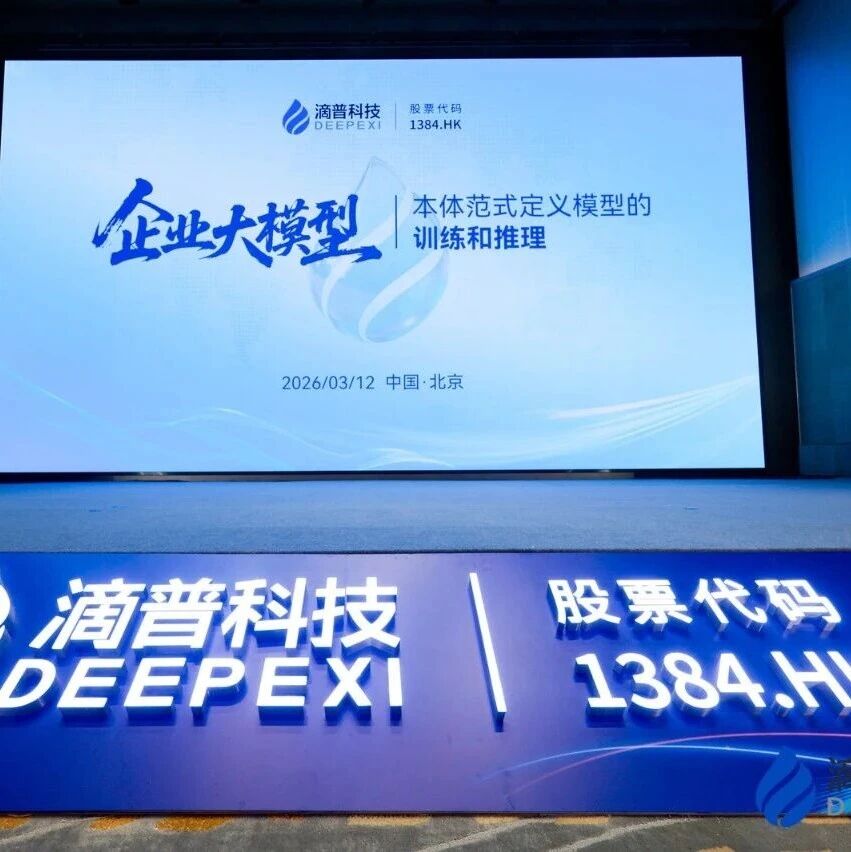
滴普科技发布全新升级的Deepexi企业大模型,用282个Skills打造企业AI员工
36氪· 2026-03-16 09:22
Core Viewpoint - The article discusses the pivotal moment for enterprise AI, highlighting the transition from basic applications to deeper integration within business processes, driven by advancements in technology, policy support, and capital market signals [3][7][30]. Group 1: Current State of Enterprise AI - Over the past two years, large models in enterprises have been used primarily for tasks like writing and summarizing, but have not significantly integrated into business processes due to the complexity of enterprise data [3][4]. - The release of Deepexi's upgraded enterprise model signifies a shift towards enabling AI to understand and participate in business operations, aiming to create AI employees that can assist in various tasks [5][6]. Group 2: Signals Indicating Change - Policy signals indicate a shift in focus from infrastructure and model capabilities to AI applications and commercialization, emphasizing the need for AI employees in enterprises [8]. - Capital market signals show that companies like Deepexi are moving from technology validation to sustainable revenue generation, suggesting a stable business model for enterprise AI [10]. - Technological advancements have allowed AI to evolve from basic tasks to executing complex business operations, marking a significant step towards the realization of AI employees [12][14]. Group 3: Data Governance and Understanding - The ability of AI to become effective employees hinges on robust data governance, which has evolved through three stages, culminating in the use of large models to automate the generation of enterprise ontology models [16][20]. - Deepexi's approach focuses on understanding enterprise data through ontology modeling, enabling AI to comprehend business processes and relationships [24]. Group 4: Execution Capabilities - The upgraded Deepexi model not only analyzes data but also generates executable code, allowing AI to directly interact with enterprise systems, thus transforming its role from a mere advisor to an active executor [25]. - The integration of understanding and execution capabilities positions AI as a valuable asset in business operations, facilitating the development of AI employees [22][25]. Group 5: Infrastructure for AI Employees - Deepexi aims to provide a comprehensive infrastructure for enterprise AI, including components for task execution and data governance, enabling a complete workflow from data management to AI execution [28][29]. - This infrastructure supports the scaling of AI employees within enterprises, marking a significant evolution in how businesses leverage AI technology [29]. Group 6: Future of Enterprise AI - The enterprise AI market is projected to grow significantly, with estimates suggesting a market size of 45.6 billion yuan by 2025, indicating a robust demand for AI applications in business [33]. - The dual-layer structure of enterprise AI, encompassing both application and infrastructure layers, positions it as a leading market segment within the AI industry [34]. - The evolution of enterprise AI mirrors past trends in enterprise software, suggesting that AI employees will become the core deliverable in future digital transformations [35][36].