Depth Anything 3(DA3)

Search documents
谢赛宁盛赞字节Seed新研究!单Transformer搞定任意视图3D重建
量子位· 2025-11-18 05:02
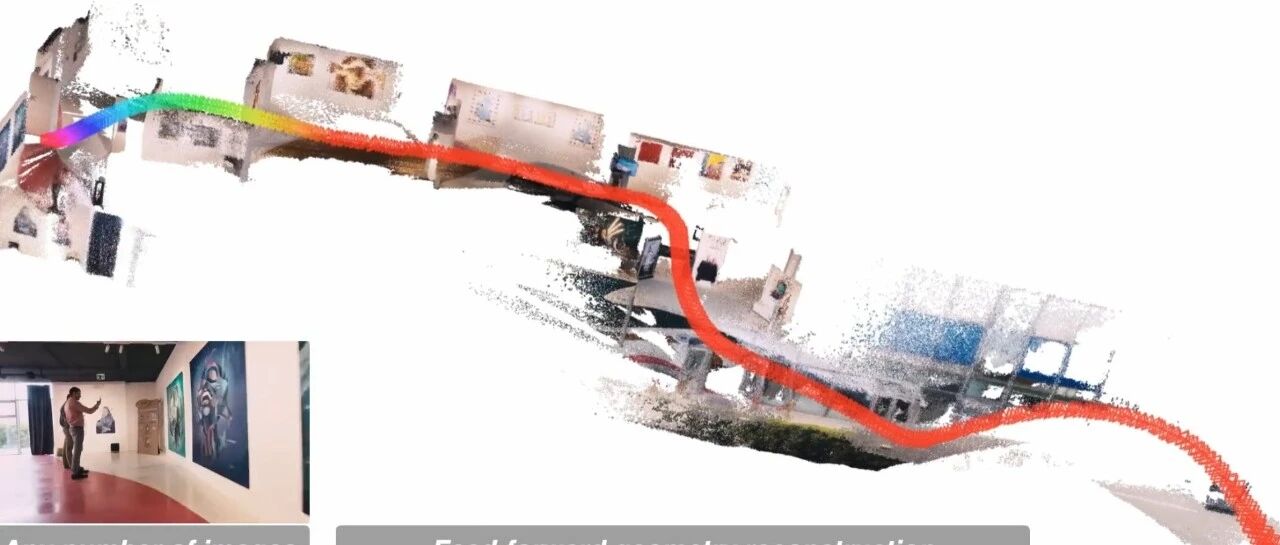
Core Insights - The article discusses the latest research achievement by ByteDance's Seed team, introducing Depth Anything 3 (DA3), which has received high praise from experts like Xie Saining [1] - DA3 simplifies the process of 3D reconstruction by using a single visual transformer to accurately estimate depth and reconstruct camera positions from various input formats, including single images, multi-view photos, and videos [2][7] Performance Improvements - DA3 has shown significant performance enhancements, with an average increase of 35.7% in camera localization accuracy and a 23.6% improvement in geometric reconstruction accuracy compared to previous models [3] - The model surpasses its predecessor, DA2, in monocular depth estimation [3] Architectural Design - DA3's architecture is designed to be simple yet effective, utilizing a single visual transformer and focusing on two core predictions: depth and light [7] - The model's workflow consists of four main stages, starting with input processing where multi-view images are transformed into feature blocks, integrating camera parameters when available [9] - The core of the model is the Single Transformer (Vanilla DINO), which employs both within-view and cross-view self-attention mechanisms to facilitate perspective transitions across different input formats [9] Training Methodology - DA3 employs a teacher-student distillation strategy, where a more powerful teacher model generates high-quality pseudo-labels from vast datasets, guiding the student model (DA3) during training [13] - This approach allows for the effective use of diverse data while reducing reliance on high-precision annotated data, enabling the model to cover a broader range of scenarios during training [14] Evaluation and Applications - DA3 demonstrates robust performance, accurately estimating camera parameters for each frame in a video and reconstructing camera motion trajectories [16] - The depth maps produced by DA3, when combined with camera positions, yield higher density and lower noise 3D point clouds, significantly improving quality compared to traditional methods [17] - The model can also generate images from unshot angles through perspective completion, showcasing potential applications in virtual tourism and digital twins [19] Team Background - The Depth Anything 3 project is led by Kang Bingyi, a post-95 researcher at ByteDance, with a focus on computer vision and multimodal models [20] - Kang completed his undergraduate studies at Zhejiang University in 2016 and pursued a master's and PhD in artificial intelligence at UC Berkeley and the National University of Singapore [23] - He has previously interned at Facebook AI Research and has collaborated with notable figures in the field [24]


3D视觉被过度设计?字节Depth Anything 3来了,谢赛宁点赞
机器之心· 2025-11-15 09:23
Core Insights - The article discusses the release of Depth Anything 3 (DA3), a model that simplifies 3D visual perception using a single depth ray representation and a standard Transformer architecture, eliminating the need for complex designs [5][12][9]. Group 1: Key Findings of Depth Anything 3 - DA3 achieved a 44% improvement in pose estimation and a 25% improvement in geometric estimation compared to the current state-of-the-art methods [7]. - The model can predict spatially consistent geometric shapes from any number of visual inputs, regardless of known camera poses [12]. - DA3 has set new state-of-the-art (SOTA) results across 10 tasks, with a 35.7% improvement in camera pose accuracy and a 23.6% improvement in geometric accuracy [14]. Group 2: Model Architecture and Training - The architecture utilizes a standard pre-trained visual Transformer as the backbone, incorporating an input-adaptive cross-view self-attention mechanism for efficient information exchange [13]. - DA3 employs a teacher-student paradigm for training, utilizing diverse data sources, including real-world depth camera data and synthetic data, to generate high-quality pseudo-depth maps [14]. - The model's design allows for flexibility in integrating known camera poses, making it adaptable to various real-world scenarios [13]. Group 3: Applications and Potential - DA3 demonstrates capabilities in video reconstruction, allowing for visual space recovery from complex video inputs [17]. - The model enhances SLAM performance in large-scale environments, significantly reducing drift compared to previous methods [19]. - DA3's ability to estimate stable and fusion-capable depth maps from multiple camera views can improve environmental understanding in autonomous vehicles and robotics [21]. Group 4: Community Response - Following the release of DA3, many developers have expressed interest in integrating this efficient and straightforward approach into their projects, indicating its practical applicability [22].