
Digital Yuan

Search documents
'The Whole System Is Broken': Anthony Scaramucci Suggests Resistance To Stablecoin Yield Makes Yuan More Attractive Than The Dollar
Yahoo Finance· 2026-01-24 18:31
Core Viewpoint - The refusal to allow stablecoin yield in the U.S. may diminish the attractiveness of the U.S. dollar compared to the Chinese yuan, as China is permitting interest payments on its digital yuan [1]. Group 1: Industry Perspectives - Banks are opposing stablecoin yield to eliminate competition from stablecoin issuers, while China is offering yield, which may influence emerging countries' choices in payment systems [2]. - The American Bankers Association has called for an end to stablecoin rewards, citing concerns that these rewards could lead to a flight of deposits from community banks, negatively impacting their lending capabilities [4]. - The Blockchain Association has countered these claims, stating that evidence does not support the notion that stablecoin rewards threaten community banks or their lending capacity [6]. Group 2: Competitive Landscape - Coinbase CEO Brian Armstrong highlighted that China’s decision to pay interest on its stablecoin provides a competitive advantage and may affect the competitiveness of U.S. stablecoins [4]. - A study by Charles River Associates indicated no evidence of significant deposit outflows from community banks due to stablecoin adoption, suggesting that banks are not genuinely constrained by deposits [6].

GENIUS Act Backlash: Banks Push to Kill Stablecoin Rewards
Yahoo Finance· 2026-01-08 22:25
Core Insights - US lawmakers are considering changes to the GENIUS Act, influenced by banking groups urging Congress to restrict third-party rewards on stablecoins, amidst a stablecoin supply surpassing $316 billion, indicating significant reliance on dollar-pegged tokens for transactions and savings [1][2] Group 1: GENIUS Act Overview - The GENIUS Act establishes foundational regulations for stablecoins, requiring issuers to maintain real dollar reserves and adhere to strict oversight, functioning similarly to cash in a digital format without intermediary banks [3] - The act prohibits issuers from directly paying interest, although crypto platforms can still incentivize users through trading fees or lending returns, which banks are now seeking to limit [4] Group 2: Industry Reactions - Industry representatives argue that banks are motivated by competitive fears rather than genuine risks, emphasizing that the legislation aims to balance safety with innovation [5] - The Blockchain Association supports this perspective, asserting that there is no evidence to suggest that stablecoins undermine banks, and that rewards primarily benefit everyday users rather than large financial institutions [6] Group 3: Potential Implications - If Congress aligns with banking interests, stablecoins may become less attractive, resembling traditional checking accounts without the benefits, which could hinder adoption and negatively impact DeFi applications that depend on stablecoin liquidity [7]
China's Decision To Pay Interest On Digital Yuan Gives Them Competitive Advantage Over The US, Says Brian Armstrong: 'Rewards Benefit Ordinary People'
Benzinga· 2026-01-08 07:27
Core Viewpoint - Coinbase CEO Brian Armstrong raised concerns about the competitiveness of dollar-pegged stablecoins following China's decision to pay interest on its central bank digital currency (CBDC), the Digital Yuan [1][2]. Group 1: Competitive Landscape - Armstrong highlighted that China's move to offer interest on the Digital Yuan provides it with a "competitive advantage" over U.S. stablecoins [2][3]. - He emphasized that rewards or interest payments on stablecoins could benefit ordinary people, similar to community lending, and urged for a market-driven approach [2]. Group 2: Legislative Challenges - The potential for yield payments on stablecoins is a significant barrier to the passage of the cryptocurrency market structure bill, which is supported by industry leaders like Armstrong [4]. - Concerns from Democrats revolve around the possibility that interest on stablecoin balances could divert deposits from traditional banking systems, particularly affecting community banks [4]. Group 3: Market Reactions - Following Armstrong's comments, Coinbase shares experienced a slight increase of 0.19% in after-hours trading, after a regular session decline of 1.85%, closing at $245.93 [5]. - Over the past year, Coinbase's stock has decreased by 5.42% [5].

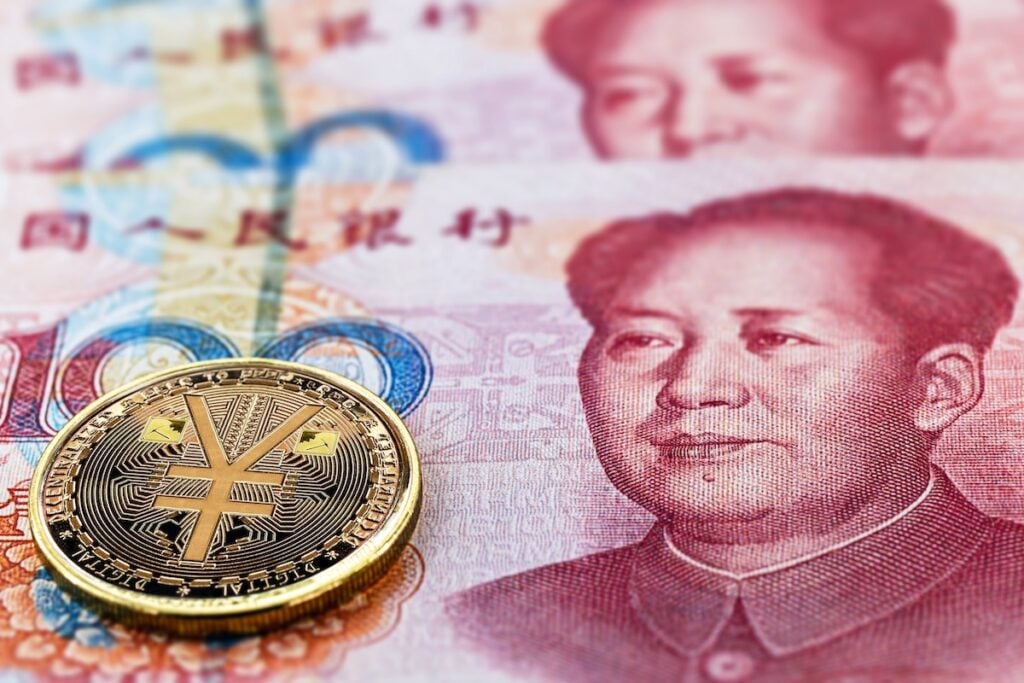
US Competitive Advantage At Stake If Congress Bans Stablecoin Rewards, Coinbase Policy Chief Says
Yahoo Finance· 2026-01-05 14:15
Core Viewpoint - The U.S. risks losing its competitive advantage in the stablecoin market if it mishandles the debate over allowing rewards on dollar-pegged stablecoins, as highlighted by Coinbase's policy chief Faryar Shirzad [1][2]. Group 1: Legislative Context - The U.S. enacted the GENIUS ACT in July, which provides guidelines for stablecoin issuance and prohibits issuers from sharing profits with holders through interest payments [4]. - Banking groups are urging lawmakers to close loopholes in the GENIUS Act, citing concerns over deposit flight risks to community banks that could impact their lending capabilities [5]. Group 2: Competitive Landscape - The People's Bank of China announced it would start paying interest on digital yuan holdings, effective January 1, as part of its strategy to promote the adoption of its Central Bank Digital Currency (CBDC) [3]. - There are concerns that if the U.S. does not adapt its regulations, non-U.S. stablecoins and CBDCs could gain a significant competitive edge, particularly in light of China's interest rate on demand deposits being at 0.05% [2][3]. Group 3: Industry Reactions - The Blockchain Association argues that claims regarding stablecoin rewards harming community banks lack evidence and warns that changes to the GENIUS Act could undermine the regulatory certainty typically associated with Congressional actions [6]. - As negotiations for the Senate's market structure legislation progress, there is optimism from White House officials that the legislation will advance, despite previous delays [7].
Coinbase Says Stablecoin Interest Ban Gives China the Advantage
Yahoo Finance· 2026-01-02 03:54
Core Viewpoint - Coinbase is warning that restrictions on stablecoin interest in the U.S. could inadvertently benefit China, especially as China prepares to allow interest on its digital currency starting early next year [1][4]. Group 1: Current Regulations and Responses - The GENIUS Act prohibits U.S. stablecoin issuers from paying interest directly to users, but some platforms are using workarounds to offer rewards without violating the law [2]. - Banking groups are advocating for regulators to eliminate these workaround options, arguing that they could destabilize traditional banking systems by diverting funds from banks [2][6]. Group 2: Innovation and Market Impact - Crypto firms argue that the push for stricter regulations goes beyond lawmakers' original intentions and could stifle innovation within the industry [3]. - If U.S. regulators enforce a ban on yield from stablecoins, it may lead to a decrease in competitiveness for U.S. stablecoins, particularly as other countries, like China, offer more attractive digital currency options [8]. Group 3: Global Implications - Coinbase's policy team warns that tightening rules around stablecoin rewards could drive users and businesses to seek alternatives, potentially diminishing the global appeal of dollar-backed tokens [4][5]. - The anticipated interest on China's digital yuan could make it a more appealing option for both transactions and long-term investments compared to U.S. stablecoins that do not offer yields [5].
Stablecoin Usage Surged In 2025 as Coinbase Exec Warns US Ban May Grant China Advantage
Yahoo Finance· 2026-01-01 08:47
Core Insights - Stablecoin usage surged significantly in 2025, contributing to the growth of crypto payments and on-chain trading despite a cooling broader market [1] - U.S. policymakers are debating regulations on dollar-pegged digital tokens, with potential implications for global competitiveness, particularly against China [1][8][9] Group 1: Stablecoin Usage and Market Trends - Stablecoin adoption was driven by increased on-chain activity in trading, payments, and yield products, indicating a shift in user interaction with crypto wallets [2][7] - Monthly swap trading volume on Bitget Wallet exceeded $900 million, reflecting a 232% year-over-year increase [2] - On-chain derivatives activity accelerated, with monthly perpetual futures volume nearing $5 billion, marking a 291% increase from the previous year [3] Group 2: Payments and Wallet Utilization - Payments became a significant driver of wallet usage, with spending through Bitget Wallet's crypto-linked card rising more than sixfold since its launch in July [4] - Subscriptions to Bitget Wallet's yield products approached $200 million per quarter by late 2025, over ten times higher than at the beginning of the year [4] Group 3: Regulatory Environment and Competitive Landscape - Regulatory scrutiny in Washington is increasing as stablecoin adoption grows, with potential global implications [6][7] - Concerns were raised that restricting rewards or interest on U.S.-issued stablecoins could undermine their competitiveness, especially as China plans to pay interest on its digital yuan [8][9]
Chinese Investors Pour $188M Into Digital Yuan Firms After PBOC Allows Wallet Interest
Yahoo Finance· 2025-12-30 19:17
Group 1 - Chinese investors have invested over $188 million into digital yuan-related stocks following the PBOC's decision to allow interest on digital yuan wallets, with the top ten shareholders in these firms holding a combined market value of 1.89 billion yuan ($265 million) [1][2] - Seven CBDC-related stocks attracted net inflows exceeding 100 million yuan from major investors on December 29, with Lakala leading at 371 million yuan ($52 million) [2] - The PBOC's decision to permit interest earnings on digital yuan wallets represents a fundamental shift in the CBDC's value proposition, creating a "win-win situation" for enterprises, individuals, and commercial banks [3] Group 2 - Starting January 1, 2026, banks will independently manage assets and liabilities within digital yuan wallet balances under the central bank's action plan covering 2026 to 2030 [3] - The wallets deployed in pilot zones function offline and automatically update balances when connecting to internet-enabled devices [4] - Shandong Province has launched a digital yuan loan program for entrepreneurs, offering startup funding capped at 200,000 yuan (approximately $28,000) [5] Group 3 - The PBOC Digital Currency Research Institute has issued warnings about fraudsters exploiting the new interest features to steal personal and financial data [5][6] - Scammers are creating fake chat rooms and hosting events to convince individuals to "convert" digital yuan through unofficial channels, involving phishing links and counterfeit apps [6]
Are Israel and China Threatening the US Stablecoin Plan?
Yahoo Finance· 2025-12-01 19:51
Group 1: Global Shift in Digital Currency Regulation - Two major economies, Israel and China, are tightening control over digital currencies, signaling a global shift towards sovereign digital money that may challenge the influence of US dollar-based stablecoins [1] - Israel is advancing its digital shekel initiative while China is expanding the digital yuan, both aiming to strengthen their respective payment infrastructures [6][8] Group 2: Stablecoin Market Dynamics - Stablecoins have become a central pillar of the digital asset market, processing over $2 trillion in monthly volume and holding a market cap above $310 billion, predominantly in dollars [2][3] - The concentration of stablecoin activity, primarily dominated by Tether and Circle, raises concerns about potential risks to the wider financial system if issues arise with their reserves [5] Group 3: Regulatory Developments in Israel - The Bank of Israel is preparing to implement stricter oversight of stablecoins due to concerns over their concentration and influence in global money flows [4] - The Bank of Israel has published a detailed design document for the digital shekel, outlining user journeys, technical architecture, and key policy considerations [6] Group 4: China's Regulatory Approach - China's central bank has intensified its crypto ban, targeting stablecoin activity and emphasizing that these tokens do not have legal currency status [8] - The digital yuan's transaction volumes have nearly doubled in the past 14 months, reaching $2 trillion by September, indicating rapid growth [9]