EasyPeso

Search documents
菲律宾贷款:看似很严,实则有空间(附中资互金在菲产品)
3 6 Ke· 2025-11-11 05:46
Core Viewpoint - The article discusses the challenges and opportunities for Chinese fintech companies expanding into overseas markets, particularly in the Philippines, highlighting regulatory changes and market dynamics that differ significantly from the domestic landscape [1][4]. Regulatory Environment - The Philippines SEC has proposed a new regulation that sets a maximum effective interest rate of 10% per month for unsecured loans up to PHP 20,000, effective from December 1, 2025 [1][3]. - Prior to this notification, the effective interest rate cap was 15% per month, indicating a tightening of regulations [3]. Penalties for Non-Compliance - Different penalties apply to financing companies (FCs) and loan companies (LCs) for violations, with fines ranging from PHP 25,000 for first offenses to potential revocation of licenses for severe violations [2][4]. - The penalties for FCs and LCs differ, with FCs facing higher fines for repeated offenses [2]. Market Dynamics - The article notes that compliance and non-compliance coexist in the Philippine lending market, with many operators navigating around regulatory frameworks [4][10]. - The current market has seen a reduction in licensed online lending platforms from over 120 to about 110 due to regulatory actions against high fees and aggressive collection practices [8][9]. Licensing and Market Entry - The cost of obtaining a license for online lending platforms in the Philippines has increased significantly, now reaching approximately USD 800,000 [11]. - New entrants face challenges in getting their products listed on platforms like Google Play, which requires compliance with local regulations [13][12]. Market Characteristics - The Philippine market is characterized by a high proportion of young consumers and rapid adoption of e-commerce and mobile payments, with an internet penetration rate of 89% as of 2024 [18][19]. - The e-commerce market in the Philippines is projected to grow from USD 24.53 billion in 2024 to USD 75.59 billion by 2033, indicating a robust growth potential for fintech services [20].


深度解析奇富科技、乐信、信也科技、嘉银科技、小赢科技、宜人智科2025Q1财报
3 6 Ke· 2025-06-16 04:11
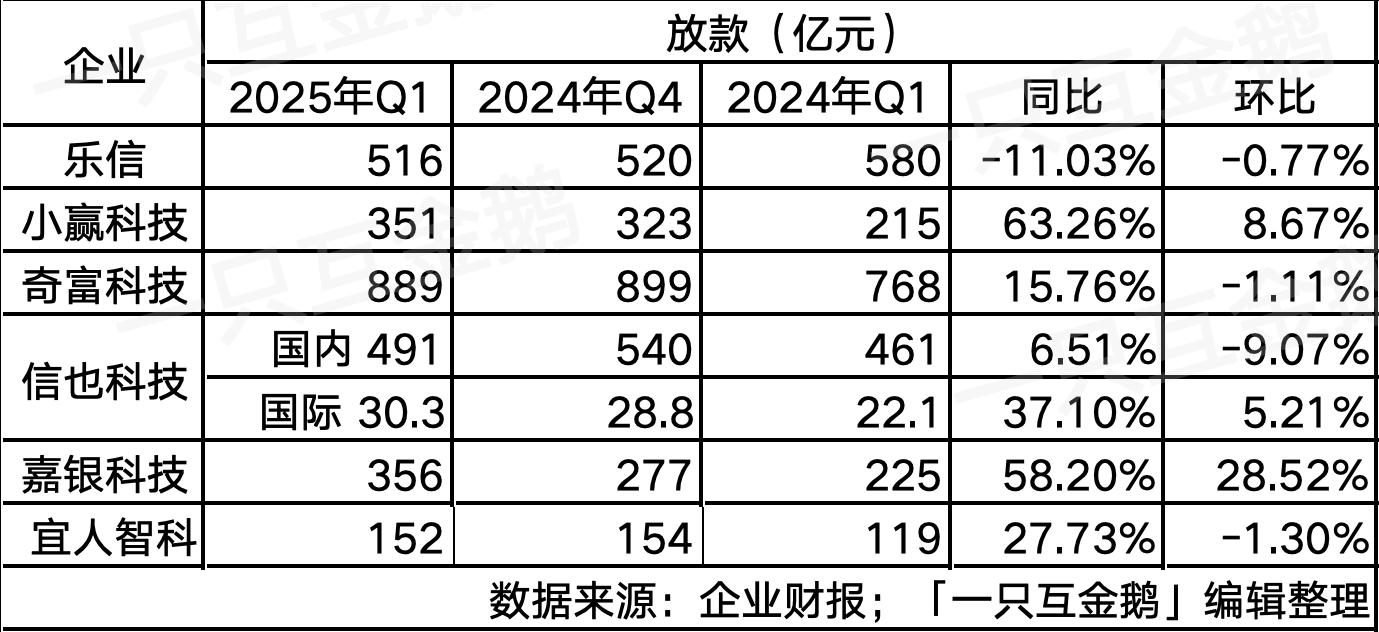
Core Insights - The article discusses the performance of various online financial companies in Q1 2025, highlighting their business models and revenue streams in the evolving fintech landscape in China. Group 1: Business Models of Online Financial Companies - The main business models of online financial companies include self-operated loans, loan facilitation, customer referral, membership and credit report sales, insurance sales, installment shopping, and financial technology services [1][3][6][9][13]. - Loan facilitation is the primary service, which can be categorized into heavy capital models requiring guarantees and light capital models sharing profits with funding sources [4][5]. - Companies are increasingly focusing on customer referral services, leveraging their large customer bases to direct clients to other lending platforms [5][6]. Group 2: Q1 2025 Performance Overview - In Q1 2025, several companies reported varying performance metrics, with most showing year-on-year growth in loan disbursements except for Lexin, which saw an 11% decline [19][22]. - Notable performances include: - Q1 loan disbursements for Qifu Technology reached 888.83 billion yuan, a 15.76% increase year-on-year [22][23]. - Xinyi Technology's international loan disbursements grew by 37.11% year-on-year [19]. - Jiyin Technology reported a 58.2% increase in loan disbursements compared to the previous year [19]. Group 3: Revenue and Profit Trends - Revenue trends varied across companies, with most showing growth except for Lexin, which experienced a 3.1% decline year-on-year [20][22]. - Qifu Technology's revenue reached 46.91 billion yuan, a 12.95% increase year-on-year, while its net profit grew by 54.91% [22][23]. - Jiyin Technology reported a 20.4% increase in revenue, reaching 17.76 billion yuan [20][22]. Group 4: Marketing and Customer Acquisition - Companies are increasing their marketing expenditures to acquire new customers, with Xiaoyin Technology's marketing costs rising by 185% year-on-year [56]. - Qifu Technology's customer acquisition cost increased to 384 yuan, reflecting a strategic shift towards embedded finance channels [24][28]. Group 5: Strategic Developments - Companies are exploring international markets, with Qifu Technology hiring for positions related to operations in the UK, indicating a shift towards developed markets [40]. - Lexin is focusing on risk reduction by directing subprime customers to other platforms, thereby lowering its risk exposure [41][42]. - Jiyin Technology is actively preparing for a potential listing on the Hong Kong Stock Exchange, reflecting its strategic growth ambitions [71].