
Figs

Search documents
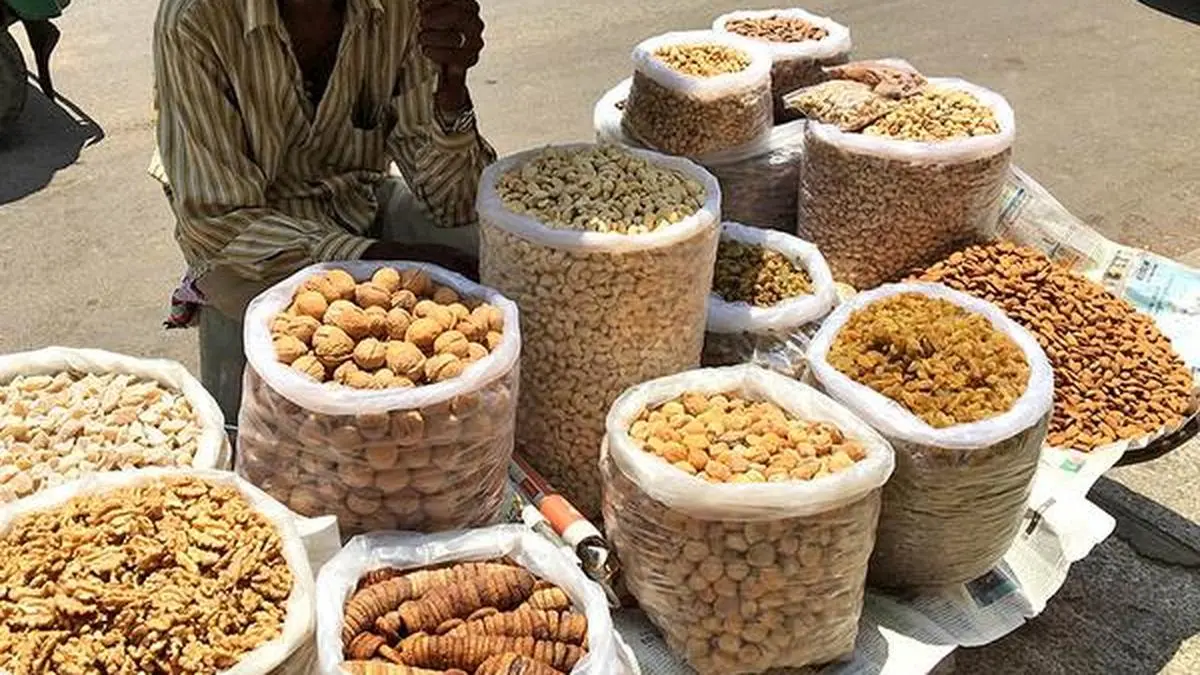
Gulf crisis may make pistachios, figs & raisins costlier for Indian buyers
BusinessLine· 2026-03-02 09:40
Core Insights - Indian consumers are likely to face increased prices for pistachios, raisins, and figs due to supply disruptions caused by the Gulf crisis, while walnut prices are expected to remain stable for the next couple of months due to ample stocks [1][6]. Supply Chain Impact - The closure of Bandar Abbas and Chabahar ports has severely affected Iranian shipments, which are crucial for India's dry fruit imports [2]. - The ongoing conflict between Iran and the US-Israel axis has led to significant geopolitical tensions, impacting trade routes and supply chains [2]. Price Changes - Prices for pistachios have risen by ₹100 per kg, with current prices around ₹1,500-1,600 per kg for kernels and ₹1,200-1,300 per kg for in-shell pistachios [1][4]. - Figs have also seen a price increase of ₹100 per kg, with potential supply issues due to reliance on Afghan shipments [5]. - Raisin prices are expected to rise as Indian arrivals have ceased, while walnut prices are stable due to sufficient stock levels [6]. Regional Market Conditions - The North Indian market, particularly New Delhi, is experiencing a lesser impact on prices due to the Holi festival holidays, which may provide temporary relief [3][4]. - The availability of walnuts from Kashmir is expected to help stabilize the domestic market in the short term [6]. Trade Policies - India imposes a 100% import duty on walnuts and over 30% on other nuts, but allows zero-duty imports from Afghanistan under the South Asian Free Trade Agreement [7].


New road to Kabul: India balances commerce, strategy and Afghan voices
The Economic Times· 2025-12-07 02:16
Core Insights - New Delhi is strategically improving ties with the Taliban, which is expected to benefit Afghan traders in India, despite many Afghans' disdain for the Taliban regime [2][5][24] - The diplomatic engagement has been marked by the establishment of an air-freight corridor and the upgrading of India's mission in Kabul to a full-fledged embassy [6][14] - Trade between India and Afghanistan remains resilient, with a significant increase in imports from Afghanistan, particularly in dried fruits and spices [14][26] Trade Dynamics - India's exports to Afghanistan decreased from $554 million in FY22 to $319 million in FY25, while imports surged by 35% from $511 million to $690 million [14][26] - The import basket is led by figs, hing, raisins, and apples, reflecting a deep culinary connection between the two nations [15][26] - Afghan traders in India continue to thrive, utilizing air transport for goods, with Ariana Afghan Airlines recently reducing freight charges to $1 per kg for exports [22][26] Diplomatic Landscape - The relationship between India and the Taliban is evolving, with India cautiously building ties since the Taliban's takeover in 2021 [10][11] - Former Indian officials emphasize the importance of maintaining operational ties with the Taliban while nurturing people-to-people connections [8][11] - Regional developments, including Pakistan's deteriorating relationship with Kabul, have influenced India's diplomatic strategy [9][17] Market Challenges - The closure of land routes between Afghanistan and India has forced trade to reroute through Iran's Chabahar port, complicating logistics for Afghan traders [18][26] - Despite these challenges, Afghan apples and other goods continue to reach Indian markets, albeit at higher prices due to transportation costs [19][26] - Afghan traders in India, known as Kabuliwallahs, prioritize business opportunities over political affiliations, focusing on trade and maintaining connections [23][24]
