Fixed Deposits

Search documents
Kotak Mahindra Bank responds over alleged fraud: Initiated ‘detailed reconciliation’ of FDs to Panchkula Municipal Corp
MINT· 2026-03-25 10:25
Kotak Mahindra Bank today said it has initiated a detailed reconciliation of fixed deposits and linked bank accounts maintained by the Municipal Corporation of Panchkula, following instructions from the civic body.In a statement, the spokesperson said that the Bank has examined records to confirm that all processes and documentation related to the Panchkula Municipality's account are in order and were handle as per norms.What has Kotak Mahindra Bank stated?“Following instructions from the Municipal Corporat ...


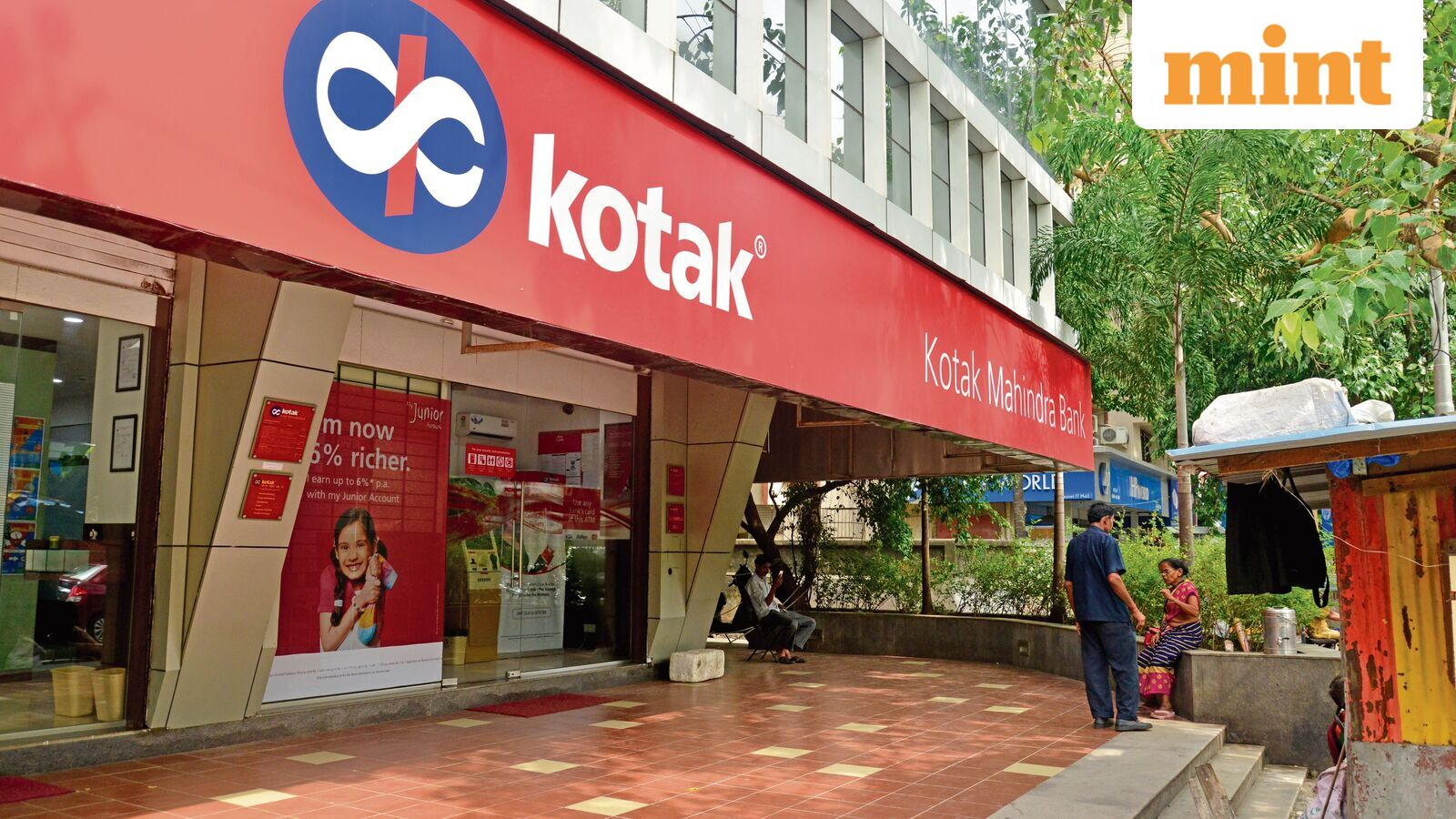
Haryana Govt finds ₹150 crore discrepancy in FDs placed by Panchkula Municipal Corp at Kotak Mahindra Bank
BusinessLine· 2026-03-25 08:23
The Haryana Government has come across yet another fraud relating to fixed deposits at a Bank. This time the Government reportedly found discrepancy in the FDs aggregating about ₹150 crore placed by the Panchkula Municipal Corporation and the records at Kotak Mahindra Bank.The Tribune, in a report quoting sources, said the Panchkula MC had deposited the amount at the Kotak Mahindra Bank branch in Sector 11, Panchkula.“Recently, when officials approached the bank about the maturity of a fixed deposit (FD) wo ...
SBI vs BoB vs PNB: Fixed deposit interest rates of top PSU banks compared — check latest rates across tenures
MINT· 2026-03-17 12:54
Core Insights - The current geopolitical challenges and equity market volatility necessitate a sensible investment strategy, with market volatility primarily driven by the Iran-US and Russia-Ukraine conflicts [1] Group 1: Fixed Deposits as Investment Options - Fixed deposits (FDs) are favored by risk-averse investors, especially those backed by public sector banks (PSUs) [1] - A comparison of prominent PSU banks reveals meaningful variations in fixed deposit interest rates across different tenures [2] Group 2: Interest Rates Offered by PSU Banks - The interest rates for fixed deposits from top PSU banks are as follows: - Punjab National Bank: 6.25% (1-Year), 6.30% (3-Year), 6.10% (5-Year), 6.00% (10-Year) - State Bank of India: 6.25% (1-Year), 6.30% (3-Year), 6.05% (5-Year), 6.05% (10-Year) - Bank of Baroda: 6.10% (1-Year), 6.25% (3-Year), 6.30% (5-Year), 6.00% (10-Year) - Union Bank of India: 6.30% (1-Year), 6.25% (3-Year), 6.00% (5-Year), 6.00% (10-Year) - Bank of Maharashtra: 6.20% (1-Year), 5.25% (3-Year), 5.00% (5-Year), 5.00% (10-Year) [3] Group 3: Recommendations for Fixed Deposits - For a 3-year fixed deposit, Punjab National Bank and State Bank of India offer attractive rates of 6.30%, making them suitable for investors seeking steady, low-risk returns [4] - For a 5-year tenure, Bank of Baroda provides the highest rate at 6.30%, appealing to investors looking for stability [5] Group 4: Asset Allocation Strategy - A well-defined asset allocation strategy is essential for effective wealth compounding amid global financial volatility, and merely chasing headline interest rates is not advisable [7]

Planning an FD? Check latest interest rates of SBI, HDFC Bank, ICICI Bank, and other top lenders in India
MINT· 2026-03-06 17:46
Core Viewpoint - Fixed Deposits (FDs) are considered a safe investment tool, offering guaranteed returns with higher interest rates than savings accounts, making them suitable for risk-averse investors [1][2]. Summary by Sections Fixed Deposit Overview - FDs allow individuals to invest a lump sum in a financial institution for a predetermined period, earning interest at a fixed rate, which provides stable and predictable earnings compared to stocks and mutual funds [2]. Interest Rate Determinants - The tenure for FDs can range from a few days to several years, with longer tenures generally offering slightly higher interest rates, though this varies by institution [3]. Withdrawal and Tax Considerations - FDs typically incur penalties for premature withdrawals, and the interest earned is subject to income tax, necessitating a comparison of interest rates, tenure options, and withdrawal conditions across banks [4]. State Bank of India (SBI) Rates - SBI offers FD interest rates from 3.05% to 6.05% for general depositors and 3.55% to 7.05% for senior citizens, with tenures ranging from 7 days to 10 years [5]. - The highest FD rate at SBI is 6.80% for senior citizens with a two-year tenure [6]. ICICI Bank Rates - ICICI Bank provides interest rates from 2.75% to 6.50% for general depositors and 3.25% to 7.10% for senior citizens, with tenures between 7 days and 5 years [9]. - The highest interest rate at ICICI Bank is 7.10% for senior citizens investing in deposits of three to five years [10]. HDFC Bank Rates - HDFC Bank offers interest rates from 2.75% to 6.15% for general depositors and 3.25% to 6.65% for senior citizens, with tenures ranging from 7 days to 10 years [12]. - The highest interest rate of 7% is available for senior citizens investing in FDs with tenures from three years to four years and seven months [13]. Axis Bank Rates - Axis Bank provides interest rates from 3% to 6.45% for general depositors and 3.50% to 7.20% for senior citizens, with tenures ranging from 7 days to 10 years [14]. - The highest interest rate of 7.20% is offered to senior citizens for FDs with tenures from 5 to 10 years [15].

Bank FDs earn up to 7.5%! Check latest interest rate for March 2026—compare SBI, HDFC, ICICI and Yes Bank fixed deposits
MINT· 2026-03-03 09:23
Fixed deposits are a safe and reliable investment tool for conservative investors to earn consistent long-term returns. Compared to simply parking your money in a savings account, a fixed deposit or FD, allows you to allocate a lumpsum amount to a financial institution for a fixed period of time and for a fixed rate of interest. FDs also tend to have higher interest rate that a savings account.FDs are great financial tools when saving for specific goals and can be automated so that the deductions from your ...

With eye on FDs, SBI chief seeks tax parity on financial products
The Times Of India· 2026-01-31 19:04
Group 1 - The State Bank of India (SBI) chairman CS Setty emphasized the need for a level playing field in tax treatment for all financial products, particularly fixed deposits, as bank deposits lag behind credit growth due to a shift towards mutual funds [4][2] - SBI Research recommended aligning tax rates on deposit interest with capital gains to encourage household savings in banks, reflecting a broader consensus in the financial sector on fiscal prudence and consolidation [4][2] - The Indian Banks' Association has been advocating for tax benefits for fixed deposits, highlighting the current eligibility for deductions under the old tax regime, which is less favored by taxpayers [4] Group 2 - The ratio of mutual fund assets under management (AUM) to bank deposits has increased significantly, from 12.6% in 2015 to over 33.5% in 2025, indicating a structural shift in investor behavior [3][4] - Bank deposits have grown nearly three times over the past decade, while mutual fund AUM has seen more than seven times growth, suggesting a trend where savers are increasingly seeking better post-tax returns in equities [3][4] - Concerns have been raised by industry leaders, including Uday Kotak and MV Rao, regarding the systemic risks posed by the ongoing shift of funds from bank deposits to non-banking assets like equities and mutual funds [3][4]

Deposit Rate Cuts Tough For Banks As Govt Retains Small Savings Rates
Rediff· 2026-01-14 03:34
Core Viewpoint - The government's decision to maintain interest rates on small savings schemes will limit banks' ability to further reduce deposit rates, impacting their overall deposit strategies [1][9]. Group 1: Government's Decision on Small Savings Rates - The government has decided to keep interest rates unchanged for various small savings schemes for the January-March 2026 quarter, including the Public Provident Fund (PPF) at 7.1%, Sukanya Samriddhi Yojana at 8.2%, and National Savings Certificate (NSC) at 7.7% [3][4]. - This marks the eighth consecutive quarter that these rates have remained unchanged, despite the Reserve Bank of India (RBI) cutting the repo rate by 125 basis points since February of the previous year [5]. Group 2: Impact on Banks and Deposit Rates - Banks are facing challenges in reducing deposit rates further due to the unchanged small savings rates, which could make deposits less attractive compared to alternative investment options [8][10]. - The weighted average lending rate (WALR) on fresh rupee loans decreased by 69 basis points from February to October 2025, while the weighted average domestic term deposit rate (WADTDR) on fresh deposits declined by 105 basis points during the same period [5][6]. - Deposit growth has slowed to 9.35% year-on-year, while credit growth has risen to nearly 12%, widening the credit-deposit growth gap by over 260 basis points [11]. Group 3: Market Competition and Strategy - Banks are experiencing increased competition from capital markets, particularly mutual funds and equity markets, which are attracting household savings away from traditional deposits [14]. - Each bank will determine its deposit rate strategy based on its credit growth ambitions and net interest margin (NIM) outlook, influenced by the liquidity conditions and interest rates of competing investment products [10][14]. - The certificate of deposit (CD) market has seen significant activity, with banks raising over ₹50,000 crore through this route in recent weeks, indicating a shift in funding strategies [15].

Risk vs Reward in Investing: A Beginner’s Guide to Smarter Decisions
The Smart Investor· 2025-09-11 23:30
Core Concept - The article emphasizes the importance of weighing risks against rewards in investing, highlighting that no investment is completely risk-free and that understanding this balance is crucial for achieving financial goals [1][15]. Risk in Investing - Risks in investing are categorized into several types, including market risk, inflation risk, foreign exchange risk, liquidity risk, and default risk [6]. - An example illustrates that while a low-interest savings account offers safety, it risks erosion of cash savings due to inflation, which has averaged 2.36% over the last five years, compared to the historical annual returns of about 8.3% for Singapore's Straits Times Index [4]. Reward in Investing - Rewards from investments can come in various forms, such as capital gains, dividends, and interest income from fixed deposits [5][7]. - Singapore Airlines is cited as a popular dividend stock, having paid out a dividend of S$0.40 over the past 12 months, resulting in a trailing dividend yield of 6.1% based on a share price of S$6.54 [8]. Risk-Reward Trade-Off - The general rule in investing is that higher risk typically correlates with the potential for higher returns, as seen with high-risk assets like cryptocurrencies versus lower-risk government bonds [10]. - Medium-risk assets, such as blue-chip stocks, can offer capital gains and regular dividends, but investors must research the fundamentals of these companies to ensure they can withstand market volatility [11]. Balancing Risk and Reward - Beginners are advised to start with lower-to-medium risk investments and gradually include riskier assets as their knowledge and confidence grow [12]. - Key considerations for investors include their investment horizon, risk appetite, and desired diversification, which will influence the types of financial products they choose [14]. Investment Strategy - The article stresses the importance of not chasing high returns without understanding the associated risks and encourages prudent long-term investment strategies [18].