Flamingo

Search documents
万字长文总结多模态大模型最新进展(Modality Bridging篇)
自动驾驶之心· 2025-11-15 03:03
Core Insights - The article discusses the emergence of Multimodal Large Language Models (MLLMs) as a significant research focus, highlighting their capabilities in performing multimodal tasks such as story generation from images and mathematical reasoning without OCR, indicating a potential pathway towards general artificial intelligence [2][4]. Group 1: MLLM Architecture and Training - MLLMs typically undergo large-scale pre-training on paired data to align different modalities, using datasets like image-text pairs or automatic speech recognition (ASR) datasets [2]. - The Perceiver Resampler module maps variable-sized spatiotemporal visual features from a vision encoder to a fixed number of visual tokens, reducing computational complexity in visual-text cross-attention [6][8]. - The training process involves a two-phase strategy: the first phase focuses on visual-language representation learning from frozen image encoders, while the second phase guides visual-to-language generation learning from frozen LLMs [22][24]. Group 2: Instruction Tuning and Data Efficiency - Instruction tuning is crucial for enhancing the model's ability to follow user instructions, with the introduction of learned queries that interact with both visual and textual features [19][26]. - The article emphasizes the importance of diverse and high-quality instruction data to improve model performance across various tasks, including visual question answering (VQA) and OCR [44][46]. - Data efficiency experiments indicate that reducing the training dataset size can still maintain high performance, suggesting potential for further improvements in data utilization [47]. Group 3: Model Improvements and Limitations - LLaVA-NeXT shows improvements in reasoning, OCR, and world knowledge, surpassing previous models in several benchmarks [40]. - Despite advancements, limitations remain, such as the model's inability to handle multiple images effectively and the potential for generating hallucinations in critical applications [39][46]. - The article discusses the need for efficient sampling methods and the balance between data annotation quality and model processing capabilities to mitigate hallucinations [48].


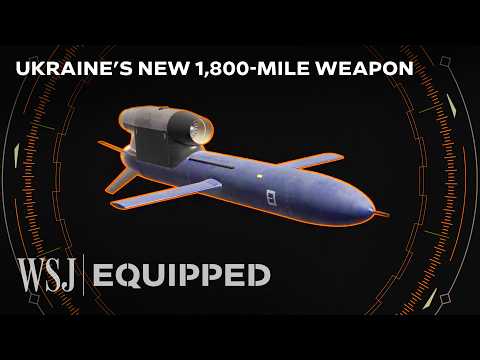
Ukraine’s New Homemade Cruise Missile Packs a One-Ton Warhead | WSJ Equipped
The Wall Street Journal· 2025-09-30 14:00
Weapon Capabilities & Specifications - The FP-5 cruise missile "Flamingo," unveiled by Ukraine, can carry a 1-ton warhead and strike targets beyond the range of Ukraine's current arsenal [1] - Flamingo has a 20-foot wingspan, significantly larger than the US-made Tomahawk's under 9-foot wingspan, potentially allowing for a larger warhead and more fuel [2][3] - Flamingo's range is approximately 1,800 miles, 300 miles further than a Tomahawk, enabling strikes deep inside Russia [3][4] - The missile's design prioritizes simplicity with fixed wings, a carbon body, and an external turbofan engine to reduce production costs and increase production speed [5] Strategic Implications & Potential Targets - Analysts believe Ukraine will likely target Russia's oil and gas industries, which are critical for funding the war [6] - Ukraine's previous drone attacks shut down facilities accounting for at least 17% of Russia's oil processing capacity [8] - Flamingo's larger payload could increase the impact on targeted facilities compared to drone strikes [9][10] - Domestically produced missiles provide Ukraine with long-term deterrence and financial benefits, reducing reliance on foreign suppliers and their restrictions [11][12] Production & Financial Considerations - Ukraine aims to establish a significant missile industry post-war to drive economic growth [13] - Mass production of Flamingo faces challenges, including budget constraints and potential shortages of parts, particularly turbofan engines [14][17] - Experts caution that Flamingo alone is unlikely to be a "game-changer" in the war [16] - The manufacturer aims to produce around 200 Flamingos per month by October, but faces challenges related to parts availability and manpower [17][18]
2025年中国多模态大模型行业主要模型 主要多模态大模型处理能力表现出色【组图】
Qian Zhan Wang· 2025-05-22 08:58
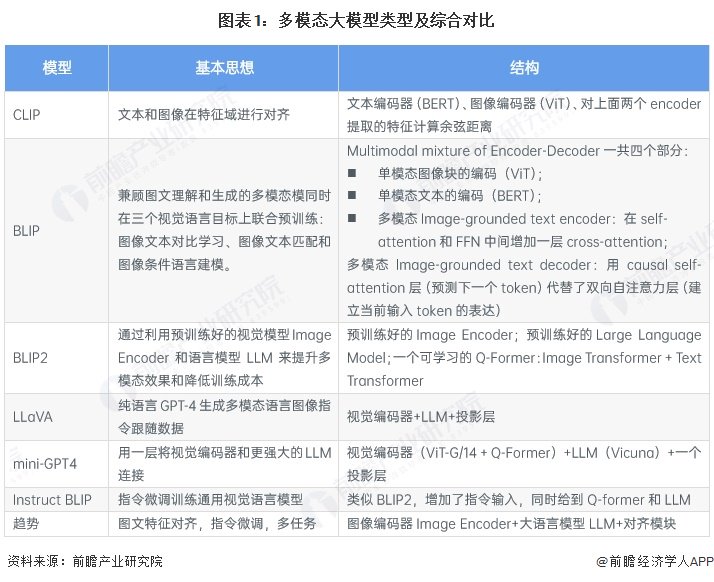
Core Insights - The article discusses the development and comparison of multimodal large models, emphasizing the integration of visual and language components to enhance understanding and generation capabilities in AI systems [1][7]. Multimodal Model Types - The mainstream approach for visual and language multimodal models involves using pre-trained large language models and image encoders, connected through a feature alignment module to enable deeper question-answer reasoning [1]. - CLIP, developed by OpenAI, utilizes a contrastive learning method to connect image and text feature representations, allowing for zero-shot classification by calculating cosine similarity between text and image embeddings [2]. - Flamingo, introduced in 2022, combines visual and language components, enabling text generation based on visual and textual inputs, and includes various datasets for training [5]. - BLIP, proposed by Salesforce in 2022, aims to unify understanding and generation capabilities for visual language tasks, enhancing model performance through self-supervised learning and addressing complex tasks like image generation and visual question answering [7]. - LLaMA integrates a visual encoder (CLIP ViT-L/14) with a language decoder, utilizing generated data for instruction fine-tuning, ensuring that visual and language tokens exist in the same feature space [8].