FocusZen脑环

Search documents
《时代摘要》对话强脑科技韩璧丞:脑机接口产业迎来“奇点时刻”
Xin Hua Wang· 2025-11-28 03:06
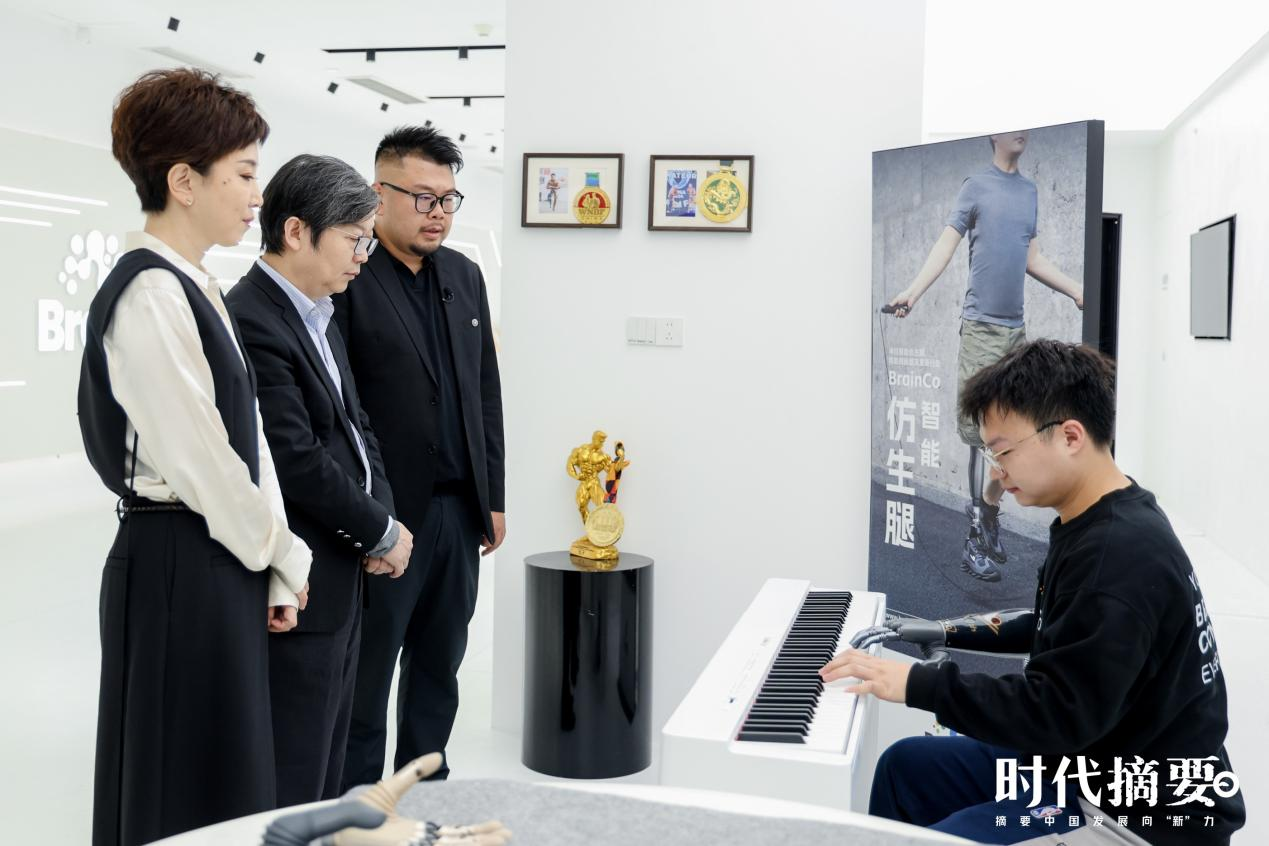
Core Insights - Brain-computer interface (BCI) technology is on the verge of a breakthrough, recognized as one of the six future industries in China's 14th Five-Year Plan, alongside quantum technology and hydrogen energy [1][13] - BrainCo, headquartered in Hangzhou, has emerged as a leading player in non-invasive BCI technology, competing with Neuralink, and is focused on transforming future industries into new growth points [1][10] Group 1: Technological Breakthroughs - BrainCo was founded in 2015 by Han Bicheng and a team of Chinese students from Harvard, focusing on developing non-invasive BCI technology [2][4] - The company has dedicated ten years to perfecting a "super sensor" capable of detecting human neural signals, achieving a signal recognition accuracy of over 95% [4][7] - The non-invasive sensor captures neural and brain signals without the need for complex surgeries, making it safer and more accessible compared to invasive methods [6][10] Group 2: Market Applications - BrainCo's products target critical needs, particularly in rehabilitation, offering bionic hands that are significantly cheaper than imported smart prosthetics, priced at 1/7 to 1/10 of similar products [10][12] - The company has established a presence in over 400 hospitals and rehabilitation centers across China, aiming to assist over 6,000 disabled individuals this year [10][12] - Non-invasive BCI technology has been included in basic medical insurance in Zhejiang Province, facilitating wider adoption and market growth [12] Group 3: Future Prospects - The BCI technology is now part of China's strategic planning, providing unprecedented opportunities for companies in this sector [13][15] - BrainCo aims to help 1 million disabled individuals obtain smart prosthetics within the next 5-10 years, enhancing their quality of life [13] - Future developments include devices for treating Alzheimer's, depression, and Parkinson's disease, with the goal of revolutionizing human-machine interaction [15]