FoodStorm

Search documents
Maplebear (NasdaqGS:CART) 2026 Conference Transcript
2026-03-04 21:22
Maplebear (NasdaqGS:CART) 2026 Conference March 04, 2026 03:20 PM ET Company ParticipantsBrian Nowak - Managing DirectorChris Rogers - CEOBrian NowakBefore we get started, I have to read the research disclosures. All important disclosures, including personal holdings disclosures and Morgan Stanley disclosures, appear on the Morgan Stanley public website. They are also available at www.morganstanley.com/researchdisclosures and at the registration desk. Some of the statements made today by Instacart may be co ...

Maplebear (CART) - 2025 Q4 - Earnings Call Transcript
2026-02-12 23:00
Financial Data and Key Metrics Changes - The company reported a Gross Transaction Value (GTV) of $9.85 billion for Q4 2025, representing a 14% year-over-year increase, marking the strongest growth in three years [20] - Orders reached 89.5 million, up 16% year-over-year, while the average order value decreased by 1% year-over-year [20] - GAAP net income was $81 million, down 46% year-over-year, primarily due to higher G&A expenses related to non-recurring legal matters [22] - Adjusted EBITDA grew 20% year-over-year to $303 million, with operating cash flow of $184 million, also up 20% year-over-year [22] Business Line Data and Key Metrics Changes - Advertising and other revenue grew 10% year-over-year, driven by strong GTV performance and an increase in active brand partners to over 9,000 [21] - The enterprise segment powered more than 380 grocery e-commerce sites, with significant growth opportunities identified for both new and existing partners [8][31] Market Data and Key Metrics Changes - The company operates in a highly fragmented grocery market that is still early in its online journey, presenting substantial growth opportunities [5] - The competitive landscape includes major players like Amazon and DoorDash, but the company maintains a leading share among digital-first players, particularly in large basket transactions [36][38] Company Strategy and Development Direction - The company's strategy focuses on being the trusted platform for grocery needs, enhancing technology for grocers, and expanding its advertising ecosystem [6] - Generative AI is being leveraged to increase operational efficiency and enhance the value of first-party data [6][13] - The company aims to accelerate its growth and capitalize on the omnichannel transformation of grocery [18] Management's Comments on Operating Environment and Future Outlook - Management expressed confidence in the company's ability to drive durable, profitable growth, citing strong momentum and a favorable operating environment [4][18] - The outlook for Q1 2026 anticipates GTV growth between 11%-13%, with advertising revenue expected to grow 11%-14% year-over-year [24] Other Important Information - The company plans to shift to an annual shareholder letter starting Q1 2026 to better reflect long-term strategy [2] - A significant share repurchase program was executed, totaling $1.4 billion in 2025, including $1.1 billion in Q4 alone [23] Q&A Session Summary Question: How should we think about the scope of the opportunity in marketplace and enterprise adoption? - Management emphasized that both marketplace and enterprise segments are growing, with enterprise providing deeper strategic conversations and technical integrations with retailers [29][30] Question: What has driven the acceleration in business metrics? - The acceleration is attributed to strong user growth, engagement, and multiple growth initiatives working together, including enhancements in product selection and partnerships [34][35] Question: How is advertising performing in the fourth quarter? - Advertising revenue grew 10%, driven by GTV strength and diversification across supply and demand, with over 9,000 brands now advertising on the platform [41][43] Question: What are the plans for international growth? - The company is excited about international opportunities, leveraging existing technology and partnerships to expand into underdeveloped markets [48][49] Question: What is the status of Instacart Plus adoption? - Instacart Plus continues to grow, representing the majority of GTV and orders, with members showing higher engagement and retention [64][66]
Maplebear (CART) - 2025 Q3 - Earnings Call Transcript
2025-11-10 14:02
Financial Data and Key Metrics Changes - In Q3 2025, orders reached 83.4 million, up 14% year-over-year, driving Gross Transaction Value (GTV) of $9.17 billion, up 10% year-over-year [22] - Average order value decreased by 4% year-over-year, primarily due to growth in restaurant orders and the introduction of a $10 basket minimum for Instacart+ members [22] - GAAP net income was $144 million, up 22% year-over-year, and adjusted EBITDA also grew 22% year-over-year to $278 million [23] - Operating cash flow increased by $102 million year-over-year to $287 million [23] - Q4 GTV is anticipated to range between $9.45 billion and $9.6 billion, representing year-over-year growth of 9%-11% [24] Business Line Data and Key Metrics Changes - The Marketplace continues to be the backbone of the business, with a growing and loyal customer base, increasing order frequency, and higher retention rates [7][8] - Advertising and other revenue grew 10% year-over-year, representing 2.9% of GTV, which was flat year-over-year [23] - The Enterprise Platform is a key growth driver, with over 350 retailer e-commerce storefronts powered by Instacart's technology [10][14] Market Data and Key Metrics Changes - The advertising ecosystem has expanded, with over 7,500 brand partners, and on average, brand partners see a 25% boost in sales when advertising on Instacart [16] - The company is seeing strong performance in October, indicating continued momentum despite macroeconomic challenges [24][52] Company Strategy and Development Direction - The company is focused on three key areas for strategic investment: affordability, accelerating the Enterprise Platform, and enhancing the advertising ecosystem [31][32][33] - International expansion is a priority, with plans to grow in Europe and Australia using existing products like Storefront, Caper, and FoodStorm [19][50] - The company emphasizes its role as a technology and enablement partner for the grocery industry, not just a marketplace [20] Management's Comments on Operating Environment and Future Outlook - Management expressed confidence in the business's strength and growth potential, highlighting a disciplined approach to investing while driving profitability [20][26] - The company is not overly concerned about competition, as it continues to lead in areas like large basket activations and retailer-owned sites [81][82] - Management is optimistic about returning advertising revenue to double-digit growth in 2026 [25][42] Other Important Information - The company increased its share repurchase program by $1.5 billion, reflecting confidence in its long-term value creation [20][26] - Stock-based compensation in Q3 was $82 million, down $24 million quarter-over-quarter [23] Q&A Session Summary Question: What are the biggest strategic investments for growth? - Management highlighted three focus areas: affordability, accelerating the Enterprise Platform, and enhancing the advertising ecosystem [31][32][33] Question: How will AI solutions be monetized? - AI solutions will connect various parts of the shopping journey, enhancing operations and customer experiences, with monetization expected over time [40] Question: What is the impact of new partnerships and international growth? - New partnerships are seen as critical for growth, with ongoing efforts to expand internationally using existing products [49][50] Question: How does the competitive environment affect pricing strategies? - Retailers are aware of competitive dynamics, and Instacart is actively engaging with them on pricing strategies to remain competitive [72] Question: What is the contribution of the Enterprise solution to revenues? - The Enterprise solution increases order density and provides cost-to-serve advantages, reinforcing both Marketplace and Enterprise growth [78][80]
Maplebear (CART) - 2025 Q3 - Earnings Call Transcript
2025-11-10 14:02
Financial Data and Key Metrics Changes - In Q3 2025, orders reached 83.4 million, up 14% year over year, driving Gross Transaction Value (GTV) of $9.17 billion, up 10% year over year [22] - Average order value decreased by 4% year over year, primarily due to growth in restaurant orders and the introduction of a $10 basket minimum for Instacart+ members [22] - GAAP net income was $144 million, up 22% year over year, and adjusted EBITDA also grew 22% year over year to $278 million [23] - Operating cash flow increased by $102 million year over year to $287 million [23] - The company repurchased $67 million worth of shares in Q3 and ended the quarter with approximately $1.9 billion in cash and similar assets [23] Business Line Data and Key Metrics Changes - The marketplace continues to be the backbone of the business, with a growing and loyal customer base, leading to increased order frequency and customer retention [7][8] - Advertising and other revenue grew 10% year over year, representing 2.9% of GTV, which was effectively flat year over year [23] - The enterprise platform is a key growth driver, with over 350 retailer e-commerce storefronts powered by the company’s technology [10][14] Market Data and Key Metrics Changes - The company is seeing strong demand in October, with continued momentum from enterprise partnerships [24][52] - The advertising ecosystem has diversified, with partnerships established with platforms like TikTok and Pinterest, enhancing the overall advertising capabilities [16][44] Company Strategy and Development Direction - The company aims to enhance affordability, accelerate enterprise growth, and innovate in the advertising space [31][32][33] - The enterprise platform is seen as a strategic growth lever, with opportunities for cross-selling additional solutions to existing partners [14] - The company is focused on international expansion, particularly in Europe and Australia, leveraging existing products [19][50] Management's Comments on Operating Environment and Future Outlook - Management expressed confidence in the business's strength and the ability to drive sustainable growth in the short, medium, and long term [19][20] - The company is committed to disciplined execution and increasing profitability, with a guidance for Q4 adjusted EBITDA of $285-$295 million [25][26] - Management acknowledged the challenges in the macro environment but remains optimistic about returning advertising revenue to double-digit growth in 2026 [25][42] Other Important Information - The company launched a suite of AI products aimed at helping retailers gain a competitive advantage [12][13] - A $1.5 billion increase to the share repurchase program was authorized, reflecting confidence in long-term value creation [20][26] Q&A Session Summary Question: What are the biggest strategic investments for growth? - Management highlighted three focus areas: affordability, accelerating enterprise growth, and enhancing the advertising ecosystem [30][31][33] Question: How will AI solutions be monetized? - AI solutions will be offered as enterprise capabilities, enhancing operations and customer experiences for retail partners [40] Question: What is the impact of new partnerships and international growth plans? - New partnerships are expected to drive significant growth, with a disciplined approach to international expansion [49][50] Question: How does the competitive environment affect pricing strategies? - Management noted that retailers are aware of competitive dynamics and are testing price parity pilots to remain competitive [72] Question: What is the contribution of enterprise solutions to overall business? - Enterprise solutions are critical for order density and cost-to-serve advantages, reinforcing both marketplace and enterprise growth [78][80]
Maplebear (CART) - 2025 Q3 - Earnings Call Transcript
2025-11-10 14:00
Financial Data and Key Metrics Changes - In Q3 2025, the company reported 83.4 million orders, a 14% increase year over year, leading to a Gross Transaction Value (GTV) of $9.17 billion, up 10% year over year [20] - Average order value decreased by 4% year over year, primarily due to growth in restaurant orders and the introduction of a $10 basket minimum for Instacart+ members [21] - GAAP net income was $144 million, up 22% year over year, and adjusted EBITDA also grew 22% year over year to $278 million [22] - Operating cash flow increased by $102 million year over year to $287 million [22] - The company repurchased $67 million worth of shares in Q3 and ended the quarter with approximately $1.9 billion in cash and similar assets [22] Business Line Data and Key Metrics Changes - The marketplace remains the backbone of the business, with a growing and loyal customer base, leading to increased order frequency and spending [5][6] - Advertising and other revenue grew 10% year over year, representing 2.9% of GTV, which was flat year over year [21] - The enterprise platform is a key growth driver, with over 350 retailer e-commerce storefronts powered by the company's technology [8][12] Market Data and Key Metrics Changes - The company is expanding its international presence, focusing on Europe and Australia, leveraging existing products like Storefront, Caper, and FoodStorm [18][39] - The advertising ecosystem has diversified, with partnerships established with platforms like TikTok and Pinterest, enhancing the company's reach [15][16] Company Strategy and Development Direction - The company aims to enhance affordability, accelerate enterprise growth, and innovate its advertising ecosystem [27][28][30] - The launch of AI solutions is expected to provide a competitive advantage and enhance the shopping experience for consumers [10][32] - The company emphasizes its role as a technology and enablement partner for the grocery industry, not just a marketplace [19] Management's Comments on Operating Environment and Future Outlook - Management expressed confidence in the company's ability to drive sustainable growth, citing strong fundamentals and multiple growth engines [18][24] - The company anticipates GTV for Q4 to range between $9.45 billion and $9.6 billion, reflecting year-over-year growth of 9%-11% [23] - Management acknowledged potential near-term pressures from large brand partners adjusting their spending due to macroeconomic uncertainties [24] Other Important Information - The company increased its share repurchase program by $1.5 billion, underscoring confidence in its future [19] - The enterprise platform is seen as a strategic growth lever, with opportunities to deepen relationships with retailers [12] Q&A Session Summary Question: What are the biggest strategic investments for growth? - Management highlighted three focus areas: affordability, accelerating enterprise growth, and enhancing the advertising ecosystem [26][27][30] Question: How will AI solutions be monetized? - AI solutions will provide smarter operations and personalized shopping experiences, creating monetization opportunities for the company [31][32] Question: What is the impact of new partnerships and international growth plans? - New partnerships are expected to drive significant growth, with a disciplined approach to international expansion [38][39] Question: How does the competitive environment affect pricing strategies? - The company is actively engaging with retailers on pricing strategies to remain competitive against players like Amazon [51] Question: What is the contribution of enterprise solutions to overall business? - Enterprise solutions enhance order density and provide cost-to-serve advantages, contributing positively to the bottom line [55][56]
Instacart Powers In-Store and Online Technology for Independent Grocers Nationwide
Prnewswire· 2025-10-23 13:00
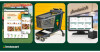
Core Insights - Instacart is witnessing a growing trend among independent grocers in the U.S. adopting its enterprise technology solutions to enhance customer experience both in-store and online [1][2] Group 1: Adoption of Technology - Independent grocers are increasingly investing in technologies like Caper Carts, FoodStorm, and Storefront Pro to provide a seamless shopping experience [1][2] - The number of stores using Caper Carts has nearly tripled over the past year, now spanning nearly 100 cities across 15 states [4] - FoodStorm has seen adoption in over 3,000 stores in North America, more than doubling since the end of 2024 [7] Group 2: Customer Experience Enhancement - Caper Carts allow customers to track spending and check out directly on the cart, leading to improved customer engagement and coupon redemption [3][4] - Retailers using Caper Carts report that 40% of customers redeem discounts presented on the smart cart, with over half using at least one coupon during checkout [3] - Storefront Pro enables grocers to create a fully branded online shopping experience, integrating features like weekly ads and AI-powered personalization [8][9] Group 3: Operational Efficiency - FoodStorm enhances back-of-house efficiency for grocers like Luke's Local Grocery, allowing real-time handling of made-to-order food without sacrificing quality [5][6] - Instacart's enterprise solutions help retailers streamline workflows, drive sales, and offer personalized shopping experiences [10]