Gaudi processors

Search documents
Arm Holdings: The Engine Powering Behind Efficient AI Computing
ZACKS· 2025-12-08 17:56
Core Insights - Arm Holdings plc (ARM) has evolved from a chip architect to a key player in energy-efficient AI computing, influencing the scalability of intelligence from edge devices to large data centers [1] - The company's Neoverse V-Series CPUs are transforming AI infrastructure by enabling faster inference and more efficient machine-learning processes, positioning Arm as a crucial enabler for next-generation AI workloads [2] Company Developments - Arm's architectural consistency across mobile, cloud, and edge platforms provides developers with seamless AI deployment, enhancing its strategic advantage over time [3] - The upcoming AI chip division, with prototypes expected in 2025, signifies Arm's shift from a licensing model to a strategic infrastructure provider, potentially strengthening its control over AI performance economics [4] Competitive Landscape - Key competitors include NVIDIA and Intel, with NVIDIA leading in GPU-based AI acceleration and Intel focusing on AI integration through its diverse chip offerings [5] - While NVIDIA's high-power GPUs contrast with Arm's energy-efficient designs, both companies drive innovation that challenges and inspires Arm's advancements in AI [5] Financial Performance - Arm's stock has increased by 14.5% year-to-date, although this is significantly lower than the industry's 53% growth [6] - The company trades at a forward price-to-sales ratio of 27x, which is substantially higher than the industry's 5x, indicating a premium valuation [8] - The Zacks Consensus Estimate for Arm's fiscal 2026 earnings has been rising over the past 60 days, reflecting positive market sentiment [9]


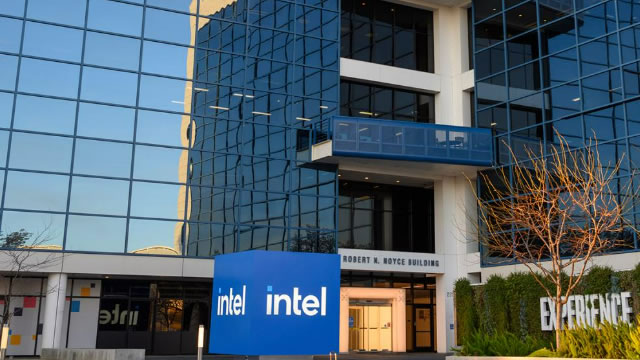
Here's How Intel Could Be Affected by the United States' Rare Earths Trade With China
The Motley Fool· 2025-05-26 20:30
Core Viewpoint - The ongoing trade tensions between the United States and China, particularly regarding rare earths, pose significant risks to companies like Intel, which heavily rely on these materials for production [1][2][4]. Group 1: Trade Tensions and Rare Earths - The recent announcement of a 90-day pause in heightened tariffs between the U.S. and China does not resolve the underlying trade strife [1]. - Intel's growth plans could be severely impacted if trade tensions escalate again, particularly due to its reliance on rare earths sourced from China [2][4]. Group 2: Intel's Business and Financials - Intel reported a 2% year-over-year decline in revenue for 2024 and has initiated a restructuring plan to reduce expenses, including staff downsizing [6]. - The company anticipates high-volume production of its Intel 18A process node in 2025, supported by approximately $8 billion in funding from the CHIPS Act [7]. - In 2024, Intel's data center and AI (DCAI) business generated $16.1 billion, accounting for 30.4% of consolidated sales, which could also be adversely affected by a constrained supply of rare earths [10]. Group 3: Risks and Market Sentiment - Intel identifies geopolitical tensions and supply chain risks related to rare earths as significant factors that could adversely impact its business [4]. - Despite potential risks, Intel's shares are currently trading at a premium, with a cash flow multiple of 14 compared to a five-year average of 7, leading to cautious sentiment among investors [11].