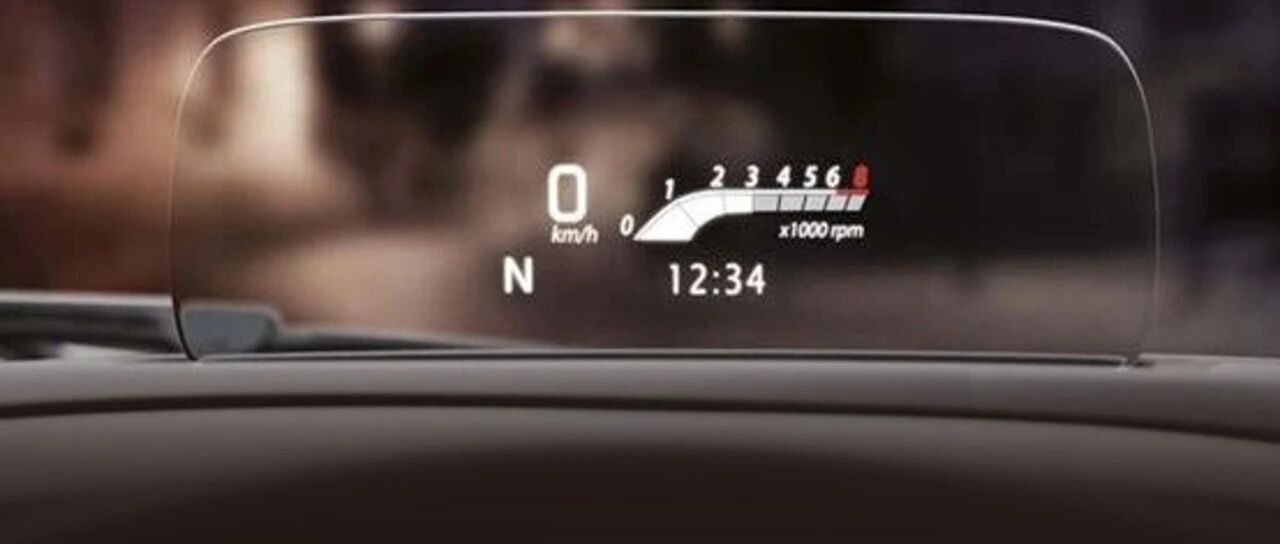
HUD(Head Up Display)

Search documents
汽车上最贵的屏,快被撑破了
汽车商业评论· 2026-03-08 23:04
Core Viewpoint - The article discusses the evolution and future of Head-Up Display (HUD) technology in the automotive industry, emphasizing the need for manufacturers to simplify the information presented to enhance driver safety and experience [3][5][11]. Summary by Sections HUD Historical Development - The concept of HUD originated during World War II to assist pilots in obtaining radar information without diverting their gaze from the sky [6]. - The first true HUD was developed in 1958 for military aircraft, with the technology making its way into automobiles in 1965 [6][7]. - The evolution of HUD technology has seen three generations: C-HUD, W-HUD, and AR-HUD, with significant advancements in functionality and application [9][11]. Current Market Trends - By 2025, W-HUD is expected to penetrate mid-range vehicles with a market share of around 30%, while AR-HUD is projected to experience a growth rate of 70% [11]. - AR-HUD is becoming a crucial feature for enhancing the competitiveness of new energy vehicles in China, with penetration rates exceeding 80% in popular models by 2025 [11][12]. Cost and Technology - The HUD market has consolidated, with around 20 companies initially, but only about 10 are currently scaling effectively [15]. - The price of AR-HUD has decreased by 65% from 2021 to 2025, making it challenging for new players to enter the market [15]. - Innovations in HUD technology, such as eliminating the need for a wedge film in windshields, are being developed to reduce costs [17]. Future Directions - The AR-HUD market is expected to advance towards higher resolution, brightness, and integration with AI technologies [18]. - With the advent of L3 autonomous driving, AR-HUD is seen as essential for enhancing driver trust and safety by providing critical information directly in the driver's line of sight [20][22]. - The integration of entertainment features into AR-HUD systems is anticipated as the technology evolves, transforming the driving experience [24].