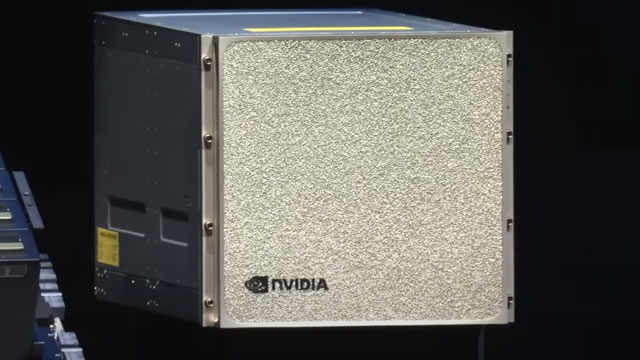
Hopper (H100) graphics processing unit

Search documents
Prediction: 3 Magnificent Stocks That'll Be Worth More Than Palantir by 2028
The Motley Fool· 2025-07-04 07:51
Core Insights - The rapid rise of Palantir Technologies in the AI sector may be temporary, with concerns about its high valuation and market sustainability [5][8][7] AI Market Overview - The global addressable market for AI is projected to reach $15.7 trillion by 2030, indicating significant growth potential for various companies [2] Palantir Technologies - Palantir's stock has surged by 1,940% since the beginning of 2023, leading to a market cap exceeding $300 billion [5] - The company has a sustainable competitive advantage with its Gotham and Foundry platforms, which are difficult for competitors to replicate [6] - Palantir's business model includes multiyear government contracts and an enterprise-based subscription model, contributing to predictable cash flow [6] - Despite its strengths, Palantir faces historical challenges that have affected other tech companies, including potential overvaluation and negative investor sentiment [7] - Palantir's price-to-sales (P/S) ratio is currently above 104, significantly higher than the historical range of 30 to 43 for leading companies in similar trends, suggesting an unsustainable valuation [8] Competitors with Growth Potential - Pfizer, with a current market cap of $142 billion, is positioned to grow stronger, especially with its oncology segment bolstered by the acquisition of Seagen [10][13] - PayPal, valued at $73 billion, offers a more attractive risk-reward profile with sustained double-digit growth potential and a forward price-to-earnings ratio of 13 [16][20] - Intuitive Surgical, with a market cap of $193 billion, dominates the robotic-assisted surgical market and is expected to see revenue growth driven by higher-margin services and accessories [21][25]



Billionaire Philippe Laffont Has Cumulatively Sold 83% of Coatue's Nvidia Stake and Is Piling Into Wall Street's Hottest Artificial Intelligence (AI) IPO
The Motley Fool· 2025-05-22 07:06
Core Insights - Coatue Management's billionaire chief, Philippe Laffont, is shifting focus from Nvidia to a newly public AI stock, CoreWeave, indicating a strategic pivot towards high-growth potential in the AI sector [1][15] - The month of May has been significant for investors due to earnings reports, economic data releases, and the Federal Open Market Committee's decisions [1][2] Company Analysis: Nvidia - Laffont has been consistently selling Nvidia stock over the past two years, reducing his position by 83% from its peak of 49,802,020 shares [6][7] - Nvidia's gross margin has surpassed 70% due to overwhelming demand for its GPUs, but competitive pressures are beginning to impact its margins [9][10] - The company faces risks from both external competitors and internal chip development by its top customers, which could diminish its market share in data centers [10][11] - Concerns about a potential AI bubble could pose significant risks to Nvidia, especially since over 90% of its net sales come from the data center segment [12][13] Company Analysis: CoreWeave - CoreWeave, an AI data center infrastructure company, has attracted Laffont's attention, with Coatue purchasing 14,402,999 shares shortly after its IPO [15][16] - The company has ambitious growth projections, with sales expected to rise from $1.92 billion in 2024 to $19.66 billion by 2028, bolstered by a strategic deal with OpenAI [17] - However, CoreWeave is experiencing accelerating net losses and significant debt financing costs, with projected net interest expenses reaching $1.06 billion in 2025 [19] - The rapid innovation cycle of Nvidia poses a risk to CoreWeave, as its reliance on Hopper GPUs may lead to obsolescence and reduced pricing power [20] - The potential for an AI bubble could adversely affect CoreWeave's business, as companies may cut back on AI infrastructure spending [21]

Prediction: Nvidia Just Received Its First Wall Street Sell Rating -- and More Will Follow After May 28
The Motley Fool· 2025-05-12 07:51
Group 1: AI Market Overview - The evolution of artificial intelligence (AI) has captivated investors for over two years, with a potential to increase global GDP by $15.7 trillion by 2030 according to PwC [2] - Nvidia has been the most direct beneficiary of the AI revolution, with its GPUs becoming the preferred choice for enterprise AI-accelerated data centers [4][5] Group 2: Nvidia's Financial Performance - Nvidia's net sales surged from $27 billion to $130.5 billion over two fiscal years, with Wall Street projecting nearly $201 billion in sales for fiscal 2026 and $248 billion for fiscal 2027 [6] - Nvidia's gross margin has declined from 78.4% in fiscal 2025 to an estimated 70.6% for the fiscal first quarter of 2026 [21] Group 3: Analyst Sentiment and Ratings - Nvidia recently received its first Wall Street sell rating, with expectations for more analysts to follow suit after the upcoming fiscal results announcement [8][13] - Seaport Research Partners' analyst Jay Goldberg initiated coverage on Nvidia with a $100 price target, citing that the bull case is fully priced in and potential downside catalysts exist [9][10] Group 4: Challenges Facing Nvidia - Nvidia faces challenges in surpassing Wall Street's expectations due to maxed-out order capacity for its Blackwell GPU and supply chain constraints from Taiwan Semiconductor Manufacturing [10] - Businesses are expected to reevaluate their AI spending, leading to slower orders in the coming quarters [11] - Export restrictions to China pose a significant headwind, potentially impacting Nvidia's sales in a major market [12] Group 5: Competitive Landscape - Internal competition is emerging as Nvidia's top customers develop their own AI chips, which could lead to cheaper alternatives and loss of market share for Nvidia [16][17] - The scarcity of AI-GPUs that previously benefited Nvidia is diminishing as competitors like AMD introduce more affordable next-generation chips [19] Group 6: Market Sentiment and Future Outlook - Historical trends suggest that AI technologies may experience bubble-bursting events, with many businesses not yet optimizing their AI investments [22][23] - As more analysts consider these factors, the number of sell ratings for Nvidia stock is expected to increase [23]

2 Sensational Stocks Billionaire Money Managers Piled Into Before the Nasdaq and S&P 500 Sell-Off, and 1 Highflier They've Been Selling
The Motley Fool· 2025-03-19 09:06
The stock market was historically pricey entering 2025, and this is something billionaire asset managers were keenly aware of.As much as investors might loathe the idea of rapid moves lower in the iconic Dow Jones Industrial Average (^DJI -0.62%), broad-based S&P 500 (^GSPC -1.07%), and widely followed Nasdaq Composite (^IXIC -1.71%), stock market sell-offs are normal, healthy, and inevitable.Following a seemingly nonstop rally in all three indexes, the Dow Jones, S&P 500, and Nasdaq Composite shed 8.6%, 10 ...



Billionaire Money Managers Weighed In on Nvidia Long Before It Released Its Full-Year Results -- and Their Sentiment Couldn't Be Clearer
The Motley Fool· 2025-02-27 10:06
Core Insights - Nvidia is a leading player in the artificial intelligence (AI) sector, particularly known for its Hopper (H100) and Blackwell GPU architectures, which are essential for AI-accelerated data centers [3][4] - Recent trading activities by billionaire asset managers indicate a significant sell-off of Nvidia stock, raising concerns about the company's future prospects [4][7] Group 1: Trading Activity - Billionaire asset managers have been decisive sellers of Nvidia stock, with notable reductions in holdings by several prominent investors [7][10] - Philippe Laffont sold 39,795,532 shares, a reduction of 80% since Q1 2023; David Tepper sold 9,569,999 shares, a 93% reduction since Q3 2023; Stanley Druckenmiller sold his entire stake of 9,500,750 shares since Q2 2023; and Stephen Mandel sold 6,416,490 shares since Q2 2023 [10] Group 2: Reasons for Selling - The primary reason for the selling activity appears to be profit-taking, as Nvidia's market value increased by approximately $3 trillion [9] - Concerns about increasing competition, particularly from Nvidia's own customers developing AI chips, may also be influencing the sell-off [11][12] - Regulatory challenges, particularly restrictions on AI chip exports to China, pose a risk to Nvidia's sales and market position [13] - Historical trends suggest that new technology sectors often experience bubble-bursting events, raising fears that Nvidia could be significantly impacted if the AI bubble bursts [14] - Nvidia's valuation, particularly its price-to-sales (P/S) ratio, which peaked at over 42, may also be a factor in the selling behavior of these investors [15]