House of Cards

Search documents
The Oscars make it clear: Hollywood is in a death spiral
Yahoo Finance· 2026-03-13 07:00
Core Insights - The Hollywood industry is experiencing a significant decline, with production days dropping from 36,792 in 2022 to an estimated 19,694 in 2025, and approximately 41,000 workers leaving the industry between 2022 and 2024 [3][2][9] - The rise of streaming services, particularly Netflix, has transformed the industry, leading to fewer traditional jobs and a shift in how content is produced and consumed [15][22][31] - The geographic concentration of talent and resources in Hollywood is diminishing, which threatens the collaborative ecosystem that has historically driven innovation and quality in filmmaking [28][29][30] Industry Overview - Hollywood has historically been a successful industry cluster, characterized by a concentration of talent and resources that fostered competitive success [6][7] - The industry's decline is attributed to various factors, including technological advancements that have lowered barriers to entry for content creation and the globalization of filmmaking [8][26] - The traditional business model of Hollywood has shifted, with television series production becoming more profitable than movies, and streaming platforms changing the dynamics of content creation and distribution [15][18][24] Economic Impact - The U.S. film and television industry generates over $20 billion annually in exports, but this figure is overshadowed by other sectors like oil and machinery [1] - The acquisition of Warner Bros. Discovery by Paramount Skydance's David Ellison, promising over $6 billion in cost synergies, indicates a trend towards consolidation and potential layoffs in the industry [2][3] - The competitive landscape has changed, with Netflix holding a market value of $358 billion, surpassing the combined value of Disney and Sony, and controlling 59% of U.S. streaming viewing time [23][24] Cultural Significance - Hollywood's cultural influence has been profound, shaping global perceptions of American values and lifestyle through its films and television shows [1] - The decline of Hollywood as a dominant force in the entertainment industry raises concerns about the future of American cultural exports and the quality of content produced [9][33] - The shift towards user-generated content and platforms like YouTube may further dilute Hollywood's traditional role in shaping entertainment [31][32]

The Oscars’ Best Picture category exposes a harsh new reality for Hollywood
Fortune· 2026-03-13 07:00
Core Insights - The Hollywood film industry is experiencing a significant decline, with production days in Los Angeles dropping from 36,792 in 2022 to 19,694 in 2025, and a loss of approximately 41,000 workers from 2022 to 2024 [3][4][5] Industry Overview - None of the 10 nominated films for the Best Picture Oscar were produced in Hollywood, indicating a shift in production locations [2] - The industry's most influential figure is now Ted Sarandos, co-CEO of Netflix, rather than traditional studio heads [3][28] - The acquisition of Warner Bros. Discovery by David Ellison is expected to lead to significant cost cuts and layoffs, further impacting the industry [4] Economic Impact - The U.S. film and television export revenue exceeds $20 billion annually, but this is overshadowed by other exports like oil and machinery [5] - Hollywood's status as a leading industry cluster is deteriorating, with the concentration of talent and resources being disrupted [6][30] Technological Disruption - The rise of streaming services, particularly Netflix, has transformed the business model of Hollywood, leading to fewer traditional jobs and a decline in the quality of content produced [10][15][20] - The introduction of AI in filmmaking poses a threat to traditional roles within the industry [5][13] Changing Production Dynamics - The streaming era has resulted in fewer episodes per show, diminishing job security for writers and other creatives [11][12] - Many industry professionals are leaving Los Angeles for more affordable locations, impacting the local talent pool [26][29] Future Outlook - The shift towards user-generated content and platforms like TikTok and YouTube is changing consumer behavior, potentially diminishing the relevance of traditional Hollywood productions [33][34] - The Oscars will transition from traditional broadcasting to YouTube by 2029, reflecting changing consumption patterns [34]



Netflix's Ted Sarandos Credits Fiction As His Leadership Guide, Says This Is 'Real' Test For Navigating Challenges - Netflix (NASDAQ:NFLX)
Benzinga· 2026-01-08 09:03
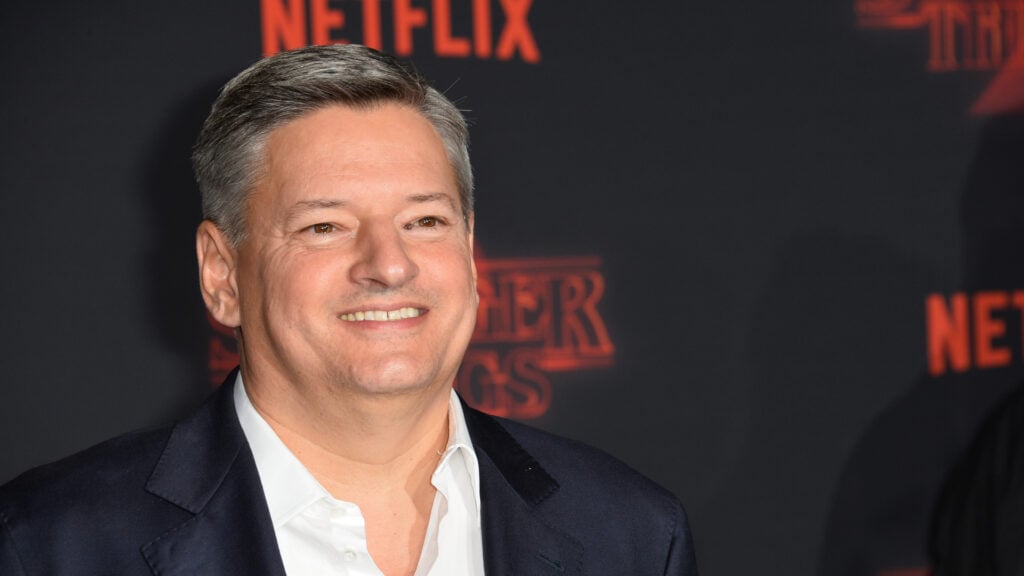
Core Insights - Netflix co-CEO Ted Sarandos emphasizes the influence of fiction over traditional management literature in shaping his leadership approach [2][4] - Sarandos highlights the novella "Typhoon" by Joseph Conrad as a significant source of leadership lessons, particularly in managing uncertainty [2][3] Group 1: Leadership Philosophy - Sarandos prefers fiction for leadership insights, stating that it provides different perspectives upon each reading [3] - He reflects on his evolving interpretation of the captain's actions in "Typhoon," recognizing deeper lessons about leadership during challenging times [3] Group 2: Application of Lessons - Sarandos relates the lessons from "Typhoon" to his own career, notably his decision to invest $100 million in Netflix's first original series, "House of Cards," without prior approval [4] - He believes that the success of this investment could significantly transform Netflix's business model [4] Group 3: Broader Leadership Insights - Other industry leaders, such as Lyft's CEO David Risher, share their leadership experiences, emphasizing the importance of learning from influential figures like Bill Gates and Jeff Bezos [5][6] - Risher credits Gates for teaching him to focus on weaknesses and Bezos for instilling a customer-centric approach, which contributed to Lyft's record performance [6]
From Netflix to Uber: How 8 top business leaders used crisis to reinvent their companies
CNBC· 2026-01-07 17:45
Core Insights - The article discusses how top executives from various companies have navigated crises and transformed their organizations, emphasizing the importance of adaptability and strategic decision-making in uncertain business environments [1][2]. Group 1: Executive Strategies - Ted Sarandos of Netflix made a pivotal decision to invest $100 million in original content, marking a significant shift in strategy when licensing from studios decreased [3][5]. - Danny Meyer, founder of Shake Shack, created a fund to support employees during the pandemic after laying off 95% of his staff, demonstrating a commitment to employee welfare [6][7]. - Mary Barra, CEO of General Motors, prioritized safety and transparency following a crisis involving faulty ignition switches, fostering a culture of open communication [12][14]. - Dara Khosrowshahi, CEO of Uber, focused on rebuilding trust by addressing the company's internal issues and promoting a culture of change [16][20]. - Neal Mohan, CEO of YouTube, responded to a major advertising boycott by hiring thousands of human reviewers and investing in technology to manage harmful content, establishing a balance between free expression and community guidelines [21]. - Brian Chesky, CEO of Airbnb, took decisive action during a crisis by implementing a property damage guarantee, which evolved from $50,000 to $3 million, showcasing leadership in times of adversity [22][23]. - Barry Diller, chairman of IAC and Expedia, chose to proceed with a $1 billion acquisition of Expedia despite the 9/11 crisis, believing in the resilience of the travel industry [24][27]. - Marvin Ellison, CEO of Lowe's, focused on supply chain transformation and employee investment, which allowed the company to adapt quickly during the pandemic [28][30]. Group 2: Lessons Learned - Executives emphasized the need for a culture that encourages dissent and open dialogue to foster innovation and adaptability [5][6]. - The importance of making bold decisions during critical moments was highlighted, as many leaders faced existential threats that required immediate and decisive action [3][22]. - A common theme among these leaders is the recognition that crises can present opportunities for significant change and improvement within their organizations [19][20].





'Stranger Things' ushered in a new era for Netflix
CNBC· 2025-12-13 13:00
Core Insights - "Stranger Things" has become a cultural phenomenon and a key driver of Netflix's success, marking a significant moment in the streaming industry [2][3][14] - The show has generated substantial viewership, with Season 5's Volume 1 achieving 59.6 million views in its first five days, the largest premiere week for an English-language series on Netflix [4] Company Strategy - Netflix's approach to "Stranger Things" includes extensive merchandise partnerships and live events, enhancing fan engagement and generating additional revenue streams [10][12][13] - The company has launched its own consumer products division and an officially licensed online shop, expanding its merchandise strategy beyond traditional licensing [9][11] Industry Impact - "Stranger Things" has revitalized 1980s culture, influencing fashion, music, and food brands, showcasing the show's broader cultural impact [8][12] - The success of "Stranger Things" has set a benchmark for Netflix's original content strategy, demonstrating the potential for original IP to drive brand recognition and engagement [15][16]
Why Netflix Still Stands Out in a Competitive Streaming Market
The Motley Fool· 2025-12-05 00:18
Core Insights - Netflix continues to thrive despite intense competition from major players like Google, Disney, and Amazon, maintaining its competitive edge through three key advantages Group 1: First-Mover Advantage - Netflix's initial success stemmed from its DVD rental service, which built significant brand recognition and a loyal subscriber base, facilitating its transition to streaming in 2007 [2][3] - The technological advancements at that time resolved previous content-delivery issues, allowing Netflix to successfully establish its streaming service, ultimately rendering its DVD rental business obsolete and encouraging many to cancel cable subscriptions [3] Group 2: Content Development and Global Reach - To differentiate itself from competitors, Netflix invested in proprietary content rather than relying solely on acquiring streaming rights, leading to the creation of popular shows like House of Cards and Stranger Things [5][6] - The company expanded internationally starting in 2010, reaching over 190 countries and developing localized content for various markets, such as the Spanish thriller The Crystal Cuckoo and the South Korean drama Squid Game [7] Group 3: Financial Success - Netflix faced challenges with negative free cash flows throughout the 2010s due to high content development costs, but the introduction of an advertising-supported tier has led to consistent positive free cash flow since 2023, totaling nearly $9.0 billion over the past four quarters [8][9] - The stock has seen a significant increase of over 530% since hitting a low during the tech sector slump in 2022, prompting a 10-for-1 stock split, which can attract more investor interest [10] Group 4: Future Outlook - Netflix's ability to create large volumes of new content through its own studio, combined with its extensive viewer data, positions it as a major player in the video ad market [12] - The company operates in nearly every global market, with a focus on developing content in multiple languages, which should help maintain its popularity [12] - However, revenue growth is projected to slow, with forecasts of 16% growth this year and 13% in 2026, while investors are currently paying 43 times forward earnings, indicating a modest premium [13]
Meet the Newest Stock-Split Stock in the S&P 500. It Soared 94,310% Since Its 2002 IPO, and It's a Buy Right Now, According to Wall Street.
The Motley Fool· 2025-11-01 07:02
Core Viewpoint - Netflix has announced a 10-for-1 forward stock split, reflecting its strong operating and financial performance, and the company is expected to continue its growth trajectory in the streaming industry [2][3]. Company Performance - Since its IPO in mid-2002, Netflix shares have increased by 94,010%, with a 939% rise over the past 10 years [3]. - For Q3, Netflix reported revenue of $11.5 billion, a 17% year-over-year increase, and earnings per share (EPS) of $5.87, which would have been $6.87 without a one-time charge of $619 million related to a tax dispute [7]. - The company forecasts Q4 revenue growth of 17% to $11.96 billion, with adjusted EPS expected to rise by 28% to approximately $5.45 [7]. Strategic Initiatives - Netflix has expanded its video game offerings and formed licensing partnerships with Hasbro and Mattel to create toys and games based on its popular film "KPop Demon Hunters," which has become a global phenomenon [8][9]. Market Position - Netflix has a market capitalization of $474 billion and a gross margin of 48.02% [10]. - Analysts remain bullish on Netflix, with 33 out of 49 maintaining a buy or strong buy rating, and an average price target of approximately $1,347, indicating a potential upside of 24% [11]. - Pivotal Research Group's analyst has a higher price target of $1,600, suggesting a potential gain of 47% [12]. Valuation Considerations - Netflix is currently trading at 47 times earnings and 35 times next year's expected earnings, which is considered a premium valuation [12]. - Despite the high valuation, Netflix has significantly outperformed the S&P 500 over the past decade, with a gain of 939% compared to the S&P 500's 229% [12].