Investment Copper Bar

Search documents
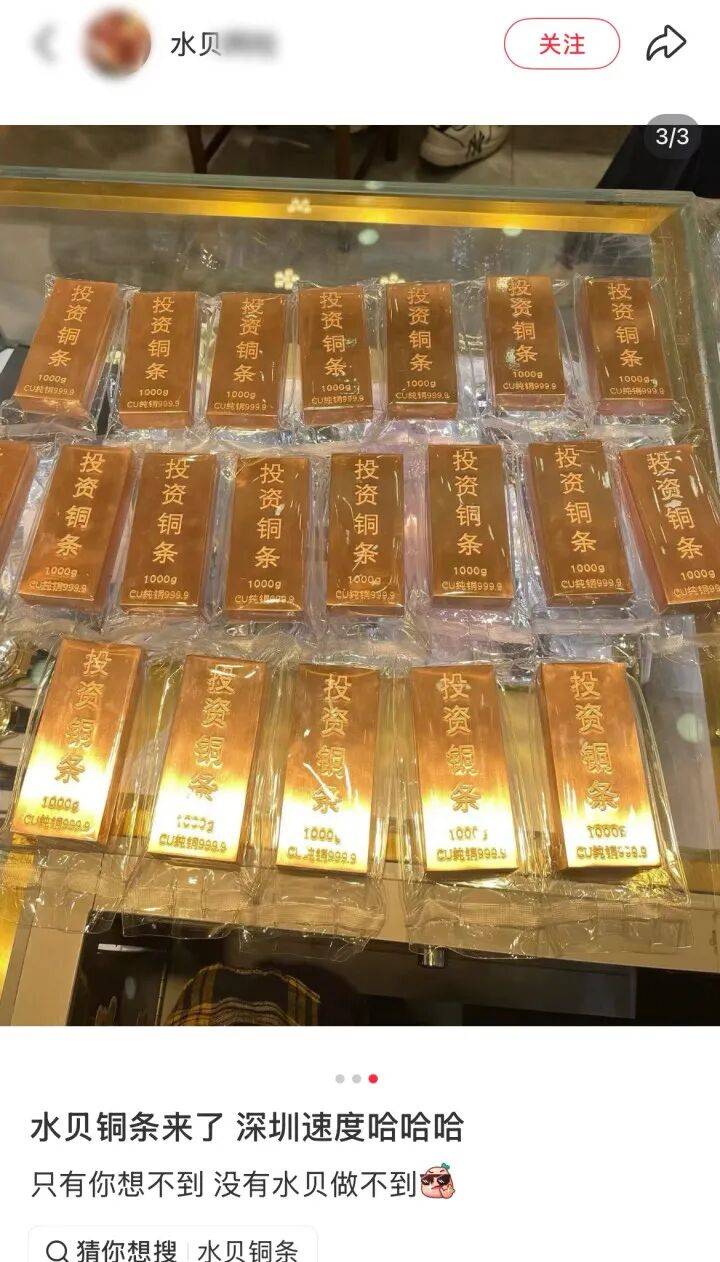
突然火了!深圳水贝惊现!商家称没有现货,得预定!网友:有点可笑了
Sou Hu Cai Jing· 2026-01-19 18:50
Core Viewpoint - The investment enthusiasm is shifting from traditional precious metals to a variety of industrial metals on the periodic table, such as antimony, germanium, tungsten, and indium, which have recently gained popularity on social media platforms [1][2]. Group 1: Market Trends - Recently, lesser-known industrial metals like antimony, germanium, tungsten, and indium have become highly sought after, with individuals hoarding significant quantities of indium ingots and others reporting a 150% price increase for potassium bars [2][17]. - In Shenzhen, merchants have started offering investment copper bars, with prices ranging from 180 to 280 yuan for a 1000-gram bar, indicating a growing interest in unconventional investment options [2][12]. Group 2: Consumer Behavior - Many consumers are expressing disbelief at the trend of investing in copper bars, with some questioning the future of such investments and the potential for absurdity in the market [8][11]. - A merchant in Shenzhen noted a surge in inquiries about copper bars, although actual orders remain low due to concerns about future resale value [13][16]. Group 3: Market Dynamics - The pricing and recovery of copper bars are inconsistent, with various merchants providing significantly different quotes, highlighting a lack of standardization in the market [16][20]. - The investment in industrial metals is becoming a hot topic on social media, with users sharing price trends and purchase channels, and some even compiling detailed investment lists based on the periodic table [17][19]. Group 4: Expert Insights - Industry experts warn that investing in niche metals carries higher risks compared to traditional precious metals, emphasizing the volatility of prices linked to global economic conditions and specific industrial demands [20][21]. - The lack of established recovery channels for physical investments in these metals poses a significant risk, as investors may face challenges in liquidating their assets [21][22].

【财经分析】投资铜条走红 新投资热点还是概念炒作?
Xin Hua Cai Jing· 2026-01-19 15:16
Core Viewpoint - The recent surge in precious and industrial metal markets, particularly gold and silver, has led to increased interest in copper investments, despite concerns about the legitimacy and risks associated with copper bars as investment products [1][2]. Group 1: Market Trends - Gold and silver prices have reached new highs, while domestic copper prices have surpassed 100,000 yuan per ton, leading to heightened investor interest in copper [1]. - In Shenzhen, the largest gold and jewelry distribution center in China, merchants have begun offering pure copper 999.9 investment bars, primarily in 1000-gram specifications, priced around 200 yuan each [1][2]. Group 2: Investment Risks - Analysts warn that the current "copper bar craze" is more of a speculative trend rather than a legitimate investment opportunity, with concerns about the lack of standardized recovery channels for copper bars [1][3]. - The comparison of copper bars to precious metals like gold and silver is misleading, as copper is an industrial metal with different pricing dynamics, making the assumption of significant returns unrealistic [2][3]. Group 3: Investment Alternatives - Investors are advised to consider alternative methods for investing in copper, such as copper ETFs, stocks of leading copper mining companies, or direct investments in copper futures and spot markets, which may offer more reliable returns [4]. Group 4: Future Price Outlook - Market sentiment regarding copper prices is mixed, with some analysts predicting short-term corrections due to macroeconomic factors, while others anticipate long-term upward trends driven by demand from sectors like renewable energy and electric vehicles [6][7]. - Goldman Sachs has adjusted its copper price forecast for the first half of 2026, citing tightening inventories outside the U.S., while also warning of potential downward pressure in the latter half of the year as U.S. inventory flows normalize [7].
【财经分析】投资铜条走红 ,新投资热点还是概念炒作?
Zhong Guo Jin Rong Xin Xi Wang· 2026-01-19 11:36
Core Viewpoint - The recent surge in precious and industrial metal markets, particularly gold and silver, has led to increased interest in copper investments, despite concerns about the legitimacy and risks associated with copper bars as investment products [2][3]. Group 1: Market Trends - Gold and silver prices have reached new highs, while domestic copper prices have surpassed 100,000 yuan per ton, leading to heightened investor interest in copper [2]. - In Shenzhen, the largest gold and jewelry distribution center in China, merchants have begun offering pure copper 999.9 investment bars, primarily in 1000-gram specifications, priced around 200 yuan each [2]. Group 2: Investment Risks - Analysts warn that the current "copper bar craze" is more of a speculative trend rather than a legitimate investment opportunity, with concerns about the lack of standardized recovery channels for copper bars [2][4]. - The comparison of copper bars to gold and silver investments is misleading, as copper is an industrial metal with different pricing dynamics, making the assumption of significant returns unrealistic [3][4]. Group 3: Investment Alternatives - Investors are advised to consider alternative methods for investing in copper, such as copper ETFs, stocks of leading copper mining companies, or direct investments in copper futures and options, which may offer more reliable returns [5]. - The investment landscape for copper is evolving, with personal investors encouraged to explore various avenues that align with their risk tolerance and investment goals [5]. Group 4: Future Price Outlook - Market sentiment regarding copper prices is mixed, with some analysts predicting short-term price corrections due to macroeconomic factors, while others anticipate long-term upward trends driven by demand from sectors like electric power and renewable energy [6][7]. - Goldman Sachs has adjusted its copper price forecast for the first half of 2026, citing structural tensions in the market, while also warning of potential price corrections in the latter half of the year as U.S. tariff policies become clearer [8].