Kai显微手术机器人

Search documents
突破医生能力上限,省内首例微米级机器人血管吻合术成功开展
Yang Zi Wan Bao Wang· 2025-10-18 02:48
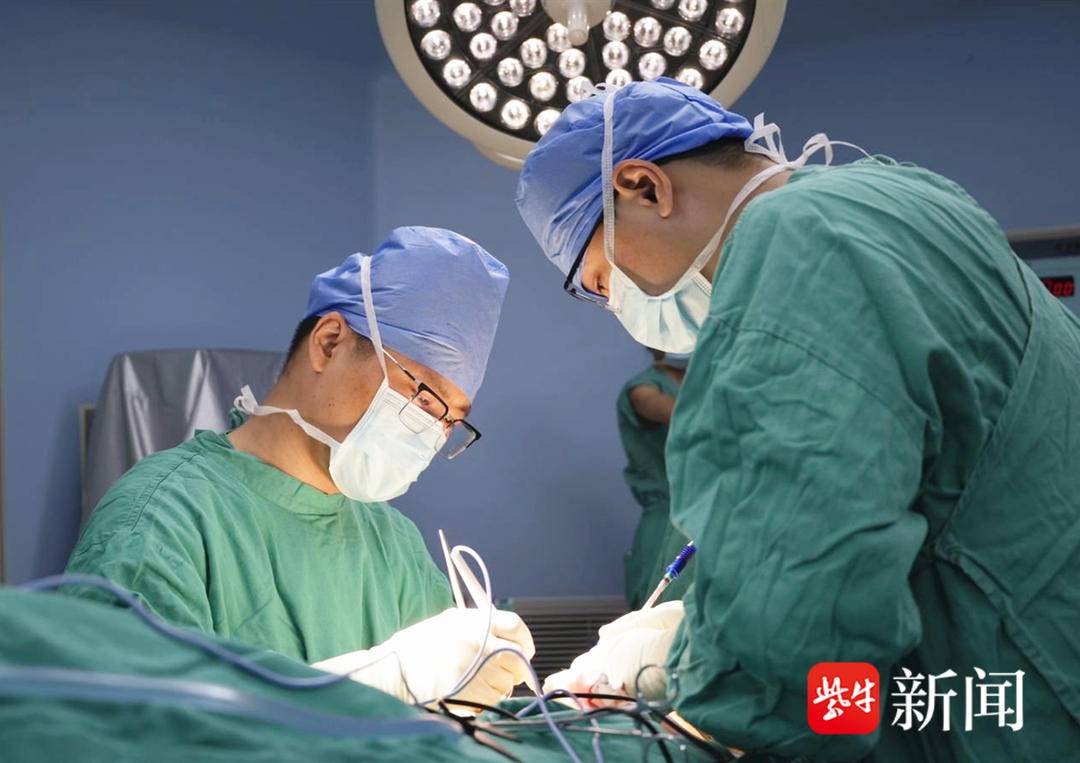
Core Insights - The successful implementation of the "Kai" microsurgery robot-assisted flap vascular anastomosis surgery at Wuxi Ninth People's Hospital marks a significant advancement in precision treatment in microsurgery within Jiangsu Province [1][6] - This operation demonstrates the hospital's commitment to integrating cutting-edge medical technology into clinical practice, enhancing patient care [6] Group 1: Surgical Procedure Details - The patient, Mr. Ran, suffered severe injuries from a workplace accident, requiring complex surgical intervention to repair multiple damaged structures in his right wrist [3] - The surgical team utilized the "Kai" robot to perform a free flap transfer from the left thigh to the right wrist, addressing the challenges of microvascular anastomosis that traditional methods struggle with due to physiological tremors [3][4] - The robot's 2mm seven-degree-of-freedom bionic arm allowed for enhanced precision, with the ability to control operation accuracy within 3-5 micrometers [4] Group 2: Technological and Institutional Impact - The successful surgery is a testament to the hospital's role as a regional medical center, focusing on patient-centered care and the application of advanced medical technologies [6] - Wuxi Ninth People's Hospital is the first in Jiangsu Province to apply the "Kai" microsurgery robot in clinical trials, filling a significant gap in the region and providing valuable experience for standardizing surgical procedures and training for local physicians [6]


手术机器人市场狂飙背后的危机
3 6 Ke· 2025-06-16 01:54
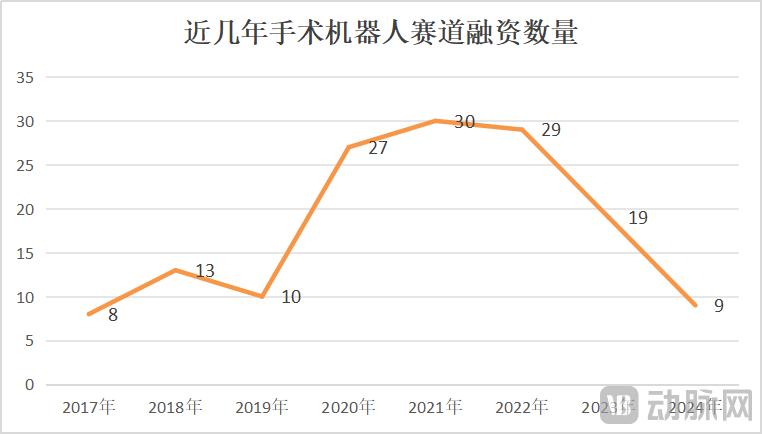
Core Viewpoint - The surgical robot market in China is experiencing significant growth, with a 82.9% year-on-year increase in the number of surgical robots awarded contracts in the first five months of 2025, despite some companies facing bankruptcy and liquidation [1] Group 1: Market Dynamics - The surgical robot industry is highly competitive, with numerous domestic companies participating in various segments, including over 16 approved laparoscopic surgical robots and more than 50 orthopedic surgical robots [1] - The number and amount of financing in the surgical robot sector have sharply decreased, leading to potential funding crises for companies that have not yet achieved commercial revenue [1][3] - The market is witnessing a price war among companies, with various surgical robots being commercialized at significantly different price points, yet the market leader, the Da Vinci surgical robot, remains unaffected in terms of sales [4][5] Group 2: Clinical and Technological Challenges - Some surgical robots are limited to simple procedures, and their clinical value has not yet been fully realized, as evidenced by a study showing that 11% of robot-assisted coronary interventions required conversion to manual operation [2][4] - The commercial success of surgical robots is heavily influenced by policies and macroeconomic conditions, with some companies experiencing significant declines in sales and revenue due to factors like anti-corruption measures and slowed bidding processes [5] Group 3: Innovations and Strategies - Companies are focusing on technological innovations, including the integration of AI to enhance the capabilities of surgical robots, with several firms already developing AI-enabled products [8][9] - Efforts are being made to reduce product costs to make surgical robots more accessible to hospitals, such as the modular design of the HaiShan laparoscopic surgical robot [9] - Companies are exploring remote surgical technologies to expand their market reach and improve access to quality healthcare, with several firms successfully conducting remote surgeries [9][10] Group 4: Market Expansion and Accessibility - Surgical robot companies are increasingly looking to international markets for growth, with firms like MicroPort achieving significant revenue increases through overseas orders [12] - There is a trend of surgical robots being adopted in county-level hospitals, which allows for more complex procedures to be performed locally, thus improving healthcare access for patients [14][15]