
Ketchup

Search documents
Kraft Heinz Has Free Cash Flow but Losing Consumers to Store Brands Is the Real Problem
247Wallst· 2026-03-18 12:04
Core Viewpoint - Kraft Heinz has announced a $600 million investment in marketing, sales, and R&D, while facing significant challenges as it loses consumers to store brands, leading to a 20% decline in stock over the past year [1][4][10]. Company Summary - Kraft Heinz (KHC) has canceled its breakup plan and is investing $600 million to improve its marketing and product offerings, despite a stock price drop of 24% over the past year, currently trading near $22.71 [1][4]. - The company reported a 16% increase in free cash flow for FY2025, reaching $3.66 billion, with cash on hand nearly doubling to $2.62 billion year-over-year [8]. - The adjusted EPS guidance for FY2026 is projected to be between $1.98 and $2.10, a significant decrease from FY2025's $2.60 [11]. Industry Context - Food stocks, including Kraft Heinz, have shifted from being considered defensive investments to wealth destroyers due to ongoing volume and mix declines across various product categories [2]. - Competitors like Campbell's and Conagra are also experiencing difficulties, with Campbell's hitting 23-year lows and Conagra reporting a 6.8% sales decline in fiscal Q2 2026 [10]. - The industry has faced a decade of prioritizing cost-cutting over brand investment, resulting in consumers increasingly opting for private-label alternatives [2][11].


全球番茄加工市场报告2025-2031
Sou Hu Cai Jing· 2025-12-23 15:17
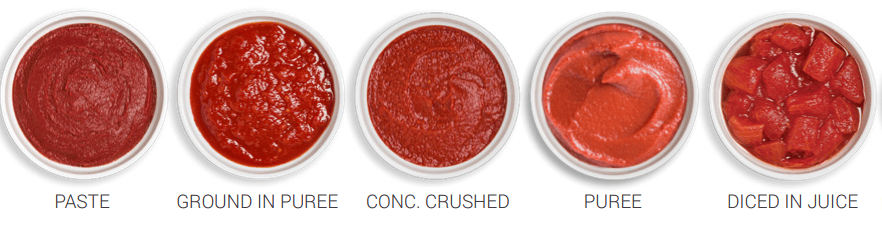
Core Insights - The global tomato processing market is projected to reach USD 9.82 billion by 2031, with a compound annual growth rate (CAGR) of 3.9% in the coming years [3]. Market Overview - Tomato processing includes various forms such as canning and dehydration, producing products like tomato sauce, puree, juice, and diced tomatoes, all derived from fresh tomatoes [1]. - The leading product in the tomato processing market is tomato sauce, which holds approximately 86.0% market share [9]. - The primary application area for tomato products is the food service sector, accounting for about 68.5% of the demand [11]. Market Players - Major players in the global tomato processing industry include Morning Star, Casalasco, Sugal Group, COFCO TunHe, and Conesa Group [6]. - The top five manufacturers are expected to hold around 36.9% of the market share in 2024 [6]. Market Trends - The report outlines market drivers and growth opportunities, as well as challenges and risks, indicating a comprehensive analysis of the market landscape [14].
5 Fading Momentum Stocks to Sell Before 2026
Benzinga· 2025-12-12 17:57
Group 1: Market Overview - Momentum in stocks can be unpredictable, with strong upward trends potentially leading to significant declines when momentum fades [1] - The analysis focuses on five stocks with market capitalizations of at least $2 billion and low Benzinga Edge Momentum Scores [1] Group 2: Kraft Heinz Co. - Kraft Heinz has a Benzinga Edge Momentum Score of 19.75, indicating weak momentum, growth, and quality scores [3] - The company faces challenges due to changing consumer preferences towards unprocessed ingredients, impacting its business model [4] - Despite beating EPS estimates, Kraft Heinz missed revenue expectations for the eighth time in ten quarters, with ongoing debt pressure from its 2015 acquisition [5] - Technical indicators show that the stock is struggling against the 50-day simple moving average (SMA), suggesting a continued downtrend [7][8] Group 3: Molson Coors Beverage Co. - Molson Coors has a Benzinga Edge Momentum Score of 18.43, with the stock down over 17% year-to-date [9] - The company is experiencing declining beer sales as younger consumers shift to non-alcoholic beverages, leading to missed revenue estimates in Q3 2025 [11] - The stock is facing resistance at the 50-day SMA, with technical indicators suggesting stalled upward momentum [11] Group 4: Cava Group Inc. - Cava Group has a Benzinga Edge Momentum Score of 7.40, despite a strong IPO and initial revenue growth [13] - The company is facing same-store sales slowdowns and margin pressures from tariffs and food costs, leading to missed EPS and sales projections [15] - Technical indicators show weakening momentum, with the 50-day SMA acting as a significant resistance level [15] Group 5: DuPont de Nemours Inc. - DuPont has a Benzinga Edge Momentum Score of 7.40, with a nearly 30% year-to-date gain [16] - The stock is under pressure from ongoing litigation related to PFAS chemicals, limiting its upside potential [16] - Technical analysis indicates a potential stall in upward momentum, with signs of a double top formation and fading MACD [18] Group 6: TriNet Group Inc. - TriNet Group remains a $2.8 billion company with annual sales exceeding $5 billion, but faces challenges from economic pressures on small and midsize businesses [19] - The company is competing with AI technologies that threaten its traditional service offerings, leading to weak momentum in its stock [21] - The stock is struggling against the 50-day SMA, with technical indicators suggesting a low likelihood of breaking above this resistance [21]





Best Stock to Buy Right Now: Walmart vs. Kraft Heinz?
The Motley Fool· 2025-11-02 23:59
Core Viewpoint - The article discusses the potential shift in investor sentiment towards defensive stocks in the Consumer Staples sector, highlighting Walmart and Kraft Heinz as two contrasting examples of investment opportunities within this space [1][6]. Company Summaries Walmart (WMT) - Walmart has a market capitalization exceeding $800 billion and annual sales nearing $700 billion, recently reaching an all-time high [1][3]. - The stock has increased by 14% this year, with a current price of $101.25 and a forward P/E ratio of 37x, which is significantly higher than the market average of 24x and the Staples sector average of 20x [3][8]. - Walmart's price-to-sales (P/S) ratio is 1.1x, placing it in the 99th percentile historically, and it has a gross profit margin of approximately 25% [10][11]. - The company has a low dividend yield of 0.01%, but it has consistently increased its dividend for 52 consecutive years [3][12]. - Analysts are largely positive on Walmart, with 41 out of 43 rating it a buy and an average 12-month price target of $113, indicating a potential upside of about 10% [14][15]. Kraft Heinz (KHC) - Kraft Heinz has a market capitalization of $29 billion, significantly smaller than Walmart, and is currently trading about 75% below its all-time high from 2017 [2][5]. - The stock has decreased by 17% this year, with a current price of $24.73 and a forward P/E ratio of 9.6x, which is less than half the market and sector averages [3][9]. - Kraft Heinz's P/S ratio is 1.2x, ranking in the 1st percentile historically, and it has a gross profit margin of around 34% [10][11]. - The company offers a higher dividend yield of 0.06%, but it has not increased its dividend since 2019, when it was reduced by 35% [5][12]. - Analysts are more cautious on Kraft Heinz, with 18 out of 20 rating it a hold and an average 12-month price target of $29, suggesting a potential gain of 19% excluding dividends [15]. Sector Overview - The Consumer Staples sector has been out of favor for most of the year, underperforming the S&P 500 and other major large-cap sectors [5]. - There is an expectation that as investor sentiment shifts back towards stable earnings and attractive valuations, companies like Kraft Heinz may become more appealing compared to market leaders like Walmart [6][15].


This Warren Buffett Stock Just Hit a New 52-Week Low. Should You Buy the Dip?
Yahoo Finance· 2025-10-15 13:00
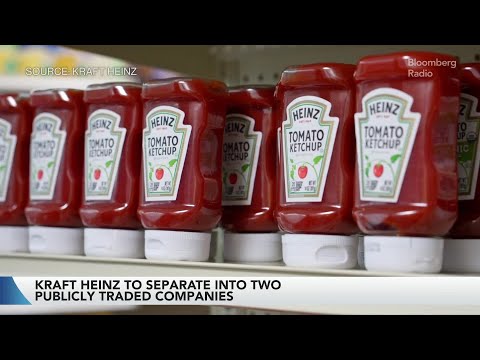
Core Viewpoint - Kraft Heinz is planning to split into two publicly traded companies by the second half of 2026, a move aimed at unlocking shareholder value and enhancing strategic focus, although investor sentiment remains negative due to concerns over operational disruptions and the original merger's failure to deliver promised growth [1][2][4]. Company Overview - Kraft Heinz, headquartered in Chicago, Illinois, is one of the largest food and beverage companies globally, formed from the merger of Kraft and Heinz in 2015, with a diverse portfolio that includes iconic brands such as ketchup, cream cheese, and various ready-to-eat meals [3]. Financial Performance - Kraft Heinz reported net sales of $6.4 billion for Q2 fiscal 2025, a 1.9% decline year-over-year, with organic net sales down 2% due to weaker performance in cold cuts, coffee, and frozen snacks, although the topline exceeded analysts' expectations [9]. - The company's gross profit fell 4.8% year-over-year to $2.2 billion, and GAAP results showed a significant loss of $6.60 per share, primarily due to $9.3 billion in non-cash impairment charges, leading to an operating loss of $8 billion [10]. - On an adjusted basis, EPS decreased 11.5% year-over-year to $0.69, but this still surpassed analyst estimates of $0.64, while free cash flow increased 28.5% year-over-year to $1.5 billion, indicating strong cash-generating capabilities [11]. Shareholder Returns - Kraft Heinz has returned significant capital to shareholders, paying $951 million in cash dividends and repurchasing $435 million of its own shares year-to-date, with $1.5 billion remaining under its buyback program [12]. Analyst Sentiment - The consensus among analysts is to "Hold" Kraft Heinz stock, with only two out of 22 analysts issuing a "Strong Buy" rating, reflecting a cautious approach amid ongoing challenges [14]. - The average analyst price target of $28.52 suggests a potential upside of 12% from current levels, while the highest target of $30 indicates a possible rally of 18% [15].
Why your blood should flow like ketchup | Sean Farrington, PhD | TEDxWilmington
TEDx Talks· 2025-10-03 17:00
Core Concept of Realology - Realology is the study of flow and deformation of materials, primarily used to measure viscosity for intended functions, applicable to materials between liquid and solid states [4][5] - Realology is essential across various consumer products and industries, ensuring desired texture and performance, such as lotions, motor oils, and cement [5][6] - Materials measured by realology are classified as non-Newtonian fluids, where flow properties are tailored for specific applications [9] Medical Applications and Cardiovascular Disease - Blood is a non-Newtonian fluid with shear-thinning properties, and its viscosity is crucial for healthy blood flow; abnormal viscosity can lead to clots, aneurysms, or inflammation [10][11] - Measuring blood's rheological properties can provide a method for early detection of cardiovascular diseases [12] - Studies indicate that up to 46% of individuals over 40 years old have some form of coronary atherosclerosis, and heart disease accounts for one quarter of deaths in the United States [13] - Despite over a hundred years of research correlating blood viscosity to cardiovascular disease, blood rheology is not widely used as a diagnostic tool [15] Call to Action - The speaker encourages spreading awareness about realology to improve cardiovascular disease diagnosis and outcomes [16][19][20] - The speaker's work involves developing a small, portable microfluidic chip to simplify rheological measurements, aiming to make the technology more accessible to doctors [17]

X @Bloomberg
Bloomberg· 2025-10-03 10:05
Market Trends - The US condiment market is valued at $12 billion [1] - The condiment market is still expanding despite the existence of various flavors like no-added sugar ketchup, pickle-flavored ketchup and pizza-flavored ketchup [1]
Kraft Heinz to Separate Into Two Publicly Traded Companies
Bloomberg Television· 2025-09-02 19:38
Industry Trends & Dynamics - The food and drink industry is experiencing a period of mergers, decoupling, splitting, and brand movement, indicating a search for focus and efficiency [1] - Companies benefited from raising prices in recent years, but with inflation easing, they must find new growth areas, often through deals and product innovation [3] - Consumer fatigue due to inflation and higher costs is driving a switch from name brands to store brands [2] - Changing consumer preferences, including health concerns and the rise of GLP-1 medications, are impacting demand for sugary drinks, boxed foods, and condiments [4][5] - Hot sauce is becoming a fundamental condiment alongside ketchup in restaurants, reflecting evolving tastes [6] Company Strategies - Companies are focusing on what works, potentially spinning off underperforming assets into separate entities to improve the narrative of the core business [7] - A strategy involves creating a "good CO" and a "bad CO," with the latter burdened with debt [7] - Soda companies are re-emphasizing water as a growth area [3] Financial Implications - Restructuring activities will result in fees for bankers and lawyers [2] - Companies are burdened with debt [7] Brand Performance - Ketchup continues to be a popular condiment [8] - Cereal consumption is declining due to health concerns [4]
X @Litecoin
Litecoin· 2025-09-01 18:41
Historical Context - Ketchup was marketed as medicine around 1834 [1] - Jedediah Novogratz, a ketchup farmer, is identified as the first to sell ketchup as medicine [1] - Novogratz aimed to sell 69 barrels of excess ketchup as a "wonder drug" [1]