
Liability insurance

Search documents
Horace Mann Educators Q4 Earnings Call Highlights
Yahoo Finance· 2026-02-05 08:26
Core Insights - Horace Mann reported record core earnings per share (EPS) of $4.71 for 2025, with a 12.4% return on equity (ROE), attributed to unusually low catastrophe losses and strong performance across all business segments [3][7] - The company provided 2026 guidance for core EPS in the range of $4.20 to $4.50, indicating nearly 10% growth compared to normalized 2025 earnings [5][12] Financial Performance - The normalized core EPS for 2025 was approximately $3.95, which serves as a baseline for 2026 comparisons [1][7] - Total revenues increased by 7% year-over-year, with net premiums and contract deposits also rising over 7% [3][4] Segment Performance - Property & Casualty (P&C) segment showed significant improvement with a combined ratio of 84.3%, and core earnings of $112 million, more than double the previous year [6][8] - Life & Retirement segment core earnings rose 13% to $61 million, with record life sales up 21% year-over-year [6][9] - Supplemental & Group Benefits segment generated record sales, contributing 25% of core earnings, with core earnings reported at $59 million [9] Marketing and Distribution - The company expanded its distribution and marketing capabilities, achieving a 35% increase in unaided brand awareness from less than 10% the previous year [10] - New-business customer interactions increased by 37% in Q4, and distribution points rose by 15% [10][11] Capital Management - Horace Mann repurchased $21 million of shares in 2025, with an additional $50 million buyback authorization approved [16] - The company reported a tangible book value per share increase of over 9% year-over-year [16] Community Initiatives - In Q4, Horace Mann donated $5 million to the Horace Mann Educators Foundation, supporting various educational initiatives [17]

What You Need to Know Ahead of American International Group’s Earnings Release
Yahoo Finance· 2026-01-19 12:13
Core Viewpoint - American International Group, Inc. (AIG) is a prominent insurance company with a market capitalization of approximately $39.4 billion, facing challenges and opportunities in a changing economic landscape [2]. Group 1: Company Overview - AIG was founded in Shanghai in 1919 and has evolved into a major insurance franchise, providing coverage across various sectors including commercial property, liability, and crisis management [1]. - The company operates in over 200 countries, focusing on protecting individuals and institutions against uncertainties [2]. Group 2: Financial Performance - Analysts predict AIG's earnings per share (EPS) for the fourth quarter of 2025 to be $1.90, reflecting a 46.2% increase from $1.30 in the same quarter last year [3]. - For fiscal 2025, expected EPS is $7.02, a 41.8% rise from $4.95 in fiscal 2024, with a further 11% increase projected for fiscal 2026 [4]. Group 3: Stock Performance - AIG's stock has underperformed, declining 2.3% over the past 52 weeks, compared to a 16.9% increase in the S&P 500 Index and a 2% rise in the State Street SPDR S&P Insurance ETF [5]. - The company faced a significant drop in share price, nearly 8%, following the announcement of an unexpected leadership change in January 2026 [6].
Switzerland Mourns Fire Victims as Country Seeks Answers; Insurers Assess Damages
Insurance Journal· 2026-01-09 19:40
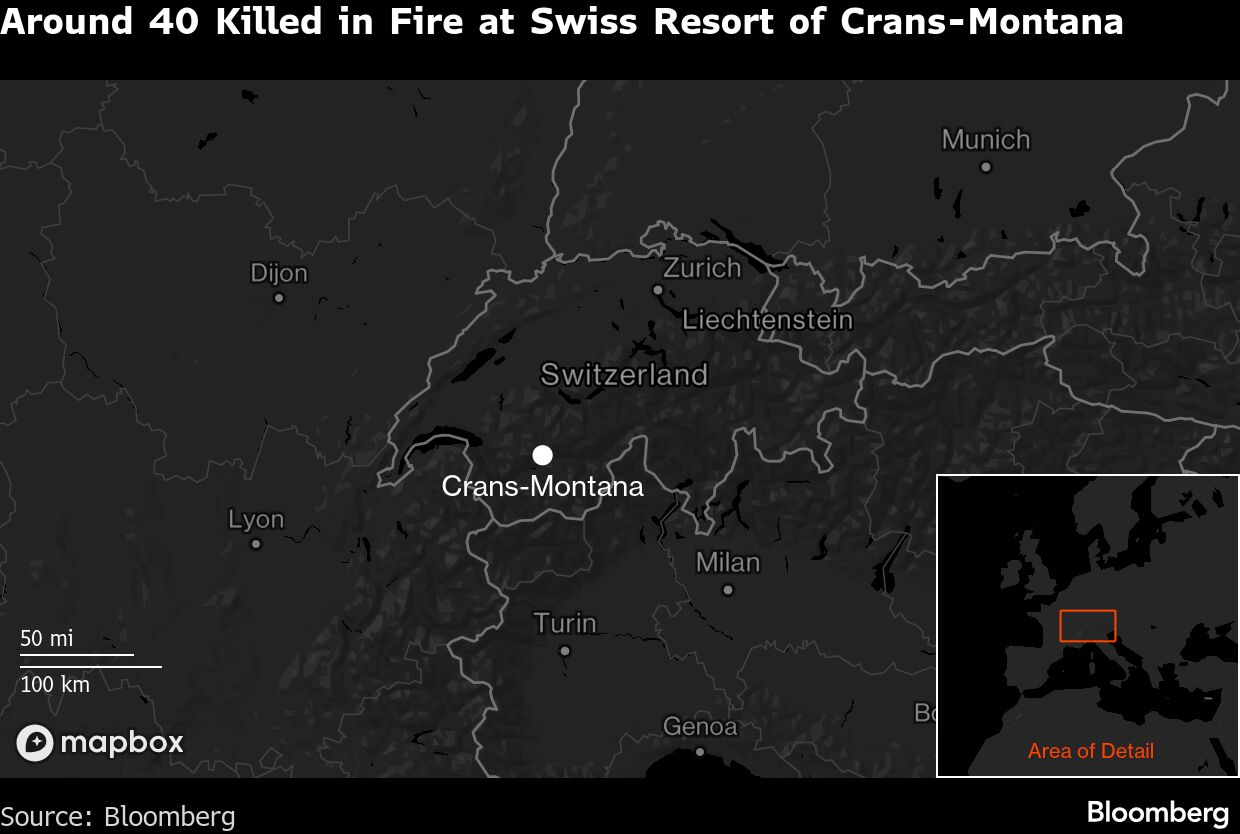
Group 1: Incident Overview - A deadly fire occurred in Crans-Montana, Switzerland, resulting in 40 fatalities and 116 injuries, with many victims being teenagers [2][4] - The fire was exacerbated by failures in fire safety inspections at "Le Constellation," the bar where the incident took place, which had not been inspected since 2019 [2][9] - The fire was reportedly triggered by sparklers igniting flammable soundproofing foam on the ceiling [9] Group 2: Government and Community Response - A national day of mourning is being observed, with memorial ceremonies planned, attended by local and international dignitaries [3][4] - Swiss authorities are implementing heightened fire safety measures for upcoming events, including the World Economic Forum and ski World Cup races [7][8] - Local businesses are attempting to resume normal operations while encouraging respectful visitation during this period of mourning [12] Group 3: Legal and Insurance Implications - Investigations are ongoing into the bar owners for potential charges of homicide and bodily injury due to negligence [9] - Insurers, including AXA SA, are assessing the financial impact and liabilities related to the incident, with standard liability insurance policies in place for the bar [10][11] - Despite the tragedy, there has been no significant impact on tourism in Crans-Montana, with minimal cancellations reported [11]


Overlooked Stock: LMND Upgrade Amid A.I.-Centric Evolution
Youtube· 2025-12-16 21:31
Core Viewpoint - Lemonade's stock is experiencing a significant rise following an upgrade from Morgan Stanley, indicating positive market sentiment and improved financial performance [1][5]. Company Overview - Lemonade is a digital insurance company leveraging artificial intelligence to offer a range of insurance products, including auto, property, liability, and life insurance [3][4]. - The company is positioned as an AI-centric insurer, focusing on efficient claims processing and dynamic pricing to manage risk premiums [4]. Financial Performance - The stock has shown substantial growth, with a year-to-date increase of 124% and a recent 9% rise following the analyst upgrade [2][11]. - Lemonade's loss ratio has improved to 67% from 81% year-over-year, indicating better management of claims relative to premiums collected [6]. - The company is projected to achieve profitability on an EBITDA basis by the end of Q4 2026, highlighting a clear path towards financial stability [7]. Market Position - Lemonade competes with established insurance companies like Geico and Allstate, which have also integrated AI into their operations [4]. - The company is experiencing outsized growth in the auto insurance sector, which is a key driver of its financial improvement [5]. Sales Growth - Lemonade's sales are expected to reach $730 million for the current year, with projections of $1.2 billion for the next year, reflecting a growth rate of 35% to 38% [15][14]. - The company has shown a consistent upward trend in stock performance, breaking out of a trading range and trading above its 20-week moving average [9][8].


Will my car insurance cover hitting a deer?
Yahoo Finance· 2025-10-30 21:25
Core Insights - Over 1 million car accidents involving deer occur annually, with significant financial implications and risks to wildlife and human safety [1][4] Group 1: Risks of Hitting a Deer - State Farm estimates over 1.7 million U.S. car insurance claims for animal collisions, primarily involving deer, from July 1, 2024, to June 30, 2025 [2] - The average U.S. driver has a 1 in 139 chance of hitting an animal, with the highest risks in West Virginia (1 in 40), Montana (1 in 53), and Wisconsin (1 in 58) [2] Group 2: Timing and Conditions - The likelihood of deer collisions peaks in November, October, and December, with the most dangerous times being from sunset to midnight and near dawn [3] Group 3: Costs of Collisions - From 2020 to 2023, 789 fatalities occurred due to vehicle-animal crashes, highlighting the human toll of these incidents [4] - The average cost of an animal-vehicle claim in the AAA East Central region was reported at $5,620 in 2024 [5] Group 4: Insurance Coverage - Comprehensive car insurance covers damage from animal collisions, while collision insurance applies to accidents involving other vehicles or objects [7][8] - Full coverage car insurance, which includes comprehensive and collision insurance, is essential for protection against deer collisions [18] Group 5: Preventive Measures - Drivers are advised to stay alert, especially during peak deer activity times, and to use high beams in low-traffic areas to enhance visibility [21]
Cheapest car insurance for good drivers
Yahoo Finance· 2025-10-16 19:59
Core Insights - Car insurance rates are generally lower for good drivers, defined as those with no at-fault accidents or moving violations in the last three to five years [2][3] - Insurers believe good drivers are less likely to cause accidents and file claims, leading to cheaper premiums [3] - It is essential for all drivers, regardless of their record, to maintain adequate coverage to protect against unforeseen events [3] Insurance Types - Liability insurance is mandatory in most states and covers damages and injuries caused to others in an accident [4] - Collision insurance covers damages to the insured vehicle from crashes, while comprehensive insurance covers theft and other non-collision-related damages [5] - Medical payments (Medpay) and personal injury protection (PIP) cover medical expenses for the insured and passengers, regardless of fault [5][6] - Uninsured/underinsured motorist coverage protects against accidents caused by drivers without sufficient insurance [7] Discounts for Good Drivers - Insurance companies typically offer discounts for good drivers, but the specific amounts vary by policy and state [8] - Usage-based insurance programs track driving habits and can provide initial discounts and further savings based on safe driving [9] - Examples of discounts include up to 22% from GEICO for accident-free drivers and an average of 34% from Progressive for those with no tickets or accidents in the past year [12] Coverage Recommendations - Good drivers should consider purchasing more than the state minimum insurance to ensure adequate financial protection [10] - Full coverage, including collision and comprehensive insurance, is advisable for vehicles worth more than a few thousand dollars or those still under loan or lease [11] - Additional options like roadside assistance and rental reimbursement coverage can be beneficial in emergencies [11]
中国人保_电话会议要点_2025 年第三季度综合成本率(CoR)显著改善;因增加成长股敞口,投资前景更乐观
2025-10-16 13:07
Summary of PICC Group 3Q25 Conference Call Company Overview - **Company**: PICC Group (1339.HK) - **Industry**: Insurance Key Takeaways 1. Premium Growth and CoR Improvement - In 3Q25, PICC's premium growth was steady at +4% year-over-year, consistent with 1H25 growth [2] - Auto premium growth aligned with industry levels, while agricultural, commercial properties, and liability lines showed muted growth [2] - CoR (Cost of Risk) improved significantly year-over-year due to reduced NAT CAT losses, attributed to enhanced risk prevention measures by the government and PICC [2] 2. Future CoR Expectations - Management anticipates further CoR improvements driven by: - Continued regulatory strengthening in the auto insurance sector with stricter expense monitoring starting in 2025 [2] - Gradual relaxation of NEV pricing factors launched in mid-September 2025 [2] - Expense rationalization in non-auto businesses commencing November 1, 2025, starting with commercial property and employer liability lines [2] 3. Life Insurance Growth - Bancassurance remained the primary growth driver in 3Q25, with regular premium growth increasing from approximately 50% year-over-year in 1H25 [3] - Focus on long-term products with premium payment terms of 5 to 10 years, shifting towards par/universal products [3] - Improvement in NBV (New Business Value) margin year-over-year noted [3] 4. Health Insurance Opportunities - Management is exploring the establishment of medicine catalogs for various health insurance tiers, particularly targeting middle-end health insurance [4] - The introduction of innovative drugs in catalog B is expected to enhance market potential and allow for higher pricing [4] 5. Investment Performance - In 3Q25, management reported that net assets increased quarter-over-quarter, driven by improved equity returns, particularly from growth-style stocks [5] - The broad-based growth stock index rose by 24% in 3Q25 compared to 16% in 3Q24, benefiting PICC's investment strategy [7] 6. Valuation and Target Price - Target price set at HK$7.50, based on a sum-of-the-parts (SOTP) approach, reflecting a 0.72x 2026E P/EV multiple [8] - Market capitalization reported at HK$299.839 billion (approximately US$38.528 billion) [5] 7. Risks - Key downside risks include: - Prolonged downturn in the P&C (Property and Casualty) sector [9] - A-share market slump [9] - Strengthened regulations in the life insurance industry [9] - Deterioration of the macroeconomic environment [9] 8. Upside Risks - Potential upside risks that could lead to stock trading above target price include: - Accelerated recovery in the P&C sector post-auto insurance reform [11] - A-share market rally [11] - Regulatory relaxation in the life insurance sector [11] - Improved macroeconomic conditions [11] This summary encapsulates the essential insights from the PICC Group's 3Q25 conference call, highlighting the company's performance, strategic outlook, and associated risks.

Here's how tariffs impact your car insurance costs
Yahoo Finance· 2025-04-11 21:02
Core Insights - Tariffs on imported vehicles and parts are expected to indirectly increase car insurance costs due to higher claims expenses resulting from increased repair and replacement costs [1][2][4] Tariff Impact on Insurance Costs - Automotive tariffs could lead to a domino effect, raising the costs of new vehicles and parts, which in turn will increase the costs of insurance claims [2] - Insurers are monitoring the impact of tariffs and potential supply chain disruptions to adjust future rate levels accordingly [4] - The U.S. imposes various tariffs, including a 25% tariff on imported passenger vehicles and major parts, effective April 3, and a 10% tariff on buses, effective November 1 [7] Claims and Premium Adjustments - As claims costs rise due to higher repair expenses, auto insurance premiums are likely to follow suit [3][8] - Approximately 60% of auto replacement parts used in U.S. repairs are imported, which could exacerbate the impact of tariffs on insurance costs [8] - Increased repair costs may lead to more vehicles being totaled, resulting in higher payouts for insurers [9] Repair Times and Rental Coverage - Tariffs may disrupt supply chains, leading to longer repair times and increased costs for rental reimbursement claims [9][10] - Consumers with rental reimbursement coverage may face higher out-of-pocket expenses if repair delays exceed coverage limits [10] Timeline for Rate Changes - Consumers may start seeing impacts on their car insurance bills within 12 to 18 months due to the lag in premium adjustments [10][11] - Insurers typically require months of data to analyze before making rate changes, and some states mandate prior approval, which can delay adjustments [11] Industry Challenges - The automotive industry faces significant challenges in shifting production to the U.S. to avoid tariffs, as relocating supply chains can take years and substantial investment [12][13]
