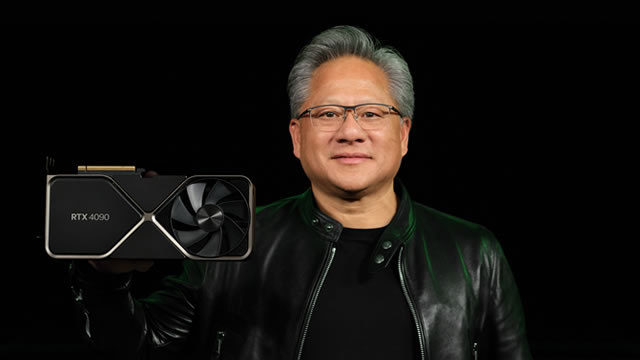
MI308 AI chip

Search documents
Could AMD Be an Artificial Intelligence (AI) Winner in 2026?
Yahoo Finance· 2025-12-09 15:15
Core Insights - AMD is emerging as a viable investment option in the AI computing hardware sector, traditionally dominated by Nvidia [1] - Concerns exist regarding a potential AI bubble, raising questions about AMD's ability to compete effectively in the AI race [1] Group 1: AMD's Improvements and Partnerships - AMD has significantly improved its ROCm software, with downloads increasing 10x year over year, following its acquisition of Nod.ai [4] - A partnership with OpenAI has been established, where AMD will provide six gigawatts of computing power, enhancing its software capabilities [4] Group 2: Market Opportunities - AMD is prepared to pay a 15% export tax to the U.S. to access the Chinese market, specifically for its MI308 AI chip, which could lead to substantial business gains [5] - The Chinese AI market represents a significant opportunity for AMD, with potential resolution on export restrictions expected by 2026 [6] Group 3: Competitive Landscape - AMD's chips are generally cheaper than Nvidia's, which may attract companies looking for cost-effective computing solutions amid financial restraint [7] - Data center revenue for AMD could see a substantial increase, projected to rise at a 60% annual rate through 2030 [8]


AMD stock slumps 5% on earnings miss, China AI chip concerns
CNBC· 2025-08-06 14:01
Core Insights - Advanced Micro Devices (AMD) reported adjusted earnings of 48 cents per share, which fell short of the expected 49 cents per share, leading to a more than 5% decline in shares [2] - CEO Lisa Su highlighted the impact of U.S. export controls on artificial intelligence chips, noting a year-over-year decline in AI business revenue due to restrictions on MI308 sales to China [2] - AMD forecasted revenue of $8.7 billion for the current quarter, which is above the $8.3 billion expected by analysts, but this guidance does not include revenue from the MI308 AI chip for the China market [3] Company Strategy - The company is actively engaging with the U.S. administration regarding license requirements for shipping chips to China, while maintaining a cautious outlook on guidance [4] - CEO Su emphasized the strength of AMD's portfolio and identified a significant market opportunity, estimating it to be over $500 billion in the coming years [4]

Nvidia's resumption of H20 chip sales related to rare earth element trade talks
TechCrunch· 2025-07-16 16:57
Core Insights - Nvidia has reversed its decision to withdraw from the Chinese market and is applying to restart sales of its H20 AI chip to China, which is linked to trade discussions regarding rare earth elements [1][2]. Group 1: Nvidia's Market Strategy - Nvidia's plans to sell its H20 AI chips in China are influenced by ongoing trade discussions with China about rare earth elements, which are critical for technology [2][3]. - The U.S. Commerce Secretary indicated that rare earth elements, primarily mined in China, are essential for various technologies, including electric vehicle batteries, making them a focal point in U.S.-China trade debates [3]. Group 2: Political Reactions - Congressman Raja Krishnamoorthi expressed concerns that Nvidia's decision could compromise U.S. technology and is inconsistent with the administration's export control policies for China [4]. - Despite the concerns, the U.S. Commerce Secretary reassured that Nvidia is only providing its "fourth best" chip to China, indicating a controlled approach to technology transfer [6]. Group 3: Regulatory Environment - The U.S. is still determining its AI chip export regulations, with the Trump administration having rescinded the Biden administration's AI Diffusion Rule, leaving uncertainty in the market [7]. - There are rumors of potential further restrictions on AI chip exports to prevent smuggling, particularly to countries like Thailand and Malaysia, highlighting the evolving regulatory landscape [7].