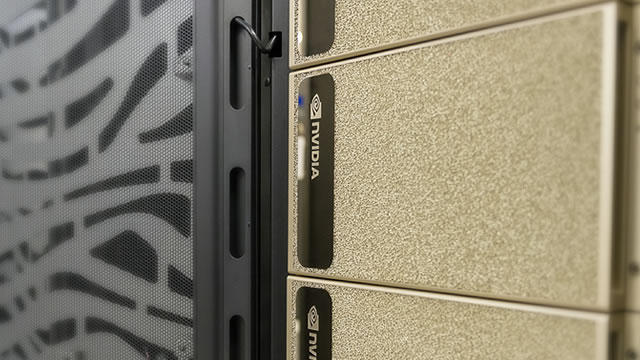
NVIDIA graphics processing units (GPUs)

Search documents
Hyperscale Data's Alliance Cloud Services Expands Collaboration with Silicon Valley Cloud Provider Following First NVIDIA GPU Deployment at Michigan Facility
Prnewswire· 2025-09-10 10:30
Core Insights - Hyperscale Data, Inc. announced a strengthened collaboration with a leading Silicon Valley cloud services provider through its subsidiary Alliance Cloud Services, following the successful deployment of NVIDIA GPUs at its Michigan facility [1][2][3] - The deployment has validated ACS's capability to provide AI and HPC infrastructure for enterprise clients, establishing the Michigan facility as a trusted destination for GPU-driven workloads [2][3] - The company aims to expand ACS's capacity to meet the growing demand for AI solutions, positioning itself as a premier partner for advanced AI applications [3][4] Company Overview - Hyperscale Data operates through its subsidiary Sentinum, which manages a data center for digital asset mining and colocation services, targeting the emerging AI ecosystem [6] - The company is also involved in acquiring undervalued businesses and disruptive technologies through its other subsidiary, Ault Capital Group, Inc. [6] - A divestiture of ACG is expected in the first quarter of 2026, which will allow Hyperscale Data to focus on data center operations and digital asset holdings [7][8] Market Position - The demand for AI computing is surging, prompting Hyperscale Data and ACS to broaden their infrastructure and deepen strategic partnerships to support enterprise AI innovation [4] - By leveraging NVIDIA's GPU technology and advanced power infrastructure, ACS is well-positioned to cater to the needs of enterprise and cloud providers globally [3]

IREN Is Up 186% YTD on AI Pivot—And It's Just Getting Started
MarketBeat· 2025-09-03 16:30
Core Viewpoint - IREN Limited has transitioned from Bitcoin mining to AI data center development, leveraging its low-cost hydroelectric power to capitalize on the growing demand for AI infrastructure [2][3][4]. Group 1: Business Model and Strategy - IREN Limited initially focused on profitable Bitcoin mining using low-cost hydroelectric power in British Columbia, which provided a strategic advantage [2]. - The company is repurposing its existing facilities into high-performance computing hubs for AI and enterprise workloads, while also constructing new facilities specifically for AI infrastructure [3]. - IREN operates 1,900 NVIDIA GPUs and plans to expand this to 10,900 by the end of the year, with a significant portion being cutting-edge technology [5]. Group 2: Financial Projections - IREN forecasts annual AI cloud revenue between $200 million and $250 million, benefiting from low power costs of approximately $0.033 per kilowatt-hour [6]. - The company has secured non-dilutive financing through 36-month leases on its GPUs, allowing for rapid expansion without diluting shareholder value [6]. Group 3: Current Market Performance - IREN stock has increased over 186% in 2025, reflecting strong investor interest in AI infrastructure [3]. - Following a recent earnings report, IREN stock rose over 27%, although it may face short-term profit-taking pressure [9]. - The stock is currently trading above its 20-day simple moving average, indicating bullish momentum, but the relative strength indicator suggests it may be overbought [10][11].


Traveling To China, Nvidia's Jensen Huang Embraces Economic Reality
Forbes· 2025-07-14 18:05
Core Perspective - Nvidia co-founder Jensen Huang's trip to China is seen as a strategic move to expand in a crucial market for U.S. companies, emphasizing the importance of economic interconnection for global peace and prosperity [2][3]. Group 1: Strategic Importance of Nvidia - Senators Elizabeth Warren and Jim Banks acknowledge the strategic importance of Nvidia's advanced AI hardware, particularly its GPUs, but fail to grasp the broader implications of global economic collaboration [4]. - The U.S. Department of Commerce restricts Nvidia's ability to sell advanced chips to China, which may inadvertently benefit the Chinese Communist Party by pushing U.S. technology out of the Chinese market [6][7]. - Chinese technologists have a strong desire for American innovation, and U.S. political actions may hinder Nvidia's growth opportunities in China, which will continue to develop regardless of U.S. involvement [8][9]. Group 2: Consequences of Protectionism - The global market will inevitably see Nvidia's technology, regardless of U.S. restrictions, as competitors will find ways to innovate and fill the void left by U.S. companies [9][10]. - Protectionist measures have historically allowed companies like Huawei to thrive independently, demonstrating that such policies can backfire and lead to increased competition from non-U.S. firms [10][11]. - Huang's recognition of the necessity for Nvidia to engage with Chinese talent is crucial for the company's survival and competitiveness in the global AI landscape [11][12].