
Neuralink线性电极

Search documents
中国团队研制新型可拉伸柔性电极,破解脑机接口核心难题
Ke Ji Ri Bao· 2026-02-09 07:07
Core Insights - A research team led by Fang Ying from Beijing Brain Science and Brain-like Research Institute has developed a new type of high-throughput, stretchable flexible electrode that addresses the challenges of traditional flexible electrodes in brain-machine interface (BMI) technology, particularly in dynamic brain movements [1][2][3] - The new stretchable electrode architecture can dynamically follow brain movements with a required stretching force that is only 1/100th of that needed for Neuralink's linear electrodes, significantly reducing mechanical damage to brain tissue and minimizing immune responses [2][3] Group 1 - The new flexible electrode technology provides a foundational solution for the long-term stability of invasive brain-machine interfaces, overcoming issues of electrode displacement and inflammation caused by brain tissue movement [2][3] - Research conducted on macaques demonstrated that the stretchable flexible electrode could achieve long-term stable recordings in the brain, successfully capturing 257 single-neuron signals with a 256-channel implant and high-quality neural signals with a 1024-channel implant [2][3] Group 2 - This innovative technology is expected to address key obstacles for the clinical application of invasive brain-machine interfaces in China, potentially allowing the country to gain a competitive edge in the global market [3] - The advancement in this technology is anticipated to enhance the performance of brain-machine interfaces, contributing to the overall development of the industry and improving public health through cutting-edge technology [3]

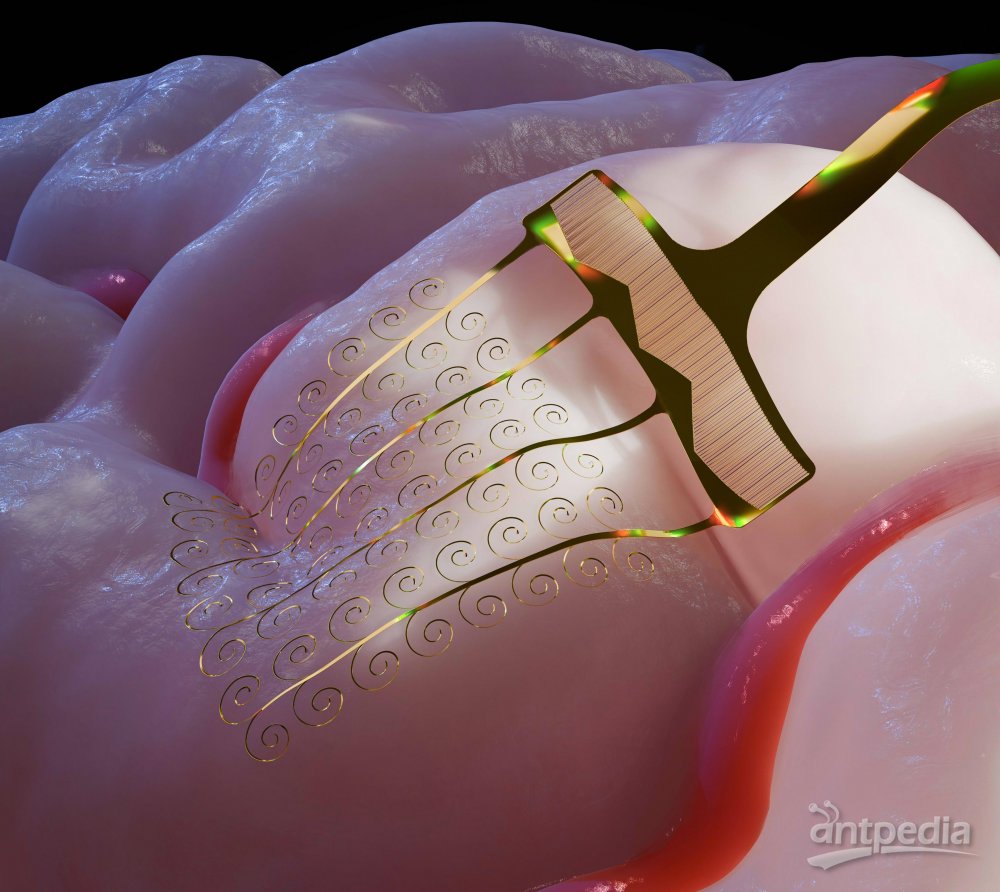
新型可拉伸柔性电极破解脑机接口核心难题
Ke Ji Ri Bao· 2026-02-09 00:50
Core Insights - A research team led by Fang Ying, a senior researcher at the Beijing Brain Science and Brain-like Research Institute and founder of Zhiran Medical, has developed a new type of stretchable flexible electrode that addresses the issues of traditional flexible electrodes displacing and detaching during dynamic brain movements, providing a foundational solution for the long-term stability of invasive brain-machine interfaces [1][2] Group 1: Technology Development - The new stretchable electrode architecture can dynamically follow brain movements and requires only 1/100 of the force needed by Neuralink's linear electrodes, significantly reducing mechanical damage to brain tissue and minimizing immune responses and glial scars caused by traditional linear electrodes [2] - Research conducted on macaques demonstrated that the stretchable flexible electrode can achieve long-term stable recordings in the brain, successfully capturing 257 single-neuron signals with a 256-channel implant and large-scale, high-quality neuronal signals with a 1024-channel implant [2] Group 2: Industry Implications - The development of this ultra-flexible neural electrode array technology addresses core issues related to the implantation of bioelectronic devices in the brain, effectively solving problems of electrode displacement and inflammation caused by significant brain movement, while also significantly reducing implantation damage to brain tissue and shortening surgical operation time [2] - This advancement is seen as a potential game-changer for the invasive brain-machine interface industry, which is considered the ultimate direction for high-bandwidth human-machine interaction, especially following the challenges faced by companies like Neuralink [1][2]