
Nvidia Rubin chips

Search documents
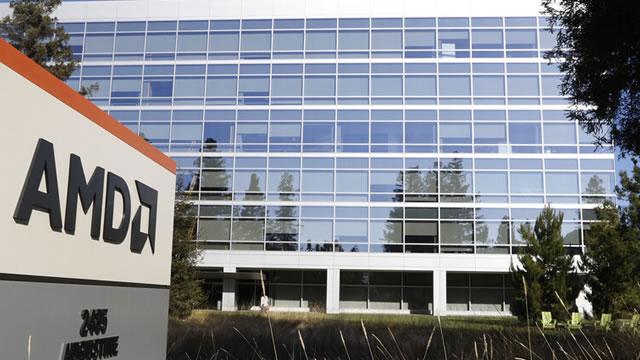
AMD's Stock Got Crushed Today. CEO Lisa Su Says Demand Is 'On Fire'
Investopedia· 2026-02-04 23:25
Core Insights - AMD's stock experienced a significant decline of over 17% despite reporting quarterly earnings that exceeded Wall Street estimates, indicating a disconnect between market expectations and actual performance [1][1] - CEO Lisa Su expressed optimism about the company's future, describing 2023 as a "big inflection year" and highlighting strong demand for AMD's chips, which she stated is "on fire" [1][1] - AMD is preparing to launch its next-generation AI products in the second half of the year, with expectations that revenue from its MI450 chip will begin contributing in Q3 [1][1] Financial Performance - AMD's quarterly earnings surpassed Wall Street estimates, yet the stock still fell, suggesting that investor expectations may have been overly optimistic [1][1] - The company's shares closed around $200, significantly below Wall Street's consensus price target of approximately $276 [1][1] Market Position and Future Outlook - AMD is positioned as a competitor to Nvidia in the AI chip market, with the upcoming launch of its MI450 chip aimed at challenging Nvidia's offerings [1][1] - The data center segment, which is crucial for AMD's revenue, is projected to grow by more than 60% annually over the next three to five years as demand for AI technology accelerates [1][1]


Big Tech's AI data center push is spawning a new heat economy
CNBC· 2026-01-27 06:05
Core Viewpoint - The integration of artificial intelligence in data centers is enhancing the efficiency of waste heat utilization, providing a sustainable heating solution for buildings, exemplified by the Technical University of Dublin's Tallaght campus being heated by waste heat from an Amazon Web Services data center [1][3][8]. Group 1: Data Center Heat Utilization - Data centers traditionally generate excess heat, but their integration with district heating networks has been slow due to low-temperature waste heat [2]. - The AI boom is increasing the computing capacity of data centers, necessitating new methods to balance efficiency and sustainability [3]. - AI technology enables higher temperature outputs from data centers, making it easier to connect to heating systems with less hardware [4]. Group 2: Social and Economic Impact - Providing heat to district heating networks enhances the social license of data centers, contributing positively to community sustainability efforts [5]. - Ireland's easing of the moratorium on new data center applications reflects a shift in sentiment regarding the economic potential of these facilities amid the AI boom [7]. - The Tallaght scheme demonstrates the benefits of integrated planning, combining power system and distribution grid operators [8]. Group 3: Project Outcomes and Benefits - The Tallaght campus project has reduced carbon dioxide emissions by approximately 704 metric tons in 2024, despite increased energy demand from new buildings [9]. - AWS's data center in Tallaght provides recycled heat free of charge, supporting the heating of 55,000 square meters of public buildings and commercial space [10][11]. - The project currently meets 92% of the campus's heating demand and significantly advances TU Dublin's decarbonization goals for 2030 [24]. Group 4: Challenges and Future Prospects - The integration of data centers into heating networks faces challenges such as permitting delays and high capital costs [13]. - The life cycle mismatch between district heating networks and data center equipment poses risks of stranded assets [13]. - Scaling up waste heat utilization could potentially supply heat for at least 3.5 million homes by 2035 if aligned with AI infrastructure development [21].



Nvidia’s $4 trillion stock rally faces more threats than ever
Yahoo Finance· 2026-01-06 14:33
Core Viewpoint - Nvidia is poised for significant growth with the upcoming release of its next-generation chips, Rubin, and remains a strong investment opportunity despite increasing competition and market fluctuations [1][4]. Company Performance - Nvidia is projected to achieve a 57% profit growth alongside a 53% increase in sales for the fiscal year ending January 2027, contrasting sharply with Apple's expected gains of around 10% [2]. - The stock has experienced a notable decline, losing approximately $460 billion in market value recently, yet it has still gained nearly 1,200% over the past three years [5][6]. Market Position - Nvidia commands over 90% of the AI accelerator market, but faces rising competition from companies like Advanced Micro Devices Inc. and major clients such as Alphabet and Amazon, who are developing their own chips [7][8]. - Despite the competition, demand for Nvidia's chips remains robust, with significant capital expenditures projected from major tech companies, totaling over $400 billion in 2026 [13]. Profit Margins and Valuation - Nvidia's gross margin is projected to be 71.2% for fiscal 2026, down from the mid-70s in previous years, but expected to recover to around 75% in fiscal 2027 [15]. - The stock is currently trading at 25 times expected profits over the next 12 months, which is a discount compared to many of its peers in the tech sector [16][17].
