OMG

Search documents
Binance cannot arbitrate customer claims over crypto losses, US judge rules
Yahoo Finance· 2026-02-26 23:39
Core Viewpoint - A federal judge has denied Binance's request for arbitration in a case involving customers who allege the exchange illegally sold unregistered tokens that depreciated significantly [1][2]. Group 1: Legal Proceedings - U.S. District Judge Andrew Carter ruled that customers can pursue claims in court for issues arising before February 20, 2019, due to Binance's inadequate notification regarding changes to their terms of use [2]. - The judge noted that there was no evidence that Binance properly announced the arbitration provision or indicated where customers could find it in the terms of use [3]. - The alleged class-action waiver in Binance's 2019 terms of use was deemed ambiguous and unenforceable by the judge [3]. Group 2: Customer Claims - Customers have accused Binance of failing to inform them about the significant risks associated with purchasing seven specific tokens: ELF, EOS, FUN, ICX, OMG, QSP, and TRX, as mandated by federal and state securities laws [5]. - The lawsuit was initially dismissed in 2022 but was revived by a federal appeals court two years later [5]. Group 3: Company Response - A spokesperson for Binance stated that the company will "vigorously defend the limited claims that remain in this meritless case" following the judge's decision [3]. - Changpeng Zhao, the founder and former CEO of Binance, is also named as a defendant in the case [4].
Vitalik Buterin 近 2 日出售多种代币,兑换为 USDC 与 ETH
Xin Lang Cai Jing· 2025-12-21 00:07
Group 1 - Vitalik Buterin sold various cryptocurrencies including UNI, ZORA, BNB, KNC, OMG, and some meme tokens in the past two days [1] - After the sales, Buterin transferred approximately $564,672 in USDC and 27 ETH (around $80,364) through RAILGUN [1]
CVPR 2025 | 如何稳定且高效地生成个性化的多人图像?ID-Patch带来新解法
机器之心· 2025-05-03 04:18
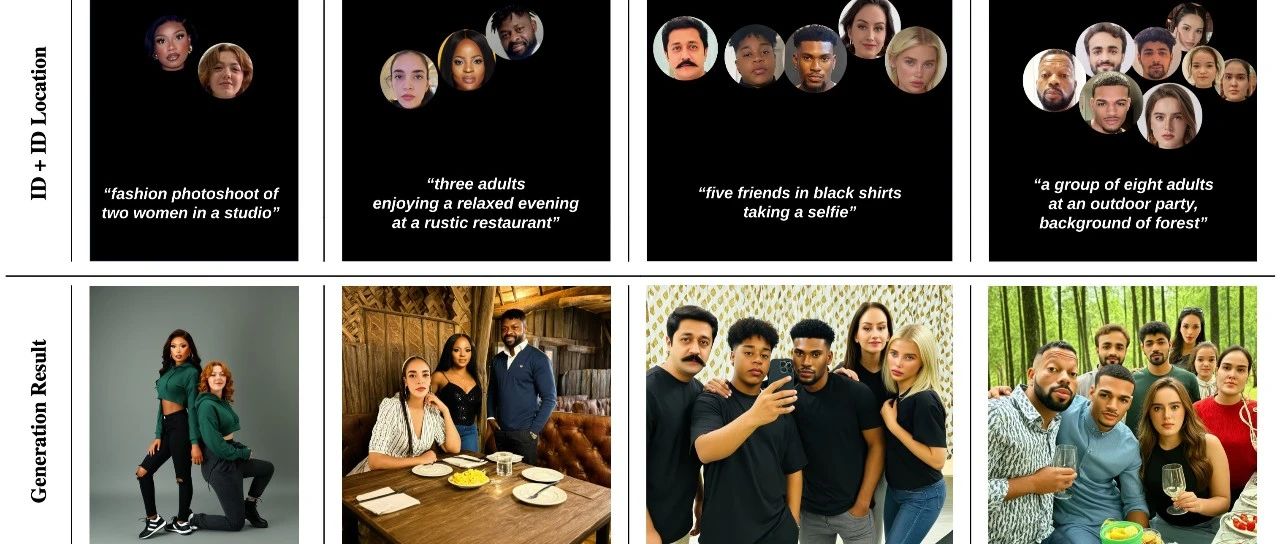
Core Viewpoint - The article discusses the advancements and challenges in personalized multi-person image generation using diffusion models, highlighting the innovative ID-Patch mechanism that addresses identity leakage and enhances accuracy in positioning and identity representation [1][5][21]. Group 1: Challenges in Multi-Person Image Generation - Personalized single-person image generation has achieved impressive visual effects, but generating images with multiple people introduces complexities [4]. - Identity leakage is a significant challenge, where features of different individuals can blend, making it difficult to distinguish between them [2][4]. - Existing methods like OMG and InstantFamily have attempted to tackle identity confusion but face limitations in efficiency and accuracy, especially as the number of individuals increases [4][14]. Group 2: ID-Patch Mechanism - ID-Patch is a novel solution designed specifically for multi-person image generation, focusing on binding identity and position [6][21]. - The mechanism separates facial information into two key modules, allowing for precise placement of individuals while maintaining their unique identities [9][21]. - ID-Patch integrates various spatial conditions, such as pose and depth maps, enhancing its adaptability to complex scenes [10][21]. Group 3: Performance and Efficiency - ID-Patch demonstrates superior performance in identity resemblance (0.751) and identity-position matching (0.958), showcasing its effectiveness in maintaining facial consistency and accurate placement [12]. - In terms of generation speed, ID-Patch is the fastest among existing methods, generating an 8-person group photo in approximately 10 seconds, compared to nearly 2 minutes for OMG [17][15]. - The performance of ID-Patch remains robust even as the number of faces increases, with only a slight decline in effectiveness [14][21]. Group 4: Future Directions - There is potential for further improvement in facial feature representation by incorporating diverse images of the same identity under varying lighting and expressions [20]. - Future explorations may include enhancing facial fidelity through multi-angle images and achieving dual control over position and expression using patch technology [22].