Optimus bot

Search documents
X @Tesla Owners Silicon Valley
Tesla Owners Silicon Valley· 2025-10-05 13:58
Robotics Development - Tesla Optimus bot 从真人表演发展到学习功夫 [1]

X @Tesla Owners Silicon Valley
Tesla Owners Silicon Valley· 2025-10-05 03:12
Robotics Development - Tesla Optimus bot is progressing from a real person demonstration to learning Kung Fu [1]
Tesla Stock Faces Demand, Political, Tariff Pressure: Why Analysts Focus On 'Multiple Generational Growth Drivers'
Benzinga· 2025-04-23 16:36
Core Viewpoint - Analysts express caution regarding Tesla's short-term outlook following missed revenue and earnings per share estimates in Q1 [1] Group 1: Analyst Insights - Truist Securities highlights weak delivery data and the withdrawal of 2025 growth guidance as negatives for Tesla [3] - Despite weak results, reaffirmation of operating goals is seen as a positive by analysts [4] - Needham notes that a demand rebound for Tesla may be challenging, citing political headwinds [5][6] - Goldman Sachs describes the first quarter as a mixed report, with key debates expected around new product launches and tariffs [6][7] - Stifel considers the weak first quarter not surprising, suggesting modestly positive implications for Q1 2025 [8] Group 2: Ratings and Price Targets - Truist maintains a Hold rating with a $280 price target [9] - Needham reiterates a Hold rating with no price target [9] - Goldman Sachs lowers its price target from $260 to $235 while maintaining a Neutral rating [9] - Stifel reiterates a Buy rating with a $455 price target [9] - Cantor Fitzgerald lowers its price target from $425 to $355 while maintaining an Overweight rating [9] - Piper Sandler maintains an Overweight rating with a $400 price target [9] - Benchmark reiterates a Buy rating with a $350 price target [9] - Canaccord Genuity lowers its price target from $404 to $303 while reiterating a Buy rating [9] Group 3: Future Outlook and Catalysts - Analysts remain optimistic about lower-priced vehicles, FSD rollout, and robotaxi progress as critical value drivers [10][11] - Upcoming catalysts include the launch of robotaxis in Texas and the introduction of lower-priced vehicles in H1 2025 [11][12] - Concerns about tariffs and macroeconomic uncertainties are noted, but long-term growth drivers are still seen as promising [13][17] - The stock's performance is contingent on a positive growth trajectory [17] Group 4: Market Performance - Tesla stock increased by 6.38% to $253.19, with a 52-week trading range of $157.40 to $488.54 [18]

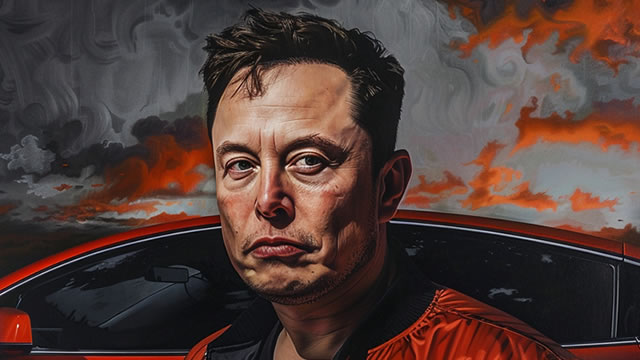
Tesla Analyst Turns Bullish Following Factory Visit, Sees Multiple Catalysts Driving EV Stock To $425
Benzinga· 2025-03-19 15:05
Core Viewpoint - Cantor Fitzgerald has upgraded Tesla from Neutral to Overweight, maintaining a price target of $425 following a visit to Tesla's Austin Gigafactory and AI data centers [1] Group 1: Investment Outlook - Tesla shares have declined approximately 45% year-to-date, presenting an attractive entry point ahead of key catalysts such as the introduction of the Robotaxi segment, Full Self-Driving rollout, a lower-priced vehicle, Optimus bot production, and the Tesla Semi [2][3] - The introduction of the Robotaxi segment is expected in June, with Full Self-Driving rollout in China already underway and anticipated in Europe in the first half of the year [3] - A lower-priced vehicle around $30,000, including tax credits, is expected to be introduced in the first half of 2025 [3] Group 2: Production and Revenue Expectations - High-volume production of the Optimus bot is expected in 2026, with initial deliveries in the first half of that year [4] - Production of the Tesla Semi is anticipated to start in the second half of 2025 or 2026, which is expected to positively impact Tesla's stock [4] - Future revenue growth is expected from Full Self-Driving, Robotaxi, Energy Storage & Deployment, and Optimus Bots, which are fundamental to Tesla's long-term thesis [5] Group 3: Near-term Challenges - Despite the bullish outlook, some near-term softness is anticipated, with a "mild" first quarter expected due to lower demand in Europe, increased competition in China, and negative sentiment surrounding CEO Elon Musk [6] - Growth in Tesla's automotive business may be partially offset by tariffs and the potential removal of the EV tax credit [7] Group 4: Delivery and Revenue Estimates - Cantor Fitzgerald has revised its full-year 2025 delivery estimates from approximately 2 million to 1.9 million and 2026 estimates from approximately 2.39 million to 2.33 million [8] - Full-year 2025 revenue estimates have been cut from $115.7 billion to $107.4 billion, and 2026 revenue estimates from $148.3 billion to $141 billion [8] Group 5: Upcoming Earnings Report - Tesla is not scheduled to report quarterly results until late April, with consensus estimates currently predicting earnings of 53 cents per share and revenue of $24.52 billion [9]
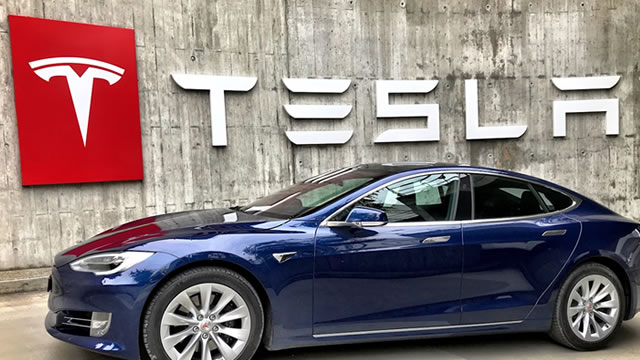
Tesla, Rivian, Aurora Highlight Tech: Autonomous Opportunities, Analyst Sees 'Attractive Profit Opportunity'
Benzinga· 2025-03-17 15:08
Core Insights - The ramp-up and near-term deployments in the electric vehicle (EV) and autonomous vehicle (AV) sectors are seen as key catalysts for growth [1] Group 1: Company Focus - Tesla is targeting a June launch for its robotaxi service in Texas, while Aurora plans a commercial launch in April in Texas [2] - Tesla is leveraging AI to enhance performance and safety for its Full Self-Driving (FSD) technology, with a focus on factors like ride smoothness and geographic area [4] - Rivian is looking to monetize personal autonomy products and plans to launch its R2 model in the first half of 2026 [8] Group 2: Cost and Profitability - Tesla's current cost to own a Model Y is approximately $0.70 per mile, with robotaxi costs expected to be below the average rideshare price of over $2 per mile in the U.S. [5] - The cost of goods sold per vehicle for Tesla was under $35,000 globally last quarter, with the Cybercab estimated to cost around $30,000 including autonomy hardware [5] - Aurora claims that autonomous driving can save roughly a third of costs compared to human driving, particularly in the trucking segment [7] Group 3: Market Dynamics - Companies are focusing on first-mover advantages and technology leads to create high switching costs and scale benefits [3] - Rivian noted that macroeconomic factors, such as tax credits and tariffs, could influence vehicle volume growth estimates [9] - Companies are looking to optimize sourcing and pricing strategies in response to tariffs [10]