Optune Pax系统

Search documents
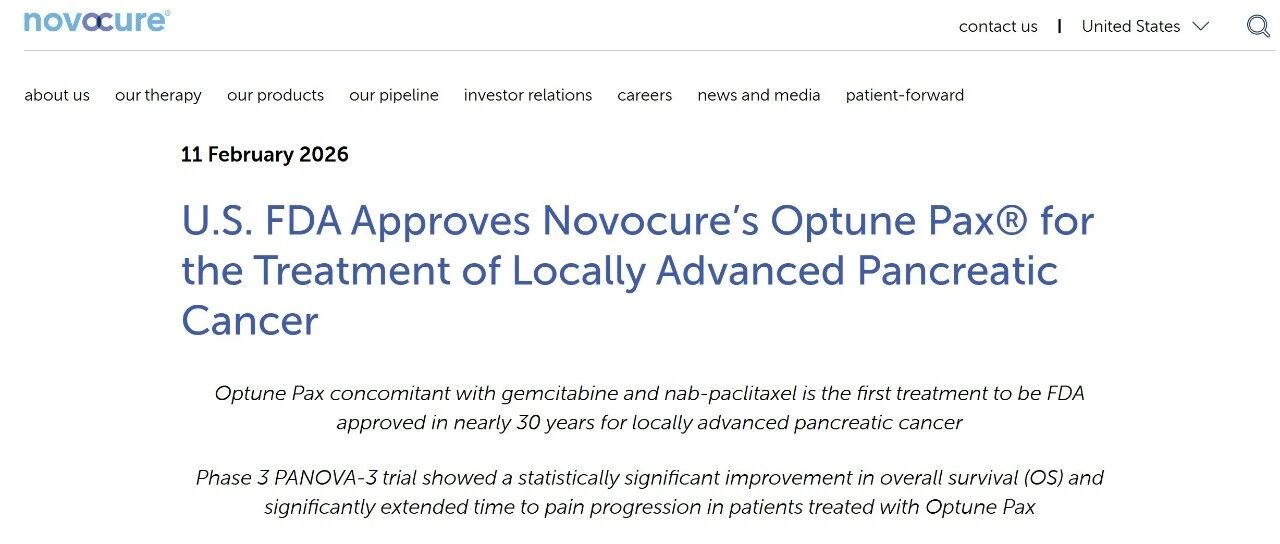
获批FDA!可穿戴的胰腺癌罕见新疗法
思宇MedTech· 2026-02-16 02:53
Core Viewpoint - A newly approved non-invasive treatment for locally advanced pancreatic cancer, utilizing a wearable device to continuously deliver electric fields that disrupt tumor cell division, has gained attention. This treatment, approved by the FDA for use in the U.S., is not yet available in China but offers insights for domestic professionals [2]. Group 1: Treatment Mechanism - The Optune Pax system employs Tumor Treating Fields (TTFields) technology, delivering low-intensity alternating electric fields to the tumor area via electrode arrays attached to the skin [3]. - The core mechanism of action is that the electric field affects rapidly dividing cancer cells while having a limited impact on normal cells, which divide more slowly [4][5]. Group 2: Device Characteristics - Optune Pax is a lightweight and portable system, allowing patients to receive treatment while maintaining daily activities [6]. - The device applies physical forces to charged cellular structures, disrupting spindle formation during mitosis, blocking chromosome separation, and leading to cancer cell death [7]. Group 3: Clinical Trial Results - The approval of Optune Pax is based on the pivotal Phase III clinical trial PANOVA-3, which demonstrated a significant improvement in overall survival [9]. - In the intention-to-treat population, the median overall survival was 18.3 months for the treatment group compared to 15.1 months for the control group, indicating a clinically meaningful improvement [10]. - The one-year survival rate was 68.1% for the treatment group versus 60.2% for the control group [11]. - Patients experienced delayed progression of pain and improved quality of life indicators, with the treatment showing good overall tolerability [12]. Group 4: Challenges and Future Considerations - Despite positive clinical trial results, real-world application faces challenges, including balancing efficacy and treatment burden, which will directly impact its adoption [17]. - Key observations for future development include the need for real-world data to validate the long-term value of TTFields in pancreatic cancer treatment [18]. - The treatment landscape for pancreatic cancer has seen little innovation over decades, making this development noteworthy [19].