PD(L)1双特异性抗体(bsAb)

Search documents
癌症的“颠覆性疗法”,中国创新药的“DeepSeek时刻”!最核心的关键词:PD(L)1 bsAb
Hua Er Jie Jian Wen· 2025-08-31 11:58
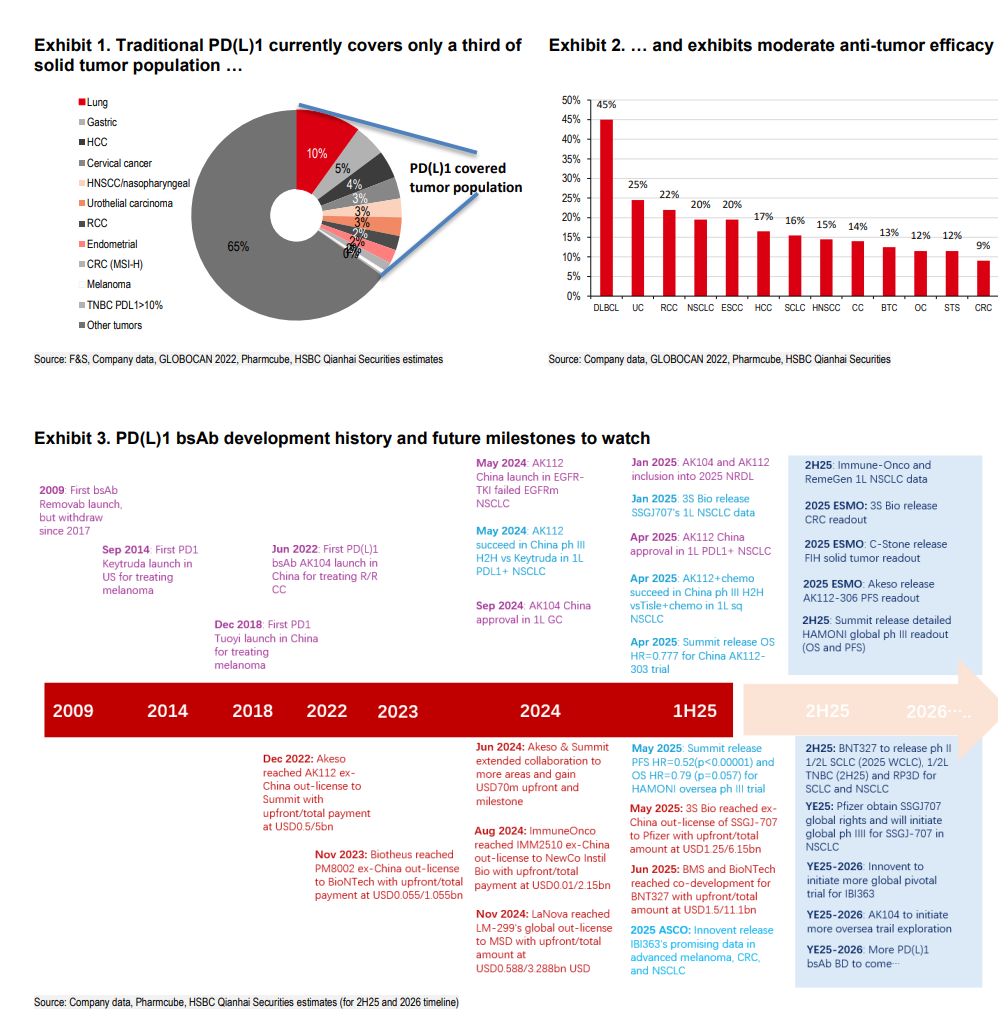
Core Insights - The emergence of PD(L)1 bispecific antibodies (bsAb) from China is being recognized as a transformative moment in the global biopharmaceutical industry, particularly in cancer treatment [1][2] - The Hang Seng Biotechnology Index has surged by 91% this year, significantly outperforming the broader market's 26% increase, driven by breakthroughs in innovative drug development [1][2] - The global PD(L)1 market is projected to grow from $53 billion in 2024 to $100 billion by 2035, with bsAb expected to capture approximately 65% of this market share [2][12] Industry Overview - PD(L)1 bsAb represents a new generation of cancer immunotherapy that targets two pathways simultaneously, enhancing immune response and overcoming resistance in a broader range of tumor types [3][19] - Traditional PD-1/PD-L1 monoclonal antibodies, such as Keytruda, have limitations, as a significant proportion of patients experience ineffectiveness or develop resistance [3][19] - The anticipated growth in the PD(L)1 market will be fueled by the introduction of key bsAb drugs around 2027-2028, their strong anti-tumor efficacy, and the expiration of patents for existing monoclonal antibodies [14][19] Chinese Market Dynamics - China is leading the development of PD(L)1 bsAb, with approximately 90% of the global pipeline originating from Chinese companies [17][18] - The Chinese PD(L)1 market is expected to grow at a compound annual growth rate (CAGR) of 8.5%, reaching $10 billion by 2035, with bsAb accounting for 70% of the market share [16][18] - Major global pharmaceutical companies have not yet established their own PD(L)1 bsAb assets, instead opting to license Chinese assets, indicating a competitive advantage for Chinese firms [18] Competitive Landscape - Leading companies are actively advancing clinical development, with five major players expected to capture over 80% of the market share, reminiscent of the dynamics seen with Keytruda and Opdivo [19] - Notable companies such as Akeso, Innovent, and others are accelerating their international expansion through significant licensing agreements and clinical breakthroughs [21] - Recent high-value licensing deals, such as Pfizer's $12.5 billion acquisition of SSGJ707 rights and BioNTech's $11.1 billion collaboration with BMS, highlight the growing interest in Chinese biopharmaceutical innovations [21]