
Pampers diapers

Search documents
The Stock Market May Be Shifting From Risky Tech Stocks to Safer Sectors. Here Are 3 Stocks to Buy Before They Soar.
The Motley Fool· 2026-03-15 09:20
Core Viewpoint - The market is facing challenges primarily due to overvalued AI equities and escalating geopolitical tensions, particularly in the Middle East, which are raising concerns about the global economy. Group 1: Market Overview - The S&P 500 has been making a series of lower highs and lower lows since late January, indicating a bearish trend in the stock market [1] - A "risk-off" attitude is emerging among investors, leading to a shift towards safer investment options [2] Group 2: Procter & Gamble (PG) - Procter & Gamble is considered a defensive stock that offers certainty in uncertain times, with a market cap of $350 billion [6][7] - The company has a diverse portfolio of well-known brands, including Pampers, Tide, and Gillette, which consumers continue to purchase regardless of economic conditions [5] - In its fiscal Q2, P&G reported flat revenue of $22.21 billion, missing estimates of $22.28 billion, although per-share profits increased to $1.88 from $1.78 year-over-year [7][8] - The recent stock dip is attributed to geopolitical tensions, but P&G's household goods remain largely unaffected, making it a less risky investment [9] Group 3: Nice (NICE) - Nice, an AI company, has faced stock weakness due to the broader market's fatigue with AI stocks, but its business model is resilient [10][15] - The company provides AI-powered customer service solutions through its CXOne platform, which is utilized by major brands like Visa and Disney [11] - Nice reported nearly $3 billion in revenue last year, an 8% year-over-year increase, with a gross margin of 66.41% [14] Group 4: Berkshire Hathaway (BRK) - Berkshire Hathaway is highlighted as a safe investment option, especially as investors shift towards lower-risk assets [16][19] - The company has a market cap of $1.1 trillion and owns a diverse range of businesses, including Geico and Dairy Queen, which provide consistent cash flow [18][20] - Despite recent underperformance compared to the market, Berkshire's value is supported by its privately held businesses, insulating it from market volatility [19][20]


4 Boring But Beautiful Dividend Stocks Perfect for Income-Focused Portfolios
The Motley Fool· 2026-03-03 08:25
Core Insights - The article emphasizes the appeal of investing in reliable dividend stocks, which are often considered "boring" but provide consistent income regardless of economic conditions [1] Group 1: Procter & Gamble - Procter & Gamble (PG) specializes in everyday consumer products like dishwashing detergent and diapers, which ensures repeat purchases [4] - The company holds significant market shares, with Tide laundry detergent at approximately 40% and Pampers diapers at about 50% in the U.S. market [5] - Procter & Gamble has a market capitalization of $380 billion, a gross margin of 51.11%, and a dividend yield of 2.59% [7] - The company has raised its annual dividend payment for 69 consecutive years, with a forward-looking yield of 2.6% [8] Group 2: Brookfield Asset Management - Brookfield Asset Management (BAM) operates in the investment management sector, focusing on industries with above-average long-term growth potential [11] - The company has a market capitalization of $77 billion, a gross margin of 95.83%, and a dividend yield of 3.85% [13] - Brookfield's long-term revenue and dividend growth target is between 15% and 20%, supported by a 15% increase in this year's quarterly per-share payout compared to 2025 [13] Group 3: Automatic Data Processing - Automatic Data Processing (ADP) is a payroll processor that serves one out of every six U.S. workers, but it also offers a range of HR services beyond payroll [14][15] - The company is integrating artificial intelligence to enhance its service offerings while maintaining a 51-year streak of annual dividend increases, with a current yield of 3.2% [16] Group 4: Coca-Cola - Coca-Cola (KO) has increased its per-share payout for 64 consecutive years, supported by a diverse portfolio of popular beverage brands [17][18] - The company has a market capitalization of $345 billion, a gross margin of 61.75%, and a dividend yield of 2.54% [20] - Coca-Cola's business model minimizes cost-based risks by outsourcing bottling and distribution to third-party partners, allowing it to focus on marketing [20]


Looking for Passive Income in 2026? 5 Dividend Kings to Buy Hand Over Fist.
Yahoo Finance· 2026-03-01 16:50
Core Insights - The article emphasizes the importance of Dividend Kings as reliable sources of passive income, highlighting their consistent ability to raise dividends over long periods, specifically for at least 50 consecutive years [2][3]. Group 1: Definition and Characteristics of Dividend Kings - Dividend Kings are defined as stocks that have increased their per-share payouts annually for a minimum of 50 consecutive years, without a specified minimum annual increase required [2]. - These companies demonstrate resilience by maintaining and growing their dividends even during economic downturns, showcasing their fiscal strength [3]. Group 2: Investment Considerations - Income investments, such as those in Dividend Kings, typically exhibit single-digit percentage revenue and earnings growth, which may not appeal to all investors but are valuable for those seeking reliable income and inflation-beating growth [4]. - The article suggests that despite the slower growth, the trade-off is often worthwhile for investors focused on consistent income [4]. Group 3: Example of a Dividend King - Procter & Gamble (NYSE: PG) is highlighted as a quintessential Dividend King, having increased its dividend payment for 69 consecutive years, soon to be 70 [5][6]. - The company's success in maintaining its dividend is attributed to its portfolio of well-known consumer goods brands, which consumers repeatedly purchase out of habit and comfort [6].
Procter & Gamble (NYSE:PG) Surpasses EPS Estimates but Misses on Revenue
Financial Modeling Prep· 2026-01-22 19:00
Core Viewpoint - Procter & Gamble (P&G) reported mixed financial results, with earnings per share exceeding estimates but revenue slightly missing forecasts due to declining demand for key products [2][3]. Financial Performance - P&G reported earnings per share (EPS) of $1.88, surpassing the estimated $1.86 [2][6]. - The company's revenue was $22.2 billion, slightly below the forecasted $22.3 billion [2][6]. - Fiscal second-quarter net income was $4.32 billion, or $1.78 per share, down from $4.63 billion, or $1.88 per share, in the previous year [3]. Market Position and Valuation - P&G has a price-to-earnings (P/E) ratio of approximately 21.22, indicating investor confidence in its earnings potential [4]. - The price-to-sales ratio is about 4.02, and the enterprise value to sales ratio is around 4.31, reflecting the market's valuation of its sales [4]. Financial Health - The company has a debt-to-equity ratio of approximately 0.67, suggesting a moderate level of debt [5]. - The current ratio is around 0.71, indicating the company's ability to cover short-term liabilities [5]. - Despite a 2% drop in share price in premarket trading, P&G's earnings yield is about 4.71%, offering a reasonable return on investment [5].

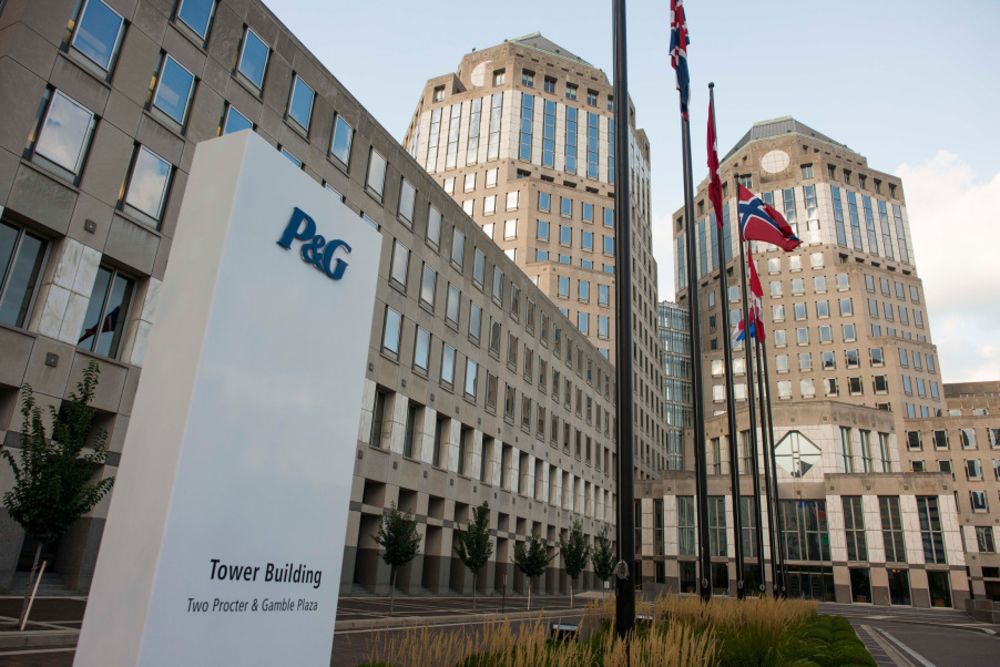
1 Magnificent S&P 500 Dividend Stock Down 20% to Buy and Hold Forever
Yahoo Finance· 2026-01-16 17:05
Core Viewpoint - Procter & Gamble (P&G) presents a buying opportunity for long-term income investors despite recent stock weakness, as the cyclical headwinds are nearing their end and the company's dividend remains secure [1][11]. Company Performance - P&G shares have declined 20% since November 2024 due to aggressive maneuvers in an inflationary environment, leading to revenue and profit shortfalls [2][12]. - The company reported a top line of $84.3 billion for the fiscal year ending in June, maintaining its position as the largest consumer staples company by revenue and market cap [4][12]. - Despite recent disappointing quarterly results, P&G has managed to widen its profit margins during this turbulent period [9][10]. Dividend Stability - P&G has a long history of consistent dividend payments, having paid dividends for 135 years and raised its annual payout for 69 consecutive years, with a growth rate of nearly 5% per year over the past decade [10][12]. - Only 63% of last fiscal year's per-share earnings of $6.51 were distributed as dividends, indicating a strong capacity to maintain and grow dividends [10]. Market Dynamics - The current market environment favors faster-growing AI stocks, which may have led to slower-growing value stocks like P&G falling out of favor [6][11]. - The Federal Reserve forecasts a decrease in the annualized inflation rate from around 3% last year to just above 2% for 2027, which could benefit P&G as economic growth improves [8][12]. Investment Opportunity - P&G's stock is currently trading at an above-average forward-looking yield of 3%, making it an attractive option for income-focused investors [11][12]. - The current stock price presents a temporary entry opportunity, as it is unusual for P&G to be down for such an extended period [12][13].
Procter & Gamble CEO could see major wealth boost from stock incentives
Yahoo Finance· 2026-01-14 21:02
Core Viewpoint - Procter & Gamble has provided its new CEO, Shailesh Jejurikar, with a significant performance incentive in the form of stock options to enhance the company's performance amid slowing sales growth [1][9]. Group 1: CEO Compensation and Stake - Jejurikar currently holds a stake worth $14.9 million in the company, which could increase to over $28 million with new stock grants and options [2]. - The new CEO's stock options are currently "underwater," meaning they hold no value until P&G's stock price exceeds $153.18, while it closed at $143.46 on January 12 [4]. - All 27 top executives and board members collectively own less than 0.2% of P&G's outstanding shares, which total more than $330 billion [3]. Group 2: Leadership Background and Strategy - Jejurikar was appointed as the next CEO on July 28, 2022, succeeding Jon Moeller, and has been viewed as a potential leader for some time [6]. - Prior to his CEO appointment, Jejurikar led P&G's Global Fabric and Home Care division, managing iconic brands that account for a third of the company's sales and profit [7]. - Under Jejurikar's leadership, P&G plans to boost sales by investing in product improvements while cutting jobs, having announced a reduction of 7,000 office positions amid slowing sales [9]. Group 3: Compensation Structure - Jejurikar's annual salary is set at $1.6 million, with potential additional incentive pay of up to $3.2 million, alongside a long-term incentive award valued at $14 million [8].
Why Procter & Gamble Stock Hit a 2-Year Low on Tuesday
Investopedia· 2025-12-02 22:37
Core Insights - Procter & Gamble (PG) shares reached a two-year low following a warning from the CFO regarding the American economy's health [1][3] - The CFO noted significant declines in sales volume and value in October, with expectations for November to remain similar [2][6] Company Performance - P&G's stock fell by as much as 3% on Tuesday, closing 1.1% lower, marking its lowest level since December 2023 [3] - The company is experiencing a shift in consumer behavior, with higher-income households opting for premium products while lower-income consumers are choosing cheaper store brands [4] Economic Context - The CFO described the current U.S. consumer environment as "nervous and cautious," influenced by tariffs and a government shutdown [6] - A previous port strike led to stockpiling by consumers, complicating year-over-year sales comparisons [2]

Worried About a Stock Market Sell-Off? Consider These 5 Dow Jones Dividend Stocks For 2026.
Yahoo Finance· 2025-10-28 13:37
Group 1 - The S&P 500 has increased by 14.5% year to date and over 35% from its April lows, raising questions about the sustainability of the market rally [1] - Investors seeking reliable dividend stocks may find opportunities in the Dow Jones Industrial Average, which consists of 30 industry-leading companies [1] Group 2 - Procter & Gamble (P&G) and Coca-Cola are highlighted as strong dividend stocks, with P&G having a 21.8 forward price-to-earnings (P/E) ratio compared to a 10-year median of 25.7, and Coca-Cola at 23.9 versus a median of 27.7 [6] - Both companies have maintained impressive dividend growth, with P&G raising its dividend for 69 consecutive years and Coca-Cola for 63 years, qualifying them as Dividend Kings [5] Group 3 - McDonald's is noted for its recession-resistant business model, providing affordable food options even amid inflationary pressures [7] - Chevron continues to increase its dividend payouts despite low oil prices, indicating strong financial management [8] - Visa is positioned to return significant cash to shareholders without relying on a booming economy [8]


Procter & Gamble to Focus on Innovation, Not Discounts, to Attract Wary Shoppers
Yahoo Finance· 2025-10-24 15:33
Core Insights - Procter & Gamble reported a 3% increase in first-quarter sales, reaching $22.39 billion, surpassing analysts' expectations of $22.18 billion [5] - The company is focusing on product innovation rather than price reductions to attract cautious consumers [1][2] - Organic sales increased by 2% due to higher pricing and a favorable product mix, with notable growth in beauty, grooming, and healthcare segments [1][6] Sales and Financial Performance - First-quarter sales rose to $22.39 billion, exceeding forecasts [5] - Organic sales growth was reported at 2%, driven by higher pricing and a favorable mix [1][6] - In Greater China, organic sales grew by 5%, indicating successful product innovation in a challenging consumer environment [6] Competitive Strategy - The company is innovating across various product lines, including diapers and laundry detergent, to counter aggressive promotions from competitors [2][4] - P&G's product innovation has led to a 2% to 2.5% price increase across its portfolio [3] - The company believes that driving integrated superiority through innovation and brand investment is a more sustainable response to competitive pressures [4] Market Trends - Consumers are becoming more cautious in their purchasing decisions, leading to a tighter market [3] - Many consumers are opting for premium products, which have contributed significantly to the company's growth in certain channels [7]
Procter & Gamble restructuring plans: Buyouts, brand sales and a CEO shakeup
Yahoo Finance· 2025-09-22 16:13
Core Viewpoint - Procter & Gamble (P&G) is undergoing significant restructuring, including cutting 7,000 jobs by mid-2027, to address slowing sales and enhance productivity, with a focus on non-manufacturing roles and potential brand divestitures [2][7][5]. Group 1: Job Cuts and Restructuring - P&G plans to cut 7,000 jobs, representing 6.4% of its global workforce of 109,000 employees, primarily targeting non-manufacturing roles [2][5]. - The company aims to reduce jobs outside of its 99 factories worldwide by 15% as part of its restructuring efforts [2]. - The last major restructuring in 2012 involved cutting 5,700 workers, or over 4% of 129,000 employees at that time [8]. Group 2: Sales Performance and Market Strategy - P&G's organic sales growth has been stagnant, with only 1% to 2% growth per quarter since spring 2024, attributed to consumer spending cuts amid inflation and trade tensions [3][4]. - The company is reviewing its markets and product offerings, considering exiting underperforming categories and brands, particularly in international markets [20][21]. - P&G's core markets, including the U.S., China, Japan, Canada, and Western Europe, saw organic sales growth of 2%, while other markets lagged at 1% [20]. Group 3: Leadership Changes - A leadership transition is underway with Shailesh Jejurikar set to become the new CEO in January, which may lead to further executive departures [26][27]. - The restructuring is described as "surgical," focusing on rationalizing product and geographic mixes to enhance operational focus [23]. Group 4: Historical Context and Future Outlook - P&G has a history of significant job cuts and brand divestitures, having cut 37,000 jobs from buyouts and divestitures between 2011 and 2018 [13][12]. - The company is considering selling off brands, although specific details on which brands may be affected remain unclear [18][22].