Plaque Analysis

Search documents
Heartflow Q4 Earnings Call Highlights
Yahoo Finance· 2026-03-18 22:36
Core Insights - HeartFlow initiated revenue guidance for 2026 at $218 million to $222 million, indicating a year-over-year growth of approximately 24% to 26% [1] - The company reported a fourth-quarter revenue of $49.1 million, reflecting a 40% increase year over year, with U.S. revenue at $44.8 million, up 41% [3][7] - Non-GAAP gross margin for the quarter reached nearly 80%, an improvement from 75.3% in the previous year, attributed to volume leverage and AI-driven efficiencies [2][7] Revenue and Growth Projections - Management expects plaque revenue to contribute approximately $15 million to $17 million in 2026, with a significant portion anticipated in the second half of the year [1][6] - The company guided for a non-GAAP gross margin of 80% to 81% for 2026, representing an expansion of roughly 300 to 400 basis points year over year [1][7] Product and Innovation Pipeline - HeartFlow is set to launch PCI Navigator in April 2026, an AI-driven planning tool for interventional cardiologists, and will roll out HeartFlow Autonomous Processing starting late 2026 [5][15][17] - The company has a proprietary database of 160 million annotated CT images, which supports its innovation efforts and has led to an increase in the midterm non-GAAP gross margin target to 85% [5][17] Market Expansion and Adoption - The company reported strong early momentum in Plaque Analysis, ending 2025 with 489 accounts, supported by a new Category One CPT code effective January 1, 2026 [6][10] - HeartFlow estimates an incremental $6 billion U.S. opportunity by expanding into a high-risk asymptomatic population, raising the total market opportunity to $11 billion [19] Competitive Positioning - HeartFlow differentiates itself through its proprietary data set, clinical evidence base, and integration into clinical workflows, competing on product quality rather than price [20] - The company has seen durable utilization of its FFRct technology, with new accounts typically reaching steady state within about a year [8] Financial Position - HeartFlow ended the quarter with $280.2 million in cash, equivalents, and investments, positioning the company to fund operations through profitability while investing in R&D and commercial expansion [22]
Heartflow (NasdaqGS:HTFL) 2026 Conference Transcript
2026-03-03 19:47
HeartFlow Conference Call Summary Company Overview - **Company**: HeartFlow (NasdaqGS:HTFL) - **Industry**: Healthcare Technology, specifically focused on AI applications for diagnosing coronary artery disease [2][3] Core Business and Market Position - HeartFlow utilizes AI to diagnose coronary artery disease, addressing a critical health issue as heart disease is the leading cause of death globally [2] - The company aims to establish a new standard of care with its HeartFlow technology, which is FDA cleared and reimbursed by Medicare and commercial payers [3][4] - HeartFlow's current penetration in the non-invasive testing market is approximately 2%, with a total addressable market (TAM) of about $5 billion, based on 9.5 million non-invasive tests conducted annually in the U.S. [7][8] Technology and Product Offerings - HeartFlow's technology operates on coronary CT images, providing insights through a cloud-based platform [6][15] - The platform includes: - **RoadMap Analysis**: A workflow tool for CT readers to enhance reading speed and accuracy [16] - **Plaque Analysis**: Measures plaque types with high precision, reimbursed by Medicare and commercial payers [17][46] - **FFRCT Analysis**: Models blood flow to assess the need for intervention [18] - **PCI Navigator Tool**: Aids interventional cardiologists in planning procedures [19][64] Clinical Data and Algorithm Development - HeartFlow has accumulated approximately 160 million annotated CT images, which are proprietary and form a significant competitive advantage [27][28] - The company has over 600 peer-reviewed clinical publications, supporting its technology and aiding in shifting clinical practice patterns [29][30] - The algorithm's efficiency has improved significantly, reducing the time for quality control from 20 hours to about 20 minutes [24] Market Expansion and Future Growth - HeartFlow plans to expand its offerings, including the launch of the PCI Navigator tool in 2026 and a serial Plaque Analysis in 2027 to track disease progression [64][65] - The company aims to enter the high-risk asymptomatic patient market, which represents an additional $6 billion TAM, with clinical trials planned for various subpopulations [66][67] - The focus on plaque analysis is expected to double the applicable patient population compared to FFRCT, enhancing revenue potential [50][52] Competitive Advantages and Barriers to Entry - HeartFlow's bi-directional data pipes facilitate seamless integration with healthcare systems, enhancing customer stickiness and operational efficiency [41][42] - The regulatory environment and the need for FDA clearance create barriers for new entrants, solidifying HeartFlow's market position [29][45] Conclusion - HeartFlow is positioned for significant growth with its innovative technology and expanding product offerings, addressing a critical need in coronary artery disease diagnosis and management. The company is focused on leveraging its extensive clinical data and proprietary algorithms to enhance patient care and drive future revenue growth [63][72]
Heartflow (NasdaqGS:HTFL) FY Conference Transcript
2025-09-10 14:17
HeartFlow FY Conference Summary Company Overview - **Company**: HeartFlow (NasdaqGS:HTFL) - **Industry**: Healthcare, specifically in the field of cardiology and diagnostic imaging - **Technology**: AI-driven software for diagnosing coronary artery disease (CAD) using coronary CTA images Key Points and Arguments Company Performance and Growth - HeartFlow reported **$43.4 million** in revenue for the quarter, representing a **40% year-over-year growth** and a sequential growth of **$6.2 million** [20] - The company has a strong commercial momentum with existing site growth and new site activations contributing to revenue [20] - Gross margins were reported at **75.5%**, with expectations for continued margin expansion driven by R&D innovations and economies of scale [21][17] Technology and Clinical Evidence - HeartFlow's software utilizes AI to diagnose CAD more accurately than traditional methods, which have a **30% false negative rate** and often lead to unnecessary procedures [7] - The company has conducted over **100 clinical trials** and has been published in over **600 reputable journals**, emphasizing the importance of clinical data in cardiology [11] - HeartFlow has accumulated over **110 million annotated CT images**, which are used to train their algorithms, improving efficiency and reducing costs [12] Market Dynamics and Competitive Position - The coronary CTA market is growing at approximately **22% annually**, with HeartFlow positioned to benefit from this trend as more hospitals adopt the technology [23] - There are currently **2,900 accounts** in the U.S. performing coronary CTA, with HeartFlow operating in about **1,100 of them** [24] - The company aims to convert the standard of care from SPECT imaging to coronary CTA, which is more efficient and less harmful to patients [62] Future Products and Innovations - HeartFlow is set to launch a new product, **Plaque Analysis**, in **2026**, which will provide insights into plaque characteristics and help in patient management [41] - The company is focused on expanding its product portfolio and investing in technology to drive future growth, with a commitment to invest over **50% of revenue growth** into these initiatives [45][46] Strategic Focus and Long-term Vision - HeartFlow's strategy includes targeting high-risk asymptomatic patients for screening, which aligns with their core competencies in technology and clinical data [51] - The company is committed to educating physicians on the use of their technology and expanding coverage with payers to facilitate adoption [43] - HeartFlow aims to achieve profitability within three years post-IPO, leveraging the capital raised to support growth initiatives [46] Risks and Challenges - The company faces challenges in aligning multiple stakeholders within healthcare systems, which can extend the sales cycle to about **12 months** [32] - There is a need for ongoing education and market development to ensure physicians understand and utilize the new technologies effectively [44] Additional Important Insights - Heart disease is the leading cause of death globally, and HeartFlow's technology aims to address this silent killer by improving early diagnosis [49] - The company emphasizes the importance of non-invasive diagnostics, which can significantly enhance patient care and treatment planning [36] - HeartFlow's competitive edge lies in its ability to provide comprehensive insights that traditional methods cannot, thereby improving clinical outcomes [62] This summary encapsulates the key points discussed during the HeartFlow FY Conference, highlighting the company's performance, technology, market dynamics, future innovations, strategic focus, and challenges.
AI医疗影像年度最大IPO,揭秘“第一股”的创新版图
思宇MedTech· 2025-08-12 03:38
Core Viewpoint - HeartFlow successfully completed an IPO raising approximately $364.2 million, marking it as one of the largest IPOs in the AI medical imaging sector since 2025, indicating a significant acceleration towards clinical entry and commercialization of imaging AI [2][17] Company Overview - HeartFlow, founded in 2010, specializes in AI cardiovascular diagnostics, with its initial product, FFR-CT analysis, accounting for over 90% of its revenue [2] - The company has established partnerships with over 1,000 hospitals globally, including 80% of the top 50 heart hospitals in the U.S., serving over 400,000 patients [14] Product Development and Features - HeartFlow's technology combines deep learning algorithms with computational fluid dynamics to create patient-specific 3D vascular models from coronary CT angiography (CCTA) [5] - The company has launched several products, including: - Plaque Analysis, the only FDA-approved AI tool for plaque quantification, with a 95% consistency rate compared to the gold standard [7] - RoadMap Analysis, which provides 3D visualization of vascular anatomy, reducing reading time by approximately 25% and inter-physician variability by about 40% [9] - PCI Planner, set to launch in 2026, will assist in virtual interventional planning [11] Market and Payment Environment - HeartFlow's services are primarily paid for by hospitals or imaging centers, with reimbursement coming from Medicare and commercial insurance [15] - The U.S. outpatient prospective payment system (OPPS) has increased payment standards for relevant tests, providing a stable profit opportunity for hospitals [15] - The estimated market potential includes approximately 9.5 million stable chest pain patients annually in the U.S., with a market size of about $3.3 billion for FFR-CT and $1.7 billion for plaque analysis [15] Competitive Landscape - HeartFlow's competitive advantages include its first-mover status, extensive data, and clinical validation, with over 1.1 billion labeled CCTA images in its training set [16] - Traditional non-invasive tests still dominate the market, and emerging AI companies are developing similar functional analysis platforms [16] - Major imaging equipment manufacturers have the capability to integrate FFR-CT functionality directly into local workstations, posing a potential threat to HeartFlow's cloud-based model [16] IPO Implications - The successful IPO of HeartFlow reflects the capital market's interest in "AI + high clinical value medical technology" and signals a new financing window for innovative medical enterprises with viable payment systems [17] - The $364 million raised will influence HeartFlow's future strategies, including global expansion and market penetration in payment-friendly regions [17]

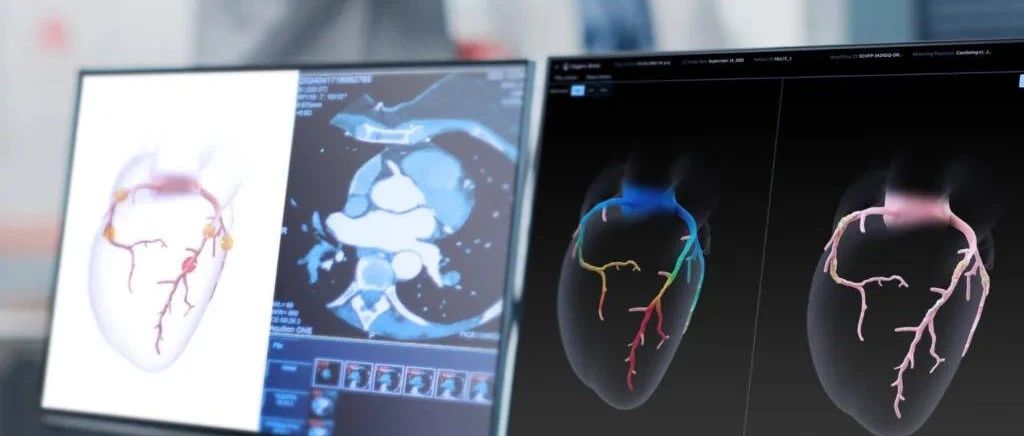
提交IPO!AI影像公司拟募资7亿
思宇MedTech· 2025-07-22 04:18
Core Viewpoint - HeartFlow is preparing for an IPO to raise $100 million, which will be used for debt repayment, platform development, sales expansion, and potential acquisitions, marking a significant step towards commercial maturity in the cardiovascular imaging sector [1] Non-Invasive Functional Imaging as the First Entry Point in Coronary Management - HeartFlow's platform offers a complete workflow from imaging to diagnosis, addressing the core node in coronary heart disease diagnosis [2] - Over 9.5 million patients visit outpatient or emergency departments annually in the U.S. due to stable chest pain, with about one-third requiring further imaging or functional tests [2] - HeartFlow's FFR CT and plaque analysis provide a non-invasive, single-session, remote-read alternative, tapping into a market ceiling of approximately $5 billion, largely untapped by other companies [2] Competitive Landscape and Industry Outlook - The application of AI in coronary imaging is shifting from "assisted recognition" to "functional judgment," with most emerging companies focusing on imaging rather than functional decision-making [3] - HeartFlow's FFR CT analysis targets approximately 3.1 million CCTA patients, with an average charge of $1,067 per case, representing a market opportunity of about $3.3 billion [4] - The plaque analysis is applicable to around 5.5 million patients, with a market space of approximately $1.7 billion [4] HeartFlow's Unique Position - HeartFlow's FFR CT is a non-invasive functional assessment tool that simulates pressure changes in blood flow without direct contact with the patient, establishing a complete 3D model of coronary arteries [6] - Unlike traditional CCTA, which only identifies plaque presence, HeartFlow's FFR CT assesses whether the plaque affects blood flow, providing critical clinical decision-making information [9] - HeartFlow's product has been included in the 2021 ACC/AHA chest pain guidelines as a functional testing alternative, gaining reimbursement pathways from multiple U.S. Medicare Administrative Contractors [11] Company Overview and Financial Performance - Founded in 2007, HeartFlow has raised over $1.06 billion and has its products integrated into 725 hospital systems as of March 2025 [18] - The company reported a revenue of $126 million in 2024, a 44% year-over-year increase, with a gross margin of around 75% [18] - Despite significant revenue growth, HeartFlow faces challenges with a net loss of $32.3 million in Q1 2025 and cumulative losses exceeding $1 billion, making future profitability a key focus post-IPO [18]