医疗影像

Search documents
160亿!GE医疗又一重磅收购
思宇MedTech· 2026-03-21 03:10
Core Viewpoint - The acquisition of Intelerad by GE Healthcare for $2.3 billion signals a strategic shift in the imaging industry from "device performance" to "data and platform capabilities" [2][3][8] Group 1: Acquisition Details - GE Healthcare completed the acquisition of Intelerad on March 18, 2026, for $2.3 billion (approximately 16 billion RMB) [2] - Intelerad is an imaging IT company specializing in PACS (Picture Archiving and Communication System), workflow management systems, and cloud solutions for radiology and cardiology [5][6] - This acquisition is not merely a horizontal expansion but a vertical integration from hardware to platform [8] Group 2: Industry Trends - The shift in the imaging industry has been ongoing, with this acquisition further highlighting the trend [3] - The strategic value of imaging IT, particularly PACS and VNA (Vendor Neutral Archive), is being reassessed due to three key changes: 1. Imaging data is becoming the entry point for AI, with PACS systems controlling data access [9] 2. Medical scenarios are shifting from in-hospital to out-of-hospital settings, where cloud imaging platforms have advantages [10] 3. The business model is transitioning from one-time sales to subscription-based revenue, emphasizing recurring income [11] Group 3: Implications for the Chinese Market - Despite structural differences, the acquisition has clear implications for the Chinese imaging market [15] - Domestic imaging manufacturers are revealing shortcomings in platform capabilities, relying on third-party IT vendors [16] - The strategic position of PACS vendors is rising, as their value is changing with the advancement of AI and cloud technology [19] - The out-of-hospital imaging market may become a new variable for growth, especially if policies and payment systems evolve [20] Group 4: Conclusion on Industry Competition - The competitive landscape of the imaging industry is shifting from equipment specifications to operating a data and AI-driven platform [21][22] - The transformation from "system supplier" to "data entry controller" is underway, with a move from project-based models to platform subscription models [23] - The emergence of chain imaging centers and increased demand for grassroots medical imaging are indicative of this shift [24]



济南市三院影像中心双源CT新技术全面开展,精准影像护健康
Qi Lu Wan Bao· 2026-02-27 06:42
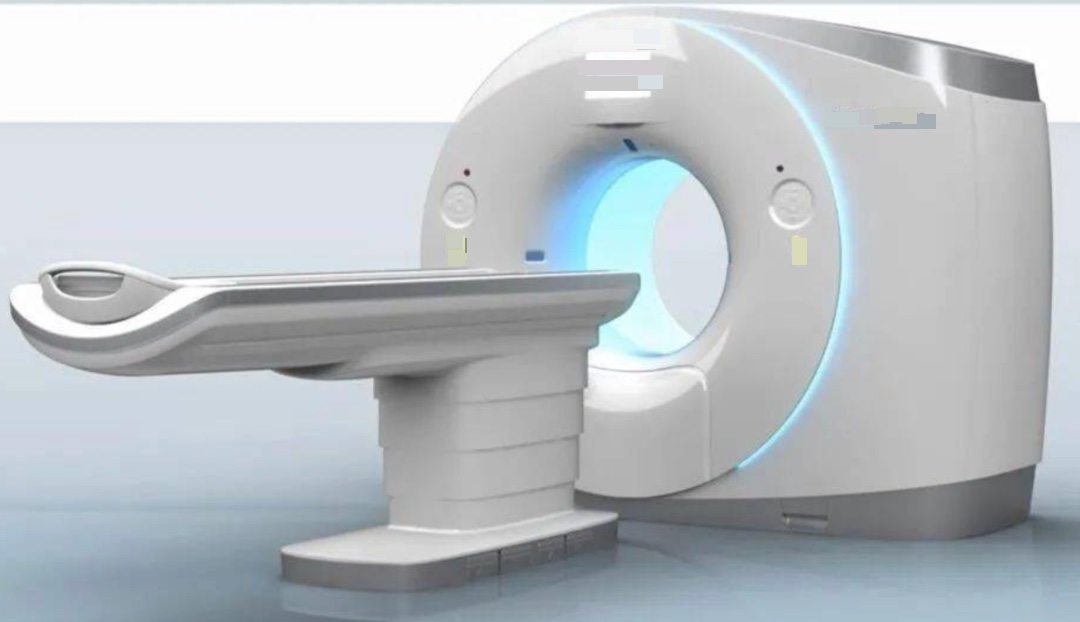
Core Insights - The Jinan Third People's Hospital's Imaging Center is set to enhance regional imaging diagnostic capabilities with the official launch of dual-source CT in July 2025, aiming to provide more efficient, precise, and safe medical services for patients [1] Group 1: Technology and Applications - Dual-source CT, featuring dual tubes and dual detectors, offers rapid scanning, dual-energy imaging, and low radiation dose, overcoming the limitations of traditional CT scans [3] - The Imaging Center has introduced several advanced imaging techniques, including coronary CTA for non-invasive coronary artery disease screening, brain dual-energy CT for precise diagnosis of brain tissue lesions, and integrated heart-brain CTA scanning to reduce examination time and contrast agent usage [3] Group 2: Emergency and Critical Care - The Imaging Center's one-stop stroke scanning integrates whole brain scanning, vascular imaging, and perfusion analysis to quickly identify stroke types and affected areas, providing critical imaging guidance for emergency treatments [3] - The chest pain triad one-stop scan allows for simultaneous assessment of coronary, pulmonary, and aortic conditions, enabling rapid diagnosis of life-threatening causes of chest pain, thus facilitating timely treatment for critically ill patients [3]
高人预测:若不出意外,春节以后,国内将迎来4个变化,很现实
Sou Hu Cai Jing· 2026-02-18 11:57
Group 1 - The employment market is facing a structural mismatch, with 12.67 million new jobs expected to be created in 2025, while 12.7 million college graduates are set to enter the job market this year, indicating a tight balance that could easily tip into imbalance [3][6] - There is a significant disparity in job availability, with basic positions offering monthly salaries of 3,000 to 4,000 yuan receiving overwhelming applications, while technical roles, such as electrical positions in Suqian, Jiangsu, offering salaries between 5,000 to over 10,000 yuan, struggle to attract candidates [6][8] - Local governments are actively addressing employment challenges, with initiatives like Jiangsu's "Spring Breeze Action" aiming to create over 5 million jobs throughout the year, and various regions organizing numerous job fairs to connect supply and demand [8][10] Group 2 - Consumer sentiment has shifted towards a more rational approach, with individuals prioritizing value over brand prestige, making them more discerning in their spending habits [14][16] - The Chinese yuan has strengthened against the US dollar, reaching around 6.9, supported by strong export performance in sectors like new energy vehicles and lithium batteries, which has enhanced the currency's stability [16][18] - The real estate market is stabilizing, with a focus on meeting genuine housing needs rather than speculative investments, as policies aim to maintain stable housing prices and expectations [20][22]

不共享数据,也能联合训练,UCL团队用联邦学习重塑血液形态学检查
3 6 Ke· 2026-02-13 09:55
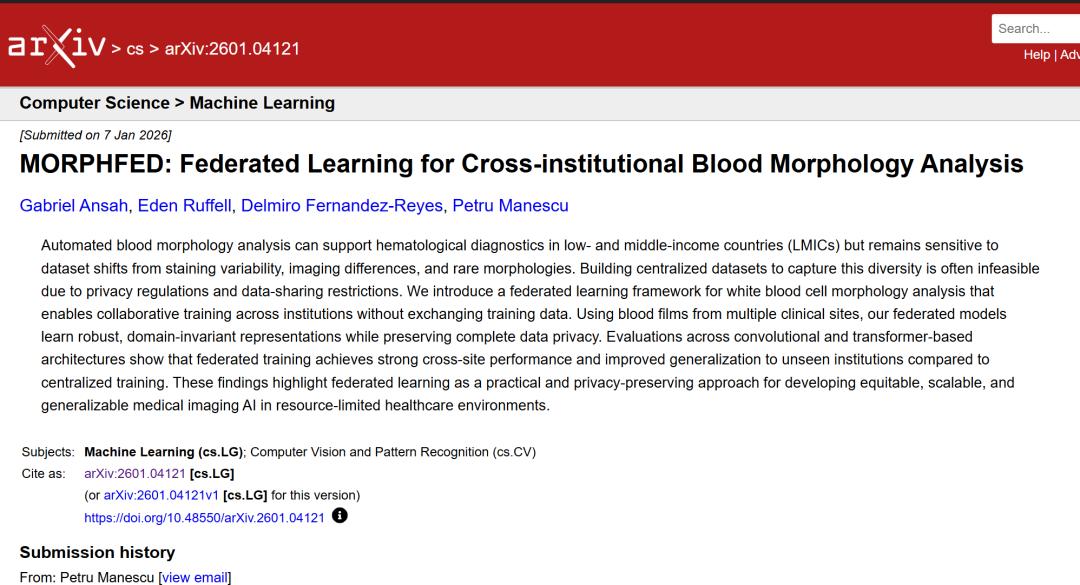
Core Insights - A research team from University College London (UCL) has developed a federated learning framework for white blood cell morphology analysis, enabling collaborative training without data exchange among institutions, thus ensuring data privacy while learning robust and domain-invariant feature representations [1][2]. Group 1: Federated Learning Framework - The federated model utilizes blood smear data from multiple clinical sites, demonstrating superior cross-site performance and generalization capabilities compared to centralized training [1][2]. - The framework addresses the critical issue of data privacy in healthcare, allowing institutions to collaborate on model training without sharing sensitive medical data [2][20]. Group 2: Clinical Relevance and Data Heterogeneity - Blood morphology examination is vital for diagnosing blood diseases, but it is labor-intensive and heavily reliant on skilled professionals, particularly in low- and middle-income countries where expertise is scarce [1]. - The study employed blood smear datasets from two centers, ensuring coverage of various cell types and reflecting real-world clinical heterogeneity, which is crucial for testing the federated learning model's generalization ability [5][8]. Group 3: Model Architecture and Training - The research utilized two deep learning architectures: ResNet-34 and DINOv2-Small, with a unified training protocol involving five rounds of global communication and local training cycles [9][11]. - Four federated aggregation strategies were implemented: FedAvg, FedMedian, FedProx, and FedOpt, each with distinct characteristics and performance implications [12]. Group 4: Performance Evaluation - The federated learning framework showed significant performance improvements, with models achieving a balanced accuracy of 58% compared to 52% for models trained on single institution data, highlighting the advantages of collaborative training without data sharing [16]. - External validation on data from a clinical hospital in Barcelona demonstrated that federated methods outperformed centralized training in generalization capabilities, achieving a balanced accuracy of 67% versus 64% [17][19]. Group 5: Implications for Healthcare - Federated learning is positioned as a key solution to overcome the "data silo" problem in healthcare, enabling collaborative model training while maintaining data privacy and compliance with regulations [20][22]. - The approach is expected to facilitate the transition of AI applications in blood morphology analysis from single-institution settings to cross-regional, clinical-grade intelligent diagnostic services, supporting precision medicine and digital healthcare [22].
康众医疗推进股票期权激励计划,增资AI医疗影像公司
Jing Ji Guan Cha Wang· 2026-02-12 08:55
Group 1: Core Insights - The company is advancing a stock option incentive plan and increasing investment in AI medical imaging company, Mind Intelligence [1][3] - The stock option incentive plan aims to motivate the core team, with details on grant conditions and exercise arrangements expected to be a focus [2] - The company has announced a projected net profit loss for 2025, estimated between 5 million to 9 million, with a non-recurring net profit loss expected between 12 million to 18 million [4] Group 2: Project Developments - The company plans to invest 70 million yuan in Mind Intelligence, acquiring a 7.3684% stake, to enter the AI medical imaging sector [3] - The integration of business operations, technological collaboration, and performance contributions from this investment are anticipated to gradually materialize in the future [3]

康众医疗:拟7000万元增资脉得智能,布局AI医疗影像领域
Cai Jing Wang· 2026-02-10 08:33
Core Viewpoint - The company plans to invest 70 million RMB in a stake acquisition of 7.3684% in Mindray Intelligent Technology (Wuxi) Co., Ltd, aiming to diversify its strategy and capitalize on opportunities in the AI medical imaging sector [1] Group 1: Investment Details - The investment will increase the registered capital of Mindray Intelligent by 1.03 million RMB [1] - The investment is expected to accelerate product development, market channel construction, and clinical maintenance [1] Group 2: Financial Performance of Mindray Intelligent - Mindray Intelligent is projected to have a revenue of 51.61 million RMB in 2025, with a net loss of approximately 25.87 million RMB [1] - The company anticipates that the investment will help unlock growth potential in performance [1]
康众医疗(688607.SH)拟7000万元增资脉得智能 培育业绩增长点
智通财经网· 2026-02-06 12:47
Core Viewpoint - The company plans to invest 70 million yuan in a capital increase to acquire a 7.3684% stake in Maide Intelligent Technology (Wuxi) Co., Ltd, aiming to enhance its diversified strategic layout and seize opportunities in the AI medical imaging industry [1] Group 1 - The investment will increase the registered capital of Maide Intelligent by 1.03457674 million yuan [1] - The move is part of the company's strategy to tap into the frontier of precision medicine and cultivate new performance growth points [1]
并购发力研发加码 推动美的集团转型科技巨擘
Zheng Quan Shi Bao· 2025-12-03 22:04
Core Viewpoint - Midea Group has successfully transformed from a home appliance company to a diversified technology giant covering various sectors including smart home, renewable energy, industrial technology, building technology, robotics and automation, healthcare, and smart logistics during the "14th Five-Year Plan" period [1][2] Group 1: Business Transformation - Midea Group has made significant capital moves, acquiring controlling stakes in listed companies such as Hekang New Energy, Wandong Medical, and Kelon Electronics, thereby entering new fields like renewable energy, medical imaging, and energy management [1] - The company aims to extend the lifecycle of its home appliance business while simultaneously promoting its B2B business, creating a "growth relay" effect [1] Group 2: R&D Investment - Over the past five years, Midea Group has invested more than 60 billion yuan in research and development [2] - The company ranks eighth globally and first among Chinese private enterprises in terms of patent families according to the 2023 global patent leaders list [2] - Midea has established 38 R&D centers in 12 countries, forming a global R&D network structured as "2+4+N" [2] - The company emphasizes a technology leadership strategy as its core strategy and plans to increase R&D investment further, focusing on fundamental research and disruptive technology breakthroughs [2]

并购发力研发加码推动美的集团转型科技巨擘
Zheng Quan Shi Bao· 2025-12-03 17:35
Group 1 - The core transformation of Midea Group during the "14th Five-Year Plan" period reflects the development of Guangdong's capital market, evolving from a home appliance company to a diversified technology giant covering smart home, new energy, industrial technology, building technology, robotics and automation, healthcare, and smart logistics [1] - Midea Group has made significant capital moves in recent years, acquiring controlling stakes in listed companies such as Hekang New Energy, Wandong Medical, and Kelon Electronics, thereby entering new sectors like new energy and industrial automation, medical imaging, and energy management [1] - The chairman of Midea Group, Fang Hongbo, stated that the company's strategy involves extending the life cycle of its home appliance business while simultaneously promoting B2B business growth, creating a "growth relay" effect [1] Group 2 - Midea Group has invested over 60 billion yuan in research and development over the past five years, ranking eighth globally and first among private enterprises in China for patent families according to the 2023 global patent leaders list [2] - The company has established 38 R&D centers in 12 countries, creating a global R&D network structured as "2+4+N" [2] - Fang Hongbo emphasized that the core strategy of Midea Group is technological leadership, with plans to increase R&D investment, pursue breakthroughs in fundamental research and disruptive technologies, and enhance the research system by attracting global leading experts and high-quality PhD talents [2]
2025出海标杆榜单揭晓:做好世界的合伙人
虎嗅APP· 2025-11-23 13:41
Core Insights - The article discusses the transformation of Chinese companies in their overseas expansion, marking the beginning of "Overseas 2.0" era, characterized by a shift from price competition to organizational strength, innovation, and localized operations [2][3]. Group 1: Strategic Upgrades - In the past year, there has been a significant upgrade in overseas strategies, with more companies establishing global operational systems, transitioning from product export to brand export [3]. - Many manufacturing and emerging consumer brands are setting up localized teams and data management units in specific regions, enhancing innovation, service, and marketing at community and user touchpoints [3][4]. Group 2: External Challenges - The external environment for overseas expansion is becoming increasingly complex, with geopolitical factors significantly impacting companies' strategies [4]. - Trade barriers in Europe and the U.S., data protection regulations in Southeast Asia, and market access issues in the Middle East require companies to possess higher strategic sensitivity and local adaptability [4][5]. Group 3: Local Adaptation and Risk Management - Compliance has become a critical threshold, necessitating that Chinese companies develop cross-border risk control and emergency response capabilities [5]. - Companies are moving from a "hit-and-run" approach to a more rooted strategy, focusing on local talent, data, ecosystems, and teams to withstand external risks and achieve resilient growth [5][6]. Group 4: Evolving Competitive Landscape - The competitive landscape and philosophies of Chinese companies are evolving, transitioning from product sales to creating value ecosystems [6]. - The most promising sectors for overseas expansion by 2025 include smart manufacturing, consumer electronics, renewable energy, and cross-border e-commerce brands [7][8]. Group 5: Benchmark Enterprises - The article emphasizes that true benchmark enterprises are not just defined by high revenue or size but by their continuous evolution of capabilities and ecological innovation [11][12]. - The evaluation criteria for benchmark enterprises include innovation capability, localization, organizational resilience, and sustainable growth [12]. Group 6: Award Winners - The article lists several companies recognized for their outstanding performance in overseas markets, including Haier, Lenovo, Midea, Didi, and Changan Automobile, highlighting their contributions to global brand building and market penetration [16][19][20][21][22][23][24][25][26][27][28]. - New emerging companies like United Imaging, Baseus, and Fantuan are also acknowledged for their rapid rise and innovative business models in overseas markets [30][31][32][33][34][35][36][37][38][39]. Group 7: Service Providers - The article identifies key service providers that support overseas enterprises, including logistics, marketing, and payment solutions, which help lower the barriers for Chinese brands to reach global users [41][42][43][44][45][46][47][48][49][50][51]. Group 8: Future Outlook - The future of Chinese companies' overseas expansion is expected to be defined by the integration of localization capabilities, data-driven strategies, and ecological collaboration [51]. - The evolution of Chinese brands in the global market is not a sprint but a long-term contest of organizational strength, innovation, and belief [51].