Prescription drugs

Search documents
More than one-quarter of Americans struggle to afford medication — why some pay more and how you could save hundreds
Yahoo Finance· 2026-02-19 12:15
Core Insights - Prescription drugs are increasingly expensive, with 27% of Americans reporting they left a prescription unfilled due to high costs [1] Group 1: Impact of High Drug Costs - Nonadherence to medication can worsen chronic conditions, leading to difficult choices between health and essential expenses, which may increase long-term costs [2] - The issue of high drug costs affects both insured and uninsured individuals [2] Group 2: Insurance Coverage and Costs - 20% of Americans have at least one drug not covered by their insurance, leading to financial strain and treatment gaps [3] - On average, 23% of Americans not covered by Medicaid spend over $50 per month out of pocket on prescriptions [3] - The type of insurance plan influences drug costs, with those on health exchange or private plans paying more than those on Medicare, Medicaid, or Tricare [4] Group 3: Payment Structures - The distinction between copay and coinsurance plans affects out-of-pocket expenses, with coinsurance potentially leading to higher costs for expensive drugs [5] - Approximately 8% of Americans are uninsured, limiting their options for medication [5] Group 4: Formulary Tiers - Formulary tiers categorize drugs covered by insurance, impacting out-of-pocket costs, with lower-tier drugs generally having lower copays [6]
Trump to unveil ‘TrumpRX’ website for discounted drug purchases
BusinessLine· 2026-02-06 03:40
Core Viewpoint - President Trump is launching a website, TrumpRx, aimed at allowing Americans to purchase prescription drugs directly from manufacturers at discounted prices, addressing concerns about drug affordability [1][2]. Group 1: Website Launch and Features - The TrumpRx website will enable consumers to buy certain medications directly from drug makers without insurance, featuring prices negotiated by the Trump administration [2]. - The official unveiling of TrumpRx was conducted at the White House with key figures including Dr. Oz and Joe Gebbia [1][2]. Group 2: Cost Reduction Efforts - The administration has negotiated agreements with over a dozen major pharmaceutical companies, including Eli Lilly & Co., Novo Nordisk A/S, and Pfizer Inc., to lower drug costs, often in exchange for reduced tariffs [3]. - The effectiveness of the website in significantly reducing costs and attracting consumers to pay cash for medications instead of using insurance remains uncertain [4]. Group 3: Operational Timeline - There is no specified date for when the TrumpRx website will become operational or when the discounted drugs will be available for purchase [3]. - The administration aimed to launch the site by the end of January, as mentioned in a previous announcement [4].


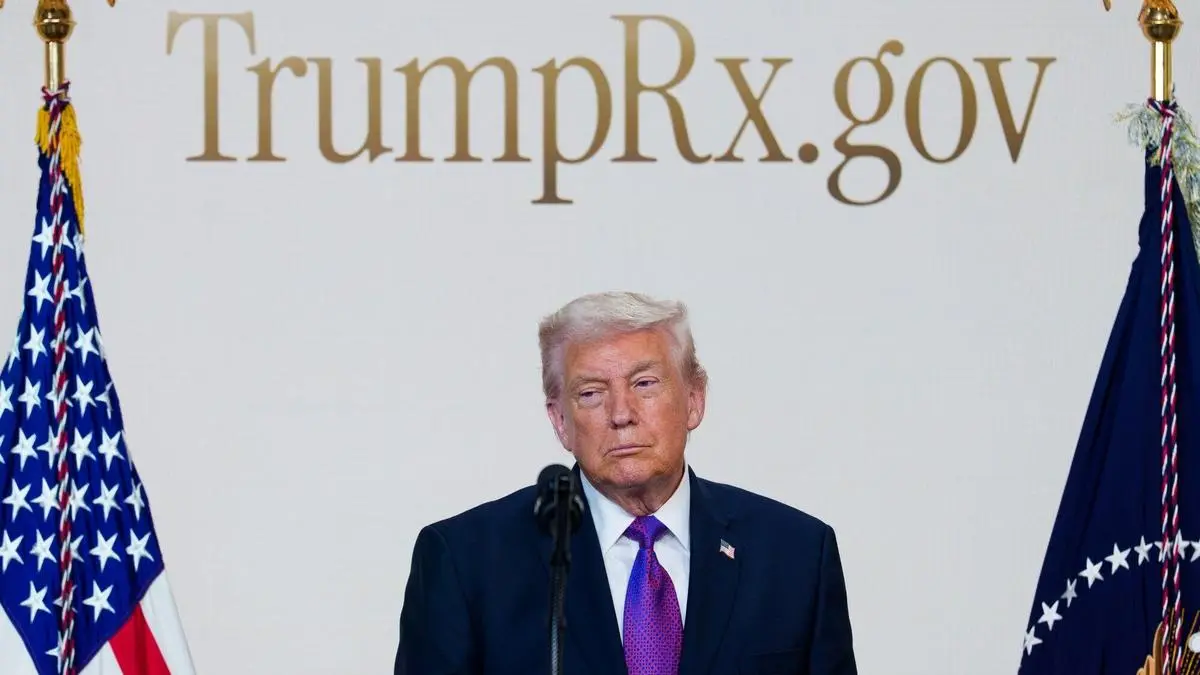
Trump launches new self-pay prescription drug website
NBC News· 2026-02-06 02:19
We're here this evening to celebrate the launch of one of the most transformative healthc care initiatives of all time. There's never been anything like it. Starting tonight, dozens of the most commonly used prescription drugs will be available at dramatic discounts for all consumers throughout a new website.It's called trumprx. gov. That's trumprx.gov. For years, politicians from both parties have promised to bring down prescription drug prices and make health care more affordable. But they all failed.It w ...

LIVE: President Trump unveils TrumpRx, a website to purchase low cost prescription drugs — 2/5/2026
CNBC Television· 2026-02-05 18:39
President Trump will officially unveil TrumpRx on Thursday — a website for Americans consumers to purchase low cost prescription drugs. For access to live and exclusive video from CNBC subscribe to CNBC PRO: https://cnb.cx/42d859g » Subscribe to CNBC TV: https://cnb.cx/SubscribeCNBCtelevision » Subscribe to CNBC: https://cnb.cx/SubscribeCNBC Turn to CNBC TV for the latest stock market news and analysis. From market futures to live price updates CNBC is the leader in business news worldwide. Connect with CNB ...
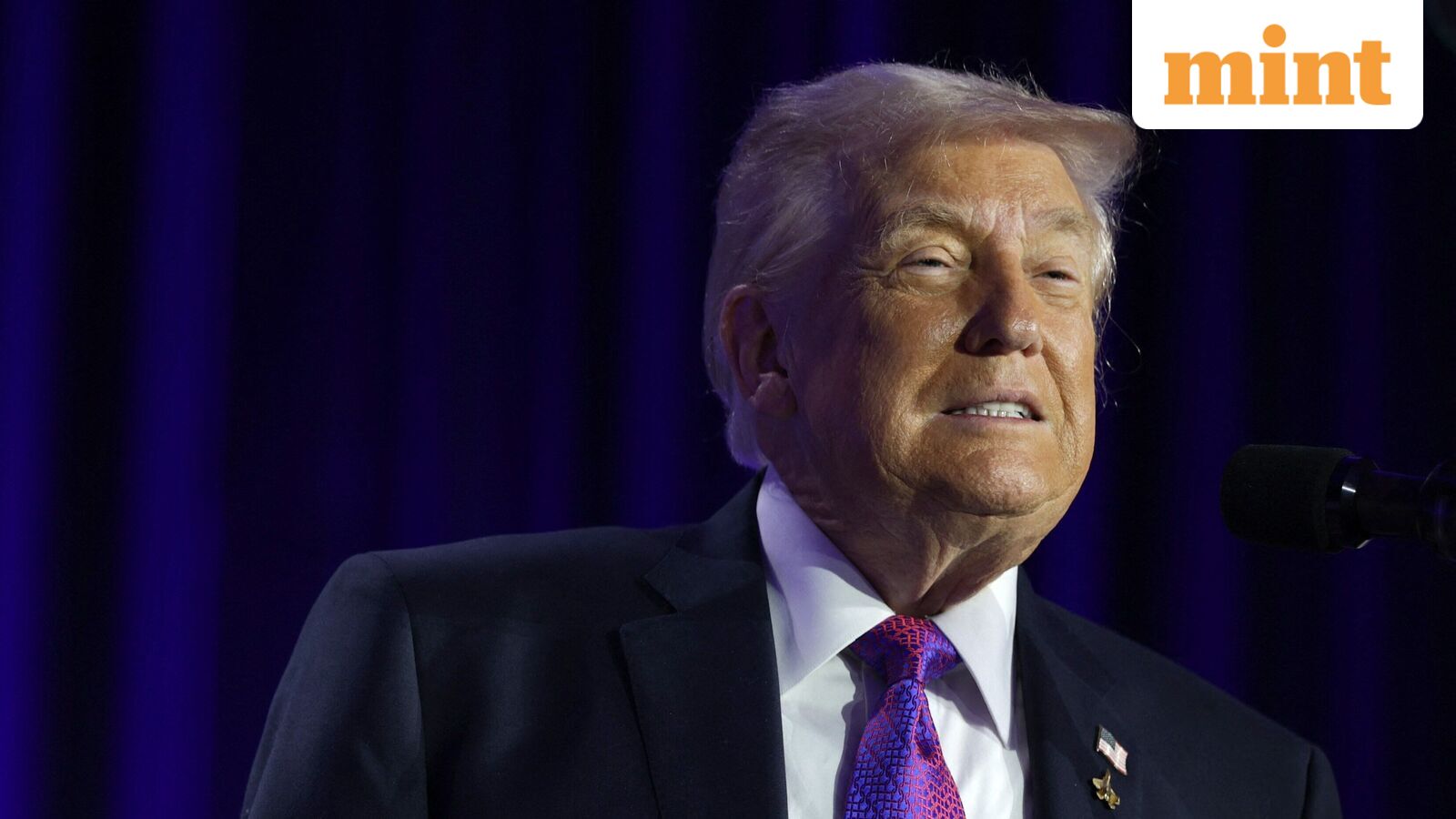
What is TrumpRx? POTUS to unveil website for prescription drugs at discounted rate
MINT· 2026-02-05 18:23
Core Insights - The Trump administration is launching TrumpRx, a government-run website aimed at helping patients obtain prescription drugs directly from manufacturers at lower prices, addressing rising healthcare costs for Americans [2][3][4] Group 1: TrumpRx Overview - TrumpRx is designed to facilitate access to lower-cost prescription drugs by directing consumers to drugmakers' direct-to-consumer sites rather than selling medications directly [2] - The initiative is part of a broader effort by the Trump administration to reduce prescription drug costs, with agreements from major pharmaceutical companies like Johnson & Johnson to provide medications at prices comparable to those in other developed nations [3][6] Group 2: Agreements with Pharmaceutical Companies - The Trump administration has secured agreements with several major pharmaceutical companies, including Pfizer, Eli Lilly, and Merck, to lower prices on certain Medicaid drugs to "most favored nations" levels [6] - Johnson & Johnson's agreement includes participation in TrumpRx, which aims to offer significant discounts to consumers [3][4] Group 3: Launch Details and Delays - The launch of TrumpRx was announced to take place on Thursday evening, following several delays that have not been publicly explained [5] - The president had previously hinted at the initiative in September, with expectations of "massive discounts" for consumers, although it remains uncertain if the prices will consistently undercut current insurance costs [4][5]

X @Bloomberg
Bloomberg· 2026-02-05 17:25
President Donald Trump plans to unveil a website on Thursday allowing people to directly purchase prescription drugs, part of his push to address Americans’ concerns about affordability https://t.co/RtuyQCfXij ...
Costco Introduced a Controversial Perk Last Year -- and It Plans to Follow This Up With 4 New Benefits in 2026
The Motley Fool· 2026-01-23 09:06
Core Insights - Costco is continuously evolving its membership model, introducing new perks for its over 81 million paying members, which is crucial for maintaining customer satisfaction and loyalty [1][5][9] Industry Overview - The global retail industry is projected to grow from approximately $29.8 trillion in 2026 to about $41.5 trillion by 2031, with a compound annual growth rate of nearly 6.9% [2] - The retail space is highly competitive, making it challenging for companies to differentiate themselves while maintaining profitability [3] Company Developments - Costco plans to introduce four new benefits for its members in 2026, aimed at enhancing the value of membership [11] - The company raised its annual membership fee in September 2024, with Executive members receiving enhanced perks, including a 2% cash back reward of up to $1,250 and a $10 monthly credit with Instacart [6][8] New Member Benefits - **Digital Membership Scanning at Food Courts**: Starting in 2026, members will need to scan their membership cards to access food court items, reinforcing the value of membership [12][13] - **Standalone Gas Station**: Costco is opening its first standalone gas station in Mission Viejo, California, which will only be accessible to paying members [14][15] - **Expansion of Pre-scan Technology**: The company will enhance its pre-scanning technology at checkout, potentially reducing checkout times by up to 20% [17][18] - **Prescription Drug Price Transparency**: A partnership with Navitus will allow members to see the cost of prescription drugs, promoting transparency in pricing [19][20][21] Financial Insights - Membership fees, while a small fraction of Costco's net revenue, are high-margin and contribute significantly to operating income [9]

McKesson (MCK) Registers a Bigger Fall Than the Market: Important Facts to Note
ZACKS· 2026-01-21 00:17
Company Performance - McKesson (MCK) closed at $821.84, reflecting a -2.22% change from the previous day, underperforming the S&P 500's daily loss of 2.06% [1] - Over the past month, McKesson's shares have increased by 2.7%, while the Medical sector has decreased by 0.88% and the S&P 500 has gained 1.63% [1] Upcoming Earnings - McKesson's earnings report is scheduled for February 4, 2026, with expected earnings of $9.19 per share, indicating a year-over-year growth of 14.45% [2] - The consensus estimate for revenue is $105.66 billion, representing a 10.88% increase compared to the same quarter last year [2] Fiscal Year Estimates - For the entire fiscal year, the Zacks Consensus Estimates predict earnings of $38.61 per share and revenue of $408.23 billion, reflecting changes of +16.82% and +13.7% respectively from the previous year [3] Analyst Estimates - Recent modifications to analyst estimates for McKesson indicate the dynamic nature of near-term business trends, with upward revisions suggesting analysts' positive outlook on the company's operations [4] Zacks Rank - McKesson currently holds a Zacks Rank of 2 (Buy), with the Zacks Rank system showing a strong track record of success, particularly for 1 stocks which have delivered an average annual return of +25% since 1988 [6] Valuation Metrics - McKesson has a Forward P/E ratio of 21.77, which is a premium compared to the industry average Forward P/E of 18.28 [7] - The company's PEG ratio is 1.38, while the Medical - Dental Supplies industry average PEG ratio is 1.97 [7] Industry Overview - The Medical - Dental Supplies industry, part of the Medical sector, has a Zacks Industry Rank of 54, placing it in the top 23% of over 250 industries [8] - Research indicates that the top 50% rated industries outperform the bottom half by a factor of 2 to 1 [8]


Nonprofit Health Services Organization Files Lawsuit Against Fortune 500 Pharmaceutical Company Over Prescription Drug Access
Businesswire· 2026-01-20 16:34
Core Viewpoint - Sagebrush Health Services has filed a lawsuit against Amgen Inc. for unlawfully terminating the sale of discounted drugs and retracting past discounts, which has hindered Sagebrush's ability to supply necessary medications to its clinics [1][2]. Group 1: Lawsuit Details - The lawsuit was filed in California Superior Court, asserting five causes of action against Amgen for violating California law and aims to protect access to affordable care for economically challenged and uninsured populations [2]. - Sagebrush seeks the return of at least $7 million that Amgen improperly took, along with treble damages and punitive damages under California law [3]. - The dispute centers on the 340B Drug Pricing Program, which allows eligible healthcare organizations to purchase outpatient drugs at significantly reduced prices [3][4]. Group 2: Allegations Against Amgen - The lawsuit claims that Amgen unilaterally determined Sagebrush was not an eligible entity under the 340B Program, disregarding the established federal process for challenging eligibility [4]. - Amgen's attorneys acknowledged in a letter to a U.S. Senate committee that the 340B program does not permit manufacturer oversight, indicating a lack of authority to police compliance [5]. Group 3: Impact on Patients and Services - Sagebrush Health Services emphasizes its commitment to improving access for underserved populations and reinvests savings from the 340B Program into vital community services [6][8]. - The organization runs a sexually transmitted infection (STI) program that integrates education, screening, testing, and treatment services, which has been affected by Amgen's actions [7][8].


Cardinal Health (CAH) Outperforms Broader Market: What You Need to Know
ZACKS· 2025-12-20 00:01
Core Viewpoint - Cardinal Health's stock performance has been mixed, with a recent increase but a decline over the past month, and upcoming earnings are anticipated to show significant growth in both EPS and revenue [1][2][3]. Company Performance - Cardinal Health's stock rose by 1.93% to $202.95, outperforming the S&P 500's gain of 0.88% [1] - Over the past month, the stock has decreased by 4.23%, underperforming the Medical sector's gain of 1.2% and the S&P 500's gain of 2.48% [1]. Earnings Forecast - The upcoming earnings report is expected to show an EPS of $2.31, reflecting a 19.69% increase from the same quarter last year [2]. - Revenue is forecasted to reach $64.07 billion, indicating a 15.94% rise compared to the previous year [2]. Annual Estimates - For the annual period, earnings are projected at $9.86 per share, with revenue expected to be $258.58 billion, representing increases of 19.66% and 16.18% respectively from last year [3]. Analyst Estimates - Recent modifications to analyst estimates for Cardinal Health are crucial, as positive revisions indicate optimism regarding business and profitability [3]. - The Zacks Consensus EPS estimate has seen a slight downward shift of 0.17% over the past month, and Cardinal Health currently holds a Zacks Rank of 3 (Hold) [5]. Valuation Metrics - Cardinal Health has a Forward P/E ratio of 20.19, which is higher than the industry average of 17.72 [6]. - The company’s PEG ratio stands at 1.45, compared to the Medical - Dental Supplies industry's average PEG ratio of 2.36 [6]. Industry Context - The Medical - Dental Supplies industry, part of the Medical sector, has a Zacks Industry Rank of 151, placing it in the bottom 39% of over 250 industries [7]. - Historically, industries in the top 50% outperform those in the bottom half by a factor of 2 to 1 [7].