QMT

Search documents
量化ptrade融资交易limit_price
Sou Hu Cai Jing· 2025-12-30 08:09
Group 1 - The function `margincash_open` requires a valid `limit_price` parameter, which should not be set to 0 as it is intended to be a protection price rather than a limit order price [1] - The documentation specifies that `limit_price` is a mandatory parameter when trading stocks on the Shanghai Stock Exchange [1] - The current stock price must be within the sell limit to execute a trade; otherwise, an error will occur if the price exceeds the protection price [6] Group 2 - The current stock price must be set appropriately to ensure that the `limit_price` is within the sell limit range for successful transactions [6] - If the stock price surges beyond the set protection price, the transaction will not be executed, indicating the importance of monitoring price movements [6]

QMT行情下载能下载多长的数据长度?
Sou Hu Cai Jing· 2025-12-29 10:11
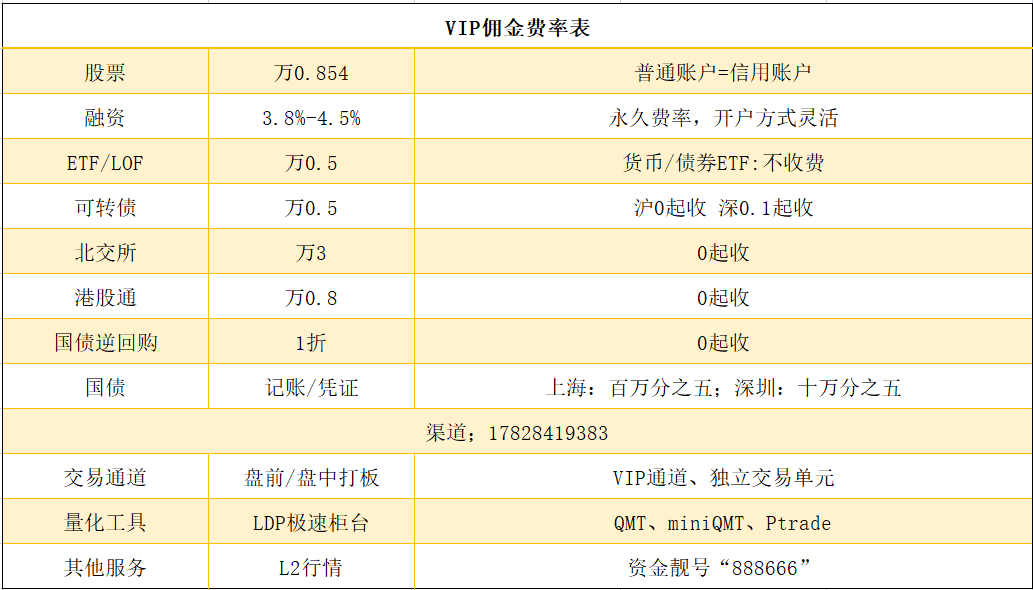
Group 1 - The QMT data download allows for extensive historical data access, particularly for daily data, which can be retrieved from the stock's listing date to the present, regardless of specified limits [4][9] - For minute-level data, there are restrictions, with the maximum accessible period being one year, which may not align with user-specified dates [6][9] - The example provided illustrates that daily data can extend back to 2001 for a stock listed in January 2001, indicating QMT's unique data retrieval mechanism [4][9] Group 2 - The VIP commission rate for stocks is set at 0.854 per ten thousand, with flexible account opening methods available [3] - Financing rates range from 3.8% to 4.5%, indicating a permanent fee structure [3] - Various trading channels and quantitative tools are offered, including LDP rapid counters and QMT services [3]
跨境ETF基金套利操作技巧解析!一文读懂!
Sou Hu Cai Jing· 2025-11-06 09:44
Core Viewpoint - Cross-border ETF funds, also known as "QDII ETF" funds, are investment funds established domestically that invest in overseas markets, creating arbitrage opportunities due to potential pricing discrepancies between market trading prices and net asset values [1] Group 1: Trading Mechanism of Cross-border ETF Funds - Cross-border ETF funds can be traded on the Shanghai and Shenzhen stock exchanges, allowing for both on-market trading and subscription/redemption operations [1] - The trading mechanism includes T+0 trading, enabling same-day buy and sell transactions without limits on trading frequency [2] - ETF fund shares redeemed require T+2 settlement for the funds to be available [2] Group 2: Necessary Conditions for Arbitrage - Selecting brokers that support RTGS settlement mechanisms is essential, as only a few brokers provide this support [3] - Ensuring low transaction costs is crucial to minimize friction costs, including subscription, redemption fees, and trading commissions [3] - A deep understanding of the trading mechanisms of cross-border ETF funds is necessary, and consulting with securities advisors is recommended [3] Group 3: Instant Arbitrage Strategies and Steps - Instant arbitrage can be categorized into premium arbitrage and discount arbitrage [4] - For premium arbitrage (when market price > IOPV): 1. Subscribe to cross-border ETF by following the daily published subscription list and obtaining ETF shares [5] 2. Sell the ETF shares in the secondary market at the expected market price [5] - For discount arbitrage (when market price < IOPV): 1. Buy ETF shares in the secondary market at the expected market price [5] 2. Redeem the ETF shares to receive a basket of stocks or cash, avoiding the need to sell stocks if cash is redeemed [5]